

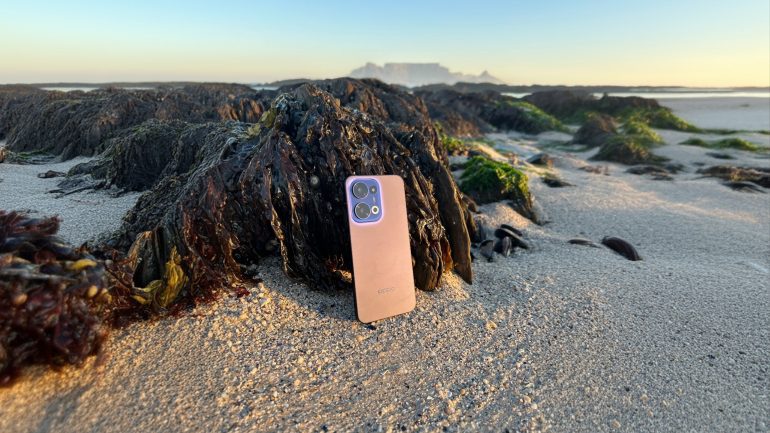
During a select few months in the year, smartphone manufacturers release their most prized possessions: their flagship smartphones. This is where all the buzz for the latest and greatest phone from [insert smartphone manufacturer] originates. While this is still true for almost every tech product out there, the market share now largely belongs to the mid-range device. If you want to sell in numbers, you sell great mid-range phones. This is precisely where the Oppo Reno 13 5G competes.
I’ve been using the Reno 13 for a few weeks now. As a power user accustomed to a flagship device, I wondered if this mid-range contender could keep up with my demands, which include shooting pictures, using it for work, gaming, and testing its AI capabilities. What I found was impressive: the camera setup pleasantly surprised me, the battery life blew me away, and the design truly stood out from the crowd. However, there were a few issues we need to address, so let’s dive into the details.
Design & Display:
Oppo has truly outdone itself with the design of this phone. With a slim silhouette, beautiful satin matte finish, curved corners, and an instantly recognisable vertical camera bump on the rear, the Luminous Blue Reno 13 is striking. Why the name “Luminous Blue”? Even the smallest bit of light creates a luminous focal point on the camera bump, making it appear lit up – it’s shouting, “Look at me!”
Up front, you get a 6.59-inch AMOLED display with a Full HD+ resolution and a 120Hz refresh rate. With only 1200 nits of peak brightness, it is on the lower end. I occasionally found myself needing to manually alter the device’s brightness to suit my current conditions. However, once I found the right setting, the display looked perfectly fine, even on a sunny day in Cape Town. Further enhancing the display is its SGS certified for low-blue-light performance. As someone who looks at displays most of the day, I cannot stress the benefits of reducing blue light on our eyes enough.
Out of the box, the display setting appeared a little washed out. However, the Reno 13 provides three display settings: Natural, Pro, and Vivid. While the device recommends “Natural,” I found that the display really popped using “Vivid,” which truly brought it to life.
Encasing this display is an aluminium frame, which adds a premium feel to the device. Oppo also boasts innovative bionic cushioning. When you add Corning Gorilla Glass 7i to the mix with “All Round Armour” (as Oppo calls it), you create a device that should hold up well against accidental knocks, tumbles, and general wear and tear. Oppo has also included IP68 and IP69 ratings for the Reno 13, removing the stress of using your device around any body of water.
Performance:
This is truly where the Reno 13 shows what it is capable of. Using this phone as a daily driver and seamlessly jumping between apps like Instagram, Microsoft Teams for work, games, watching videos on YouTube and Netflix, and the occasional AI experiments, this phone doesn’t miss a beat. It’s fluid, has snappy animations, and multitasking is effortless. To achieve this, the Reno 13 is powered by a MediaTek Dimensity 8350, coupled with 12GB
of RAM and 512GB of storage. All these components work so well together that you don’t really have to think about it. When it comes to gaming, this chip does a great job, providing smooth, lag-free gaming at 60FPS on high settings. After playing CPU-intensive games for a bit, you will experience the device heating up.
From a software perspective, the Reno 13 comes with ColorOS 15 out of the box, which is based on Android 15. User interface preference is subjective, and having experienced both the latest Android and iOS versions, ColorOS 15 feels like the child of both – a Frankenstein OS, if you will.
Additions like Aqua Dynamics (the new notification interaction), “Share with iPhone,” and a generous helping of AI throughout the UI show a device capable of being ready for tomorrow. Having said that, with just three major OS updates and four years of security patches, “tomorrow” comes fairly soon. With other brands offering seven years’ worth of updates, one has to wonder about the phone’s longevity. Another gripe is the bloatware. With an OS as mature as this, it’s hard to believe that in 2025, this is still an issue.








Cameras:
At the rear, you have a main 50MP sensor with OIS, alongside an 8MP ultra-wide, and a 2MP monochrome lens. While these numbers only tell half the story, the captured and processed image is the important part. From the pictures I’ve taken, the Reno 13’s camera sensors deliver!
Photos taken in daylight are crisp with a natural colour aesthetic. The images closely resemble what your eyes see, rather than being over-processed. Portrait shots are great, with excellent edge detection and detail, providing just the right amount of blur around a focal point. In low light, the camera does well to infuse as much light as possible; however, you’ll find that detail is lacking and images turn out soft. While you get a usable image, zooming in closer exposes flaws. This can be more pronounced with the ultra-wide lens, where noise tends to creep into the image.
The camera comes with many modes, giving you a lot to work with. This includes a Pro mode, which allows you to change sensor settings to get the type of image you want. Giving you this level of control shows Oppo believes in the capabilities of the camera, and you should too. One standout feature is the ability to take photos underwater, with a specific setting designed just for this.
At the front, you have a 50MP front-facing camera which delivers sharp images with plenty of light. Here, it feels as though the quality is as good as the rear camera. There was a time when your best camera was always at the back, but the Reno 13 challenges that.
For video, you are able to record in 4K at 60FPS for both the front and rear cameras. With the ability to record 4K from the front camera, it’s clear the Reno 13 would be a great device for content creators. The video quality is excellent, while also recording clear audio. Your videos come out smooth and natural-looking.
When you couple these sensors with the Reno 13’s AI features, you gain a wealth of capabilities. This includes AI Clarity Enhancer for blurry images or shots taken in motion, AI
Reflection Remover (which helps remove reflections on images taken through windows), and AI Night Portrait to improve low-light image clarity. Here we see a device that doesn’t just have AI as an afterthought, but as an integral part of the photo experience.
Battery & Charging:
You get a 5600mAh battery with 80W SUPERVOOC Flash Charge. My experience with charging this device has been amazing and is one of the standout features of the Reno 13. Charging this device fully takes 35 minutes and easily lasts a full day of rigorous use.
This means that a quick charge before loadshedding or before heading out of the house will give you a lot less to worry about. One downside: there is no wireless charging. While the argument could be made that the wired charging is so fast and the phone manages battery performance so well that wireless charging wouldn’t be necessary, I still say it’s a missed opportunity.
Verdict:
While there are many pros, there are some cons. ColorOS is one of them. While some may find it easy to use, it feels confused about what it wants to deliver. There are moments when you find it doing something cool, but it comes off half-baked. For example, allowing you to use the flashlight in a pill-shaped notification, much like the Dynamic Island from iOS, is a neat feature, but this function is only available for default device apps and lacks third-party app support. Going all the way here would have created a more fluid UI experience.
Another issue is the price. I’ve spent this entire time talking about how great of a mid-range phone the Reno 13 is, and it truly is. But for a mid-ranger to capture the market, it needs to pack the most punch for the least amount of money. The Oppo Reno 13 5G is currently R17 999 at some retailers, putting it directly in line with the Samsung Galaxy S25 and the iPhone 16. This in itself isn’t a bad thing, but when the cons that exist in the Reno 13 don’t exist in its competitors, it’s going to be a hard sell.
That being said, the Reno 13 is showing off. Its specs speak to a device that wants to give you more than just the basics while doing the basics well. Its build is not only premium but good-looking, and with the addition of AI features, it helps the device feel more modern. For anyone who wants a good-looking, reliable phone that performs day-to-day tasks like a champion, the Reno 13 is for you.