The post Spotify announces donation to Vibrate Space, a NPO supporting young Ghanaian music entrepreneurs appeared first on Reframed.
]]>Operated by Surf Ghana in Accra, Vibrate Space is a community recording studio and music business programme that offers education, mentorship, and space to young Ghanaian artists to create, connect, and collaborate. Spotify first partnered with Vibrate Space in September 2022 with a donation that facilitated the launch of the studio. Over the past six months, Vibrate Space has registered over 200 studio bookings and hosted many more creators for events and classes.
Phiona Okumu, Head of Music for Sub Saharan Africa (SSA) at Spotify, said, “The partnership with Vibrate allows us to continue supporting emerging artists and cultural entrepreneurs in Ghana in addition to the on-platform work we are doing in the country.”
The most recent donation was announced at an event at Surf Ghana by Spotify’s Global Head of Artist and Audience Partnerships, Joe Hadley. The donation will be administered over multiple years, enabling Vibrate Space to collaborate with and support more aspiring young artists who seek to kick-start their careers.
Vibrate Space’s plans to use the additional funding for artist support include a festival at the space, to be held at the end of the year, supporting artists to put on their events and establishing a youth hostel, where young people can find affordable, short-term accommodation while experiencing the collaborative and community aspects of Vibrate. The organisation is also looking to establish an artist in residency and exchange programme to fuel creativity, collaboration, and cultural exchange, as well as a women’s programme aimed at supporting women’s growth in the industry. They also intend to expand their educational offerings, by extending their highly successful monthly masterclasses for another two years and introducing a three-month instrument learning programme, starting with piano lessons and expanding into other instruments.
Sandy Alibo, Founder and Director of Surf Ghana, said, “We work with young and emerging artists and creators who are looking to make a mark in the music industry, and Spotify is a brand that speaks to young people and has played a significant role in taking African and Ghanaian music to the world.”
Spotify data shows that fans worldwide are finding and listening to Ghanaian artists on the platform. For every stream in Ghana of a Ghanaian artist, there are six streams worldwide, with top international markets for Ghanaian artists including the USA, UK, Nigeria, Germany, the Netherlands, Canada, and France.
A number of Ghanaian artists have been beneficiaries of Spotify programmes aimed at showcasing local artists on a global stage and increasing discoverability. These include Black Sherif, who is a Spotify RADAR artist, Amaarae, Moliy and Gyakie, who have both been EQUAL Ambassadors, and Kofee Bean, who is a Fresh Finds artist. Sincerely Accra, a Ghanaian podcast, was also named as one of 13 African podcasts to receive a share of Spotify’s $100,000 USD last year.
Jocelyne Muhutu-Remy, Managing Director for Spotify SSA, said, “Spotify is constantly seeking new and innovative ways to promote African music and celebrate and support its creators. Our partnership with Vibrate is one way that we are doing this in Ghana, but we have plans and projects in place to support artists both on and off the platform across the region.”
The post Spotify announces donation to Vibrate Space, a NPO supporting young Ghanaian music entrepreneurs appeared first on Reframed.
]]>The post An unexpected new taste in music with the rise of K-pop in Africa appeared first on Reframed.
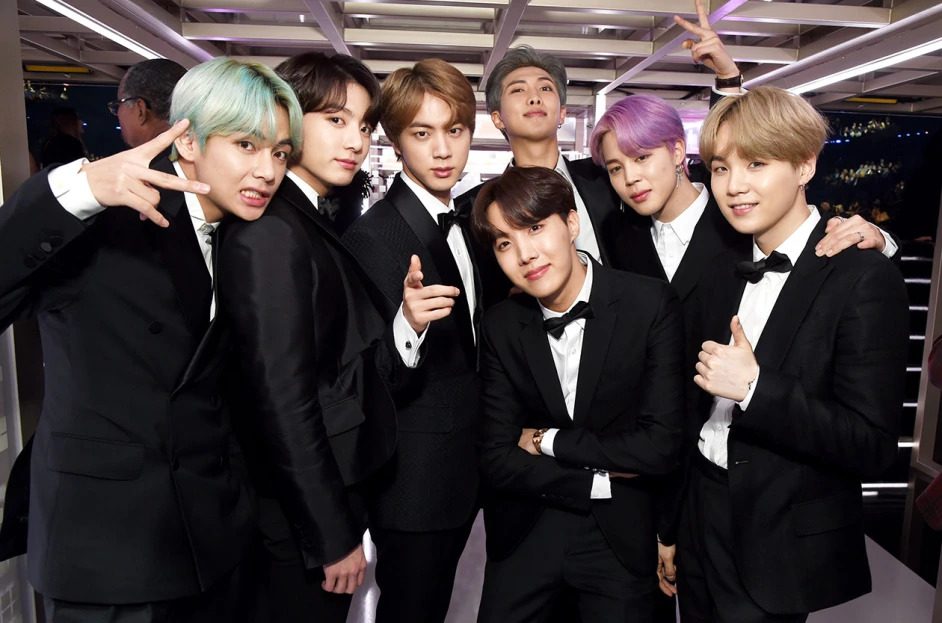
]]>Today, Western music no longer holds that singular dominance. We’re now seeing music from new corners of the world gain that same global popularity. The latest to follow in this trend of globalisation is South Korean pop music, known as K-pop. Partly driven by the popularisation of South Korean culture through TV dramas – and boosted by the virality of South Korean artist Psy’s smash hit Gangnam Style, K-pop is on a meteoric rise. This year, the K-pop boy band BTS made history by becoming the first Korean act to be nominated for the 5th time, in as many consecutive years, at the Grammy Awards.
What’s pleasantly surprising, however, is that while Africa has been making its musical presence known to the world, Korean culture and music have steadily permeated into the continent – and its popularity continues to grow.
According to Spotify’s head of music for Sub-Saharan Africa, Phiona Okumu “Surprisingly, there’s been a 93% year-on-year increase in K-pop streams in Sub-Saharan Africa in 2022, accounted for by over 3 billion hours of streaming. It’s clear from this data that K-pop is not just a passing phase, but has a devoted and growing African fandom.”
Some of the key markets contributing to this increase are Nigeria, where there was a 267% increase in K-pop streams, Ghana with 236% and Kenya with a 140% increase.
So what exactly is propelling this rising interest in K-pop on the continent?
Some, like National Geographic, attribute the global rise of K-pop to the pandemic, which inadvertently focused the world’s attention on this East Asian cultural powerhouse. Around the globe, millions made use of their time and binge watched K-dramas like Squid Game, at the same time discovering multiple facets of Korean culture.
While this may be equally true for the African continent, other factors like increased internet access might also have a hand to play. With a population which is young and online – it makes sense that Africa is a strong emerging market for K-pop which enjoys mass youth appeal. A recent survey which polled 400 000 BTS fans around the world, determined that approximately 50% of their fans are under the age of 18, with a further 42% aged 18-29. Spotify’s Wrapped data for Africa paints a similar picture – with a combined 88% of K-pop music streams coming from people under the age of 29.
“In an increasingly connected world, on-demand streaming services like Spotify have certainly made it easier than ever to tap into another country’s music. Streaming has become instrumental in not only enabling the discovery of African music abroad but also in exposing African listeners to new and unexpected sounds,” she elaborates.
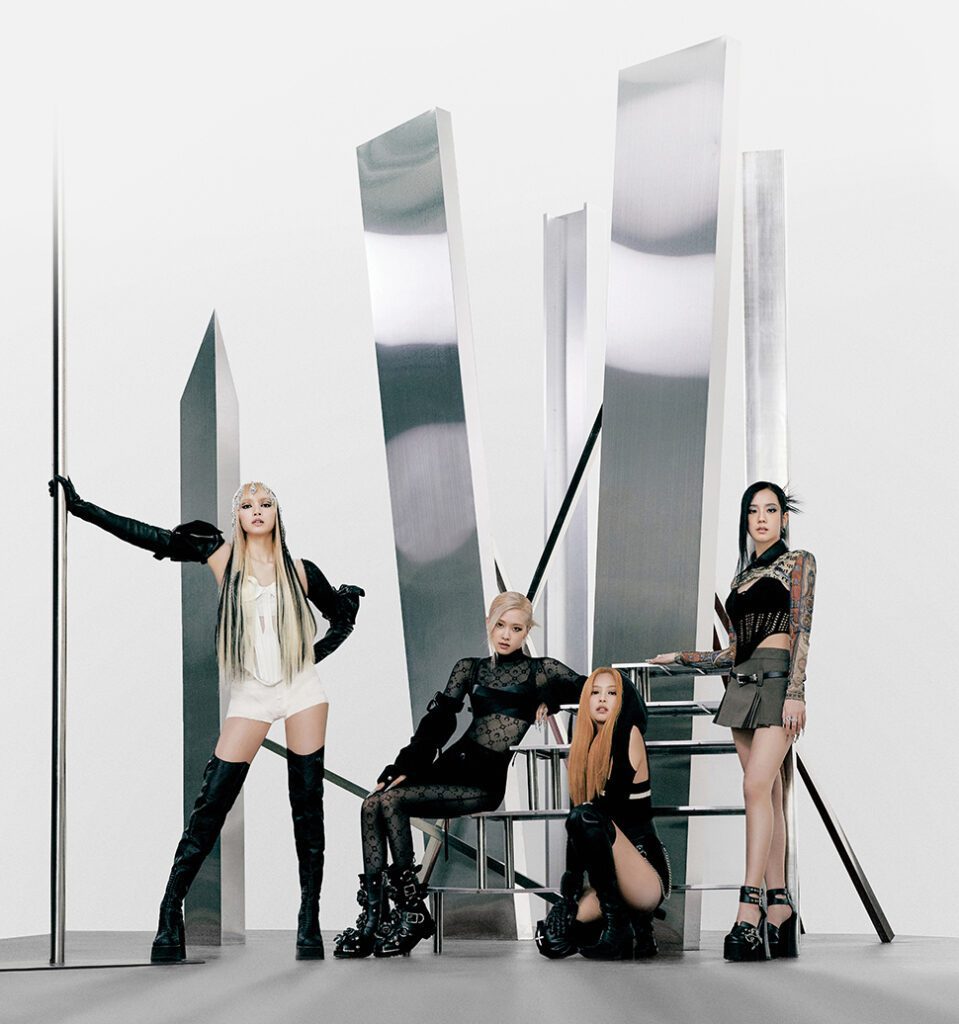
What’s capturing the hearts of this new audience, however, is the diverse sounds that K-pop has to offer. Although called Korean pop music, K-pop actually ranges across a vast number of music genres such as Pop, Hip Hop, R&B, Rock, Jazz, Reggae, Disco, and even traditional and folk Korean musical stylings. K-pop is essentially not really a music genre, but simply music from Korean artists – known colloquially as idols.
Whether it is seen as adoption or appropriation, there is no denying the Hip Hop and R&B influences in K-Pop-genres which have historically had massive support across Africa. And increasingly, African inspiration is emerging in K-pop.
BTS, who occupies the top spot for K-pop artists streamed in Sub-Saharan Africa and dominates the list of most streamed tracks, covers nearly every music genre in their discography – including South African grown Gqom. The band’s hit IDOL, features Gqom-style beats while the video tips its hat to the continent in the band’s dance moves and their African print suits. Girl band BS (or Black Swan) made history in 2020 when they introduced the first ever African K-Pop idol, Senegalese model Fatou Samba.
On top of this range of musicality, K-pop idols are also known for their extremely tight and extravagant choreography, high-value stage and music video productions, and the distinctive style and “concept” of each K-pop group. Not to mention the polished good looks and fashion of these immensely talented artists.
“This year, K-pop showcased its staying power in Sub-Saharan Africa (SSA) with millions of streams in countries like South Africa, Kenya and Nigeria – the top three for K-pop consumption on the continent respectively. Other countries that made it into the top 10 K-pop markets in SSA included Mauritius, Ghana, Uganda, Namibia, Tanzania, Zambia and Botswana,” Okumu says of the data uncovered about K-pop consumption on the continent.
“K-Pop stars have also increasingly targeted global audiences through collaborations with acts from the West. In Africa this appears to have real appeal – the number one streamed K-Pop track is My Universe, a collaboration between BTS and Coldplay, with the second spot occupied by Left and Right, another collab between Charlie Puth and Jung Kook (of BTS fame),” Okumu says.
| TOP 10 MARKETS FOR K-POP IN SUB-SAHARAN AFRICA | TOP STREAMED K-POP ARTISTS IN SUB-SAHARAN AFRICA | TOP STREAMED K-POP TRACKS IN SUB-SAHARAN AFRICA |
| South Africa | BTS | My Universe – BTS, Coldplay |
| Kenya | Stray Kids | Left and Right (feat. Jung Kook of BTS) – Charlie Puth |
| Nigeria | BLACKPINK | Dynamite – BTS |
| Mauritius | TOMORROW X TOGETHER | MONEY – LISA |
| Ghana | TWICE | Butter – BTS |
| Uganda | j-hope | Stay Alive (Prod. SUGA of BTS) – Jung Kook |
| Namibia | ENHYPEN | Yet To Come – BTS |
| Tanzania | Jung Kook | Christmas Tree – V |
| Zambia | ATEEZ | Run BTS – BTS |
| Botswana | SEVENTEEN | Pink Venom – BLACKPINK |
Spotify’s Wrapped data not only gives us clear insights into the music that people love, but it also gives us an annual snapshot of the mood and the zeitgeist of the year. Africa’s love of K-pop paints a picture of a world without creative boundaries, in which music can be discovered, shared and enjoyed, no matter where it’s made, or what language it’s in.
Read next: Spotify Wrapped 2022: What did South Africa listen to this year?
The post An unexpected new taste in music with the rise of K-pop in Africa appeared first on Reframed.
]]>