
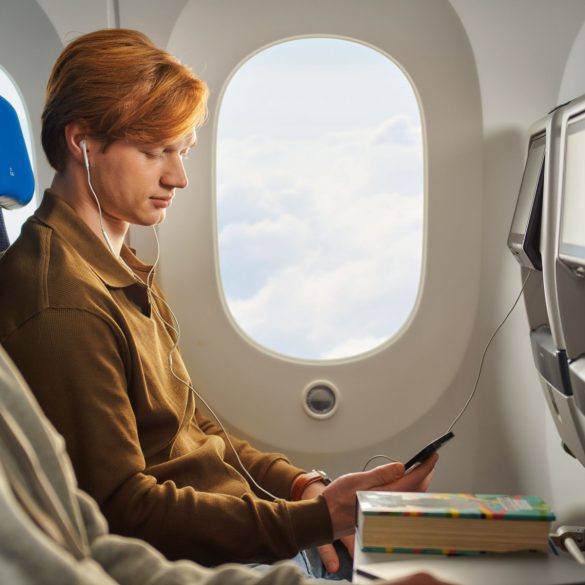
The Dutch airline is playing catch-up with Air France and other carriers that have already started offering free high-speed internet. Passengers will need a Flying Blue account to get online. KLM passengers will soon be able to stream films, browse the web and send more than a basic WhatsApp message without paying for an in-flight internet package. The Dutch airline is bringing SpaceX’s Starlink to its intercontinental flights from mid-2027, with free, unlimited Wi-Fi available across every cabin. That’s good news for anyone who’s spent a long flight staring at a message that refuses to send, although KLM is hardly leading the charge. Its sister airline, Air France, began rolling out free Starlink Wi-Fi in September 2025, and several other international carriers are already using the satellite service. KLM is arriving at a point where fast, free internet is becoming something passengers can reasonably expect from a major airline. There’s also some fine print. The service will be free for members of Flying Blue, the loyalty programme shared by KLM and Air France. Membership doesn’t cost anything, and passengers will be able to register during their flights, but they’ll still have to create an account to use the Wi-Fi. KLM announced the Starlink deal on 8 October, coinciding with its 107th anniversary. The airline says installation will happen in phases, without specifying which aircraft will receive the equipment first or when the rollout will be completed. KLM’s current Wi-Fi isn’t particularly generous KLM already offers internet access on some of its long-haul aircraft, but there’s quite a difference between its current offering and what Starlink promises. Under the airline’s existing Wi-Fi arrangements, Flying Blue members can send and receive text messages through services such as WhatsApp and Messenger without paying. Photos, voice notes and videos aren’t included. If you want to browse websites, check social media or stream something, you’ll need to buy an internet pass. KLM offers one-hour and full-flight passes on equipped intercontinental aircraft. Pricing varies, and not every aircraft has onboard connectivity. Starlink is supposed to remove those restrictions. KLM says passengers will have unlimited access for activities including streaming films and television programmes, listening to music and playing online games. It’ll be available to economy passengers as well as those travelling in premium cabins. The technology behind it is familiar by now. Starlink uses thousands of satellites in low Earth orbit rather than relying on satellites positioned much farther away. The shorter distance helps reduce latency, which is particularly useful for activities where delays are noticeable, such as online gaming and video calls. Of course, the speeds passengers actually experience will depend on the aircraft’s installation, network capacity and how many people are connected. KLM hasn’t published any speed guarantees, so its claims of ultra-fast internet will have to be tested once the service is operational. Airlines are running out of excuses for charging passengers for Wi-Fi Starlink has been gaining ground in commercial aviation, with airlines increasingly willing to make connectivity part of the ticket rather than sell it as an extra. Qatar Airways and United Airlines are among the carriers adopting the technology, while Air France has been installing it across its fleet since 2025. Air France’s system also requires Flying Blue membership, so KLM is following an approach already established within the airline group. Emirates is another airline making the switch. By May 2026, Starlink was already active on 28 of its aircraft, while the airline had also restored 96% of its global route network following earlier disruptions. Emirates serves Johannesburg, Cape Town and Durban, giving South Africans another opportunity to experience Starlink-powered Wi-Fi on international flights. KLM also has some ground to make up within its own operation. It began offering free, unlimited Wi-Fi on most of its European fleet earlier this year. The new Starlink agreement extends free connectivity to intercontinental flights, where the airline currently charges passengers for anything beyond basic messaging. As more airlines remove Wi-Fi charges, it’s becoming harder to justify charging passengers separately for something they already use throughout their day. There’s also a commercial incentive for airlines to offer it free. Requiring passengers to register for a loyalty programme gives them another way to build a direct relationship with customers, even those who fly only occasionally. Whether people want to remain connected for an entire long-haul flight is another question. There’s something quite appealing about being unreachable for several hours. But paying extra for the privilege of checking an email or sending a photo feels increasingly outdated. The rollout begins in 2027, but not every flight will have it...
