
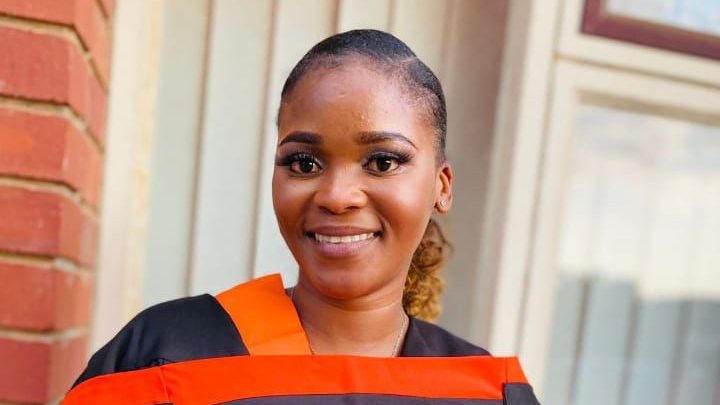
When Nozipho Pretty Bhila woke up one morning to find her old laptop had been hit by a stray bullet overnight, she did what many South African women do when circumstances spiral: she kept going. The laptop still worked, barely, but she needed more than barely. What she got was an ASUS ExpertBook, and with it, a clearer path forward as a content creator, data science student, and single mother in Mpumalanga.

That story anchors ASUS’s latest initiative focused on female empowerment through technology in South Africa, and it’s a good one. Nozipho is a real person with a real journey, and the device made a real difference. The honest reading, though, is that the story also does a lot of work for ASUS that the broader initiative doesn’t yet do on its own.
The context matters here. South Africa’s gender employment gap is persistent and well-documented. Women’s unemployment sat at 35.9% in Q2 2025, almost five percentage points above the rate for men, and only 54.9% of women participated in the labour force at all, against 65.5% of men. Women remain concentrated in lower-skilled roles, and those who do find work often carry caregiving responsibilities that men in equivalent roles don’t. These are structural problems, and no single hardware brand is going to solve them. ASUS isn’t claiming otherwise, to be fair. What they are doing is using the language of transformation in a way that sits uncomfortably against the scale of what’s actually described.
The ExpertBook range itself is a solid business machine. The Ultra variant, launched locally earlier this year, weighs under a kilogram, runs Intel Core Ultra processors with dedicated AI processing, and is built to MIL-STD-810H military durability standards. It’s a genuinely good product for professionals who need a portable, capable machine. The ExpertBook Nozipho received is described as faster and lighter than her previous device, with enough processing power to move her editing work off her phone and onto a proper screen. For someone building a content career while studying data science and raising a child, that’s not a small upgrade.
ASUS isn’t alone in this kind of positioning. Huawei South Africa has trained over 300 women through its Women in Tech programme, combining technical skills in 5G, AI and cloud with leadership development. HP has run similar empowerment campaigns across Africa. The pattern across all of them is the same: a real person’s story, a real product, and a genuine but bounded intervention attached to a marketing objective. None of these brands has reworked its pricing, financing, or distribution model specifically to address women’s access to devices at scale. That’s the gap between what the campaigns claim and what they deliver.
Werner Joubert, Commercial SYS Business Director at ASUS South Africa and SADC, frames it this way: “Digital transformation is only as valuable as it is inclusive and impactful.” The challenge is that inclusive digital transformation requires addressing affordability, connectivity, and caregiving infrastructure simultaneously. A gifted laptop moves one person forward. It doesn’t move the 35.9%.
None of this should diminish what happened in Nozipho’s case. She’s using the device to build projects, apply for jobs, and grow an audience across TikTok, Instagram, Facebook and YouTube. Her goals are concrete and her trajectory is upward. The ExpertBook is doing what ASUS says it will do: enabling her to work faster, move more freely, and take her career seriously. That’s worth saying plainly.
What’s also worth saying is that the ambition in ASUS’s positioning outpaces the scope of what a device campaign can deliver. South African women don’t primarily need better laptops. They need lower unemployment, better childcare infrastructure, more equitable access to education, and devices they can afford without waiting to be gifted one. When those conditions are met, a capable, lightweight business laptop becomes the tool it should be rather than the symbol this campaign needs it to be.
Nozipho’s situation improved because she got a capable machine at the right moment. For her, that was enough. For the 35.9%, it’s a different conversation entirely.