
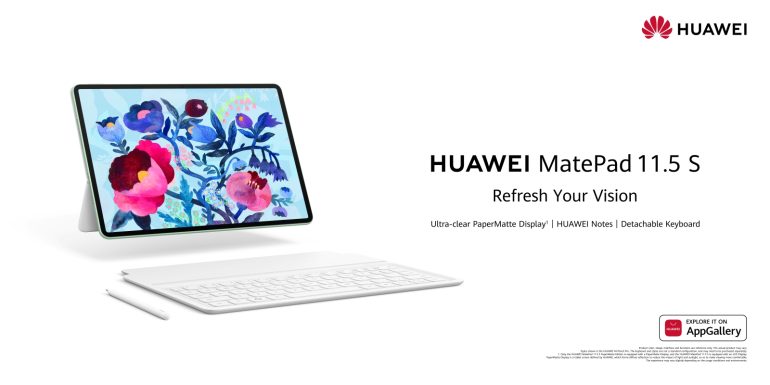
Huawei unveiled the MatePad 11.5S 2026 last night in Dubai, alongside the Mate X7 foldable and a lineup that felt strategically familiar. But while the foldable grabbed headlines, the tablet refresh is worth a closer look, particularly if you’re already eyeing the previous MatePad 11.5S that’s still available in South Africa. The 2026 model is iterative, sure, but it’s iterative in the way that suggests Huawei’s actually listening to how people use these things.
Whether it’ll land locally remains an open question. Huawei hasn’t confirmed South African availability yet, which isn’t unusual for devices announced at regional events. But the spec sheet tells a story about refinement over reinvention, and that’s often more useful than flashy feature drops.
More RAM, more storage, smarter choices
The most obvious upgrade is memory. The 2026 model ships with 12GB of RAM across the board, up from the 8GB in last year’s device. That’s not just spec-sheet padding. Tablets increasingly sit in that productivity-adjacent space where you’re running multiple apps, stacking floating windows, and generally expecting your device to keep pace. The extra 4GB matters more here than it would on a phone.
Storage options have also expanded. You can now spec the 2026 model with 256GB or 512GB, while the original topped out at 256GB. Not groundbreaking, but sensible if you’re treating this as a laptop substitute and need room for files, apps, and the inevitable bloat that comes with actual use.
The screen got (slightly) better at being a screen
Huawei’s sticking with its 11.5-inch, 2.8K PaperMatte display, which was already one of the better anti-glare implementations in the tablet space. The tech’s fundamentally unchanged: nano-level etching, low reflectivity, the same 144Hz adaptive refresh rate that made the original feel genuinely smooth.
What’s new is the claim of a 50% reduction in surface sparkle, which addresses one of the subtle annoyances of matte displays. That shimmery effect you sometimes see under certain lighting? Less of it, apparently. The brightness stays at 500 nits, same as before, so don’t expect any miracles in direct sunlight. But the PaperMatte tech already handled outdoor readability better than most, so this feels like polish rather than a fix.
Fast charging, finally
Here’s where things get interesting. The 2026 model supports 40W fast charging, a significant bump from the 22.5W on the original. That’s the difference between topping up during a meeting break and needing to leave it plugged in through lunch. The battery capacity stays at 8,800mAh, which was already solid, but faster charging makes that capacity more usable in practice.
Huawei’s also keeping the same dual-cell battery design that lets them fit a big battery into a 6.1mm-thick body (marginally thinner than the 6.2mm of the original). At 515g, it’s also 5g heavier than last year’s 510g, which you won’t notice unless you’re weighing it on a scale.
New colours, same aesthetic
The 2026 version comes in Green and Space Gray, replacing the Space Grey, Silver Frost, and Violet palette from before. The all-metal unibody design remains, which is good because it was one of the more premium-feeling builds in this price bracket. Huawei’s design language here is consistent: clean, unfussy, more about materials than gimmicks.
Software’s still the wildcard
Both models run HarmonyOS, with the 2026 version shipping on HarmonyOS 4.3 versus the original’s HarmonyOS 4.2. The features Huawei keeps pushing, like the upgraded HUAWEI Notes with AI equation recognition and Note Replay, remain genuinely useful for anyone treating this as a study or work device. GoPaint’s brush selection and SuperHub’s cross-device file sharing are both solid implementations of ideas that sound better on paper than they work in practice, except here they actually work.
The ecosystem play matters more than it used to. If you’re already using Huawei phones, PCs, or wearables, the Super Device connectivity and NearLink accessories make the tablet more valuable. If you’re not, you’re buying into AppGallery and working around Google services, which is fine for some workflows and limiting for others. That calculation hasn’t changed with the 2026 model.
What didn’t change (and probably should have)
The cameras are identical: 13MP rear, 8MP front, same as the original. Tablet cameras are rarely good and even more rarely important, so this isn’t a dealbreaker, but it would’ve been nice to see at least the front camera get a bump for video calls.
The M-Pencil Pro and Smart Magnetic Keyboard appear to be separate purchases, which is standard but annoying given how central they are to Huawei’s productivity pitch. The tablet’s clearly designed to work with them, so bundling options would make sense.
Incremental, but in the right direction
The MatePad 11.5S 2026 isn’t chasing headlines. It’s taking what worked about the original and smoothing out the edges. More RAM for better multitasking, faster charging for actual usability, slightly refined display tech for less visual noise. These aren’t transformative changes, but they’re practical ones, which matters more for a device people actually use daily.
If you’re in South Africa and can get your hands on the original MatePad 11.5S at a discount, that’s still a solid buy. If the 2026 model does make it here at a reasonable price, the upgrades justify themselves mainly through that extra RAM and faster charging, assuming you’re planning to keep the device for a few years.