
African fintech trust has become the condition investors say they’re attaching to capital after two years of correction and selective recovery, and the funding data makes a reasonable case that something structural has shifted. African startup funding fell by nearly a quarter in 2024 before rebounding to $1.64 billion in 2025, up almost 50%, but with fewer deals and a marked shift toward debt and asset-backed facilities. Africa was the only region globally where private capital deal volumes grew during that period. Capital returned, but it came back asking different questions.
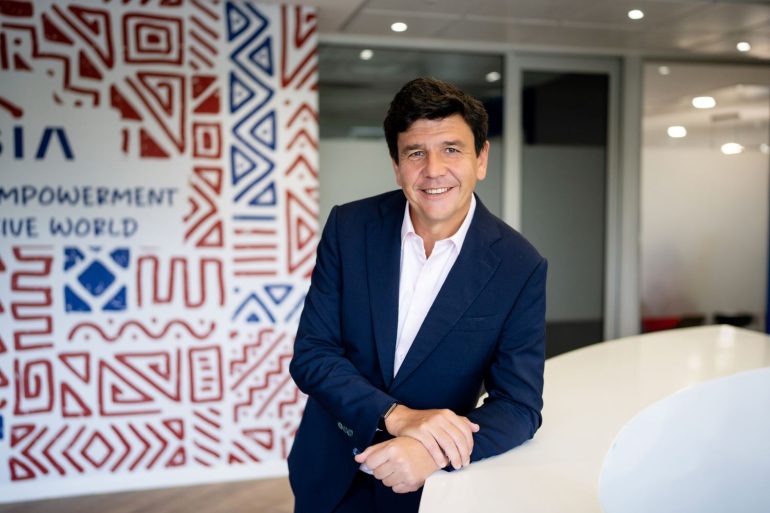
Salvador Anglada, CEO of Optasia, is among those now providing the answers. His argument, that trust is the foundational infrastructure of any functional financial system, that AI credit models have excluded thin-file populations by misreading absence of data as presence of risk, and that specialist infrastructure providers partnering with telcos and banks will outperform solo platforms, is well constructed and draws on real evidence. The Reserve Bank’s finding that nearly half of banked South African adults withdraw everything as soon as it clears, with a measurable share doing so because they don’t trust the institution holding their money, is a precise description of a system that hasn’t earned confidence. In a market where around 70% of the Middle East and Africa workforce is within one missed payday of hardship, per the ADP Research People at Work 2025 report, that distrust isn’t an attitude problem. It’s calibrated to experience.
What the argument doesn’t disclose is that Optasia listed on the JSE in November 2025, raising R6.5 billion in an IPO priced at the top of its range and oversubscribed several times over. FirstRand holds a 20.1% strategic stake. RMB structured two consecutive debt facilities for the company, the most recent at $330 million, with the combined total at $505 million. Optasia’s platform processes over 32 million loans daily across 38 countries, partnering with mobile network operators including MTN and Vodacom to extend micro-loans and airtime credit. The partnership model Anglada advocates, where telcos and banks supply distribution and specialists handle the data science and underwriting, is Optasia’s business model described at a level of abstraction that removes the company name. That doesn’t disqualify the argument. It does explain why it’s being made.
The harder question the op-ed sidesteps is whether the credit models being rehabilitated here serve users well, or merely reach more of them. A decade of mobile lending expansion across East and West Africa produced enough cases of accurate affordability assessments paired with pricing that created debt spirals to suggest those aren’t the same outcome. Kenya’s mobile lending industry showed that behavioural scoring works at scale. It also showed that scale and responsibility can move independently. For a platform processing tens of millions of daily transactions, the distinction between “users who can technically repay” and “users for whom the credit is net beneficial” is where the trust argument either holds or it doesn’t. Anglada’s op-ed treats these as aligned. They can be, and often aren’t.
South Africa’s regulatory context complicates the broader narrative in ways that matter locally. The National Credit Act requires formal affordability assessments, which means behavioural data models can’t simply route around the consumer protection architecture the way they might elsewhere. South Africa’s fintech ecosystem is also more developed than the underbanked population framing typically implies, and the shift toward ecosystem-scale thinking rather than individual platform dominance is already shaping how capital flows here. The SARB’s trust deficit is real and documented. It exists alongside a market sophisticated enough to have oversubscribed Optasia’s JSE debut several times over.
The funding correction did produce something genuine: it ended the era where user acquisition projections were sufficient for capital. Operators who spent those years building systems that actually hold up under load, that handle disputed transactions, that don’t fail when networks drop, have an advantage that wasn’t being priced correctly before. That’s what the debt-heavy, model-proven capital of 2025 is selecting for. The trust argument is a reasonable description of what happened. As a prescription for what comes next, it’s worth knowing that its loudest advocates are also the companies best positioned to be the infrastructure layer.