
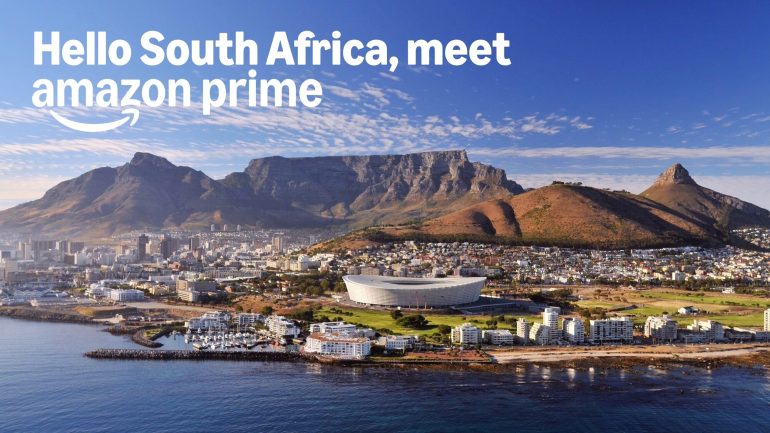
Amazon Prime South Africa went live on 3 June, priced at R399 a year or R59 a month. The terms on Amazon.co.za/prime are specific: free same-day delivery on orders placed before midday, in Cape Town, Johannesburg and Pretoria only, with no minimum spend. Everything else, the unlimited next-day delivery, the Prime Video catalogue, the Amazon Luna game streaming, sits on top of that one core promise.
The only way to judge a promise like that is to test it. I placed an order just after 2pm on 16 June, a public holiday, and it arrived free of charge a little over three hours later. That’s two hours past Amazon’s own stated cutoff, on a day when courier networks typically run lighter shifts rather than full capacity. One delivery doesn’t prove a system. It does suggest the company built itself some room before publishing the terms, rather than printing a number it then has to scramble to meet.
That matters more here in South Africa than it might in many other places, because locally shoppers have learned to read delivery promises with one eye closed. Takealot’s own same-day delivery service has, at times, been restricted to four named regions, Cape Town, KwaZulu-Natal, Johannesburg and Pretoria, a restriction that doesn’t always surface clearly until a customer is mid-checkout on an order placed from just outside the line. A screen confirming eligibility followed by a delivery fee at the final invoice is a familiar enough sequence in this market that beating a stated cutoff, rather than merely meeting it, reads as the more interesting outcome.
Prime isn’t actually walking into the fight that most people assume. South Africa’s on-demand delivery market is already settled in groceries, where Checkers Sixty60 has built a lead Shoprite itself puts above 80%, off the back of a structural advantage Amazon can’t replicate locally: roughly 80% of South Africans live within five kilometres of a Shoprite or Checkers store, so fulfilment happens from existing stock rather than a warehouse network. Pick n Pay’s grocery tie-up with Takealot’s Mr D app improves that experience without touching the underlying density problem, and the restaurant delivery contest between Mr D and Uber Eats, last split roughly 30/25 in Mr D’s favour (though that figure is a few years old, and Uber has pushed hard into delivery globally since), is a separate market again. Prime doesn’t compete in either.
The membership it actually competes with is TakealotMORE, Takealot’s own delivery subscription, launched in May 2024 in direct response to Amazon’s South African arrival. TakealotMORE’s standard tier costs R39 a month, its premium tier R99, working out to R468 and R1,188 a year respectively. Both bundle free delivery across Takealot’s marketplace and selected Mr D orders. Prime’s R399 annual fee undercuts both, while adding a media and gaming layer TakealotMORE doesn’t attempt to match. What Prime gives up in exchange is reach: TakealotMORE plugs straight into restaurant and grocery delivery through Mr D, and into more than three dozen in-store pickup points inside Pick n Pay supermarkets, neither of which Amazon offers in South Africa yet. We’ve has tracked Amazon’s local delivery build-out before, and the pattern holds: Amazon’s value case in this market still rests on the price and reliability of its own network, not on the breadth of services wrapped around it.
The number to keep an eye on now isn’t how many members they get. Prime Day runs from 23 to 29 June, a first for South Africa, and festive season order volumes will follow soon after. A single holiday delivery beating its own cutoff is impressive. Whether that midday window and the three-city limit survive thousands of orders a day, rather than one, is what will actually decide whether this membership is worth the cost.