
The easiest way to measure an airline’s confidence in a market isn’t by what its executives say. It’s by how many seats it’s willing to put into the sky.
Airlines don’t add daily frequencies because they’re optimistic. They do it because they believe demand will justify the cost. Every additional aircraft rotation ties up crews, airport slots and millions of dollars’ worth of equipment that could be deployed elsewhere. That’s what makes Emirates‘ decision to launch a third daily Cape Town service more significant than simply adding another option for travellers. It’s a vote of confidence in South Africa’s role within one of the world’s largest long-haul aviation networks.
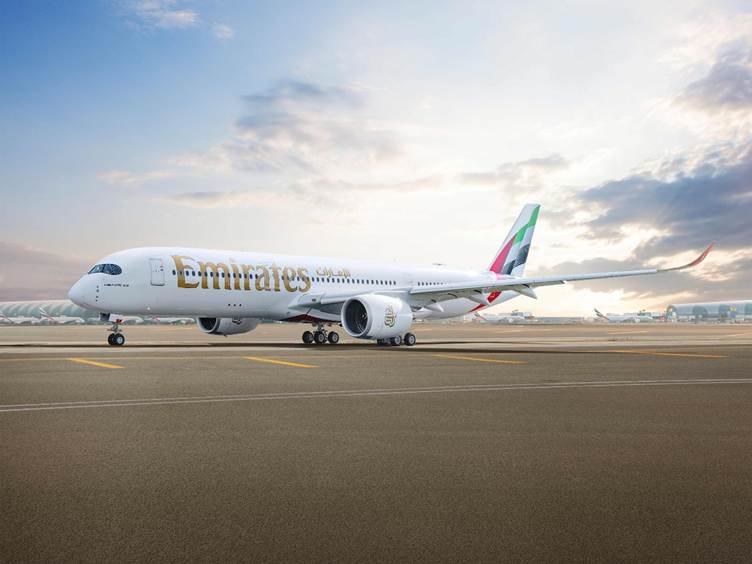
The new Dubai-Cape Town service also marks the South African debut of the airline’s Airbus A350, bringing Emirates’ latest cabin design to the local market and expanding access to its increasingly popular Premium Economy offering. At the same time, the carrier has reinstated its fourth daily Johannesburg flight, giving it 56 weekly services between South Africa and Dubai across Johannesburg, Cape Town and Durban.
It’s easy to read announcements like this as another story about aircraft interiors, upgraded entertainment systems and more comfortable seats. Those details matter to passengers, but they’re not the most interesting part of the announcement. What’s more revealing is what Emirates appears to believe about South Africa’s future.
International aviation remains one of the clearest indicators of economic confidence. Airlines constantly adjust capacity according to demand, geopolitical risk and profitability. Routes that don’t perform are reduced. Aircraft are reassigned. Frequencies disappear. After recently restoring 96% of its global network and shifting its focus from recovery to growth, Emirates is now adding capacity in markets where it believes demand will continue to strengthen. That makes South Africa’s latest expansion particularly revealing. As Reframed reported when the airline restored almost its entire pre-pandemic network, rebuilding routes was only the first step. Expanding them is a much stronger signal of long-term confidence.
Cape Town has become an increasingly important destination in that equation. Tourism has rebounded strongly since the pandemic, while the city continues attracting remote workers, conference delegates and international leisure travellers looking beyond Europe’s traditional holiday destinations. Emirates’ additional frequency gives those passengers more flexibility while making onward connections through Dubai more practical, particularly to destinations across Asia and Australasia.
The airline is also reinforcing that strategy beyond simply adding flights. Earlier this year, Emirates and Wesgro signed an agreement aimed at attracting more visitors from markets including the Gulf, India and the Far East. Additional capacity only creates value if those seats can be filled, making route expansion and destination marketing two sides of the same strategy rather than separate initiatives.
There’s another dimension that’s easy to overlook because passengers rarely see it. Every additional widebody aircraft also carries cargo.
For South Africa, that’s arguably just as important as another flight for holidaymakers. Emirates says its expanded schedule increases capacity for exports including fresh fruit, vegetables, seafood, dairy products and cut flowers, giving local producers faster access to overseas markets through Dubai’s logistics network. That turns what looks like a tourism story into one about trade infrastructure.
The arrival of the Airbus A350 itself is notable, although perhaps not for the reasons airlines typically highlight. Yes, passengers gain redesigned cabins, newer entertainment systems and wider availability of Premium Economy. Those improvements are becoming expected rather than exceptional. The more interesting shift is how airlines increasingly use their newest aircraft to compete on efficiency as much as passenger experience. New-generation aircraft consume less fuel, offer greater operational flexibility and allow airlines to deploy capacity more precisely on routes where demand is growing without the operating costs associated with larger aircraft.
That matters because long-haul aviation is becoming a balancing act between profitability and resilience. Airlines are looking for aircraft that can adapt to changing demand while keeping operating costs under control. The A350 fits neatly into that strategy.
None of this guarantees uninterrupted growth. Aviation remains vulnerable to economic slowdowns, geopolitical instability and currency fluctuations, all of which can quickly reshape international travel patterns. But airlines tend to make network decisions with a longer horizon than the next quarter.
Adding a third daily Cape Town service and restoring Johannesburg’s fourth daily flight suggests Emirates believes South Africa remains worth that long-term investment. In an industry where confidence is measured in aircraft movements rather than marketing slogans, that’s probably the most meaningful message contained in the announcement.