

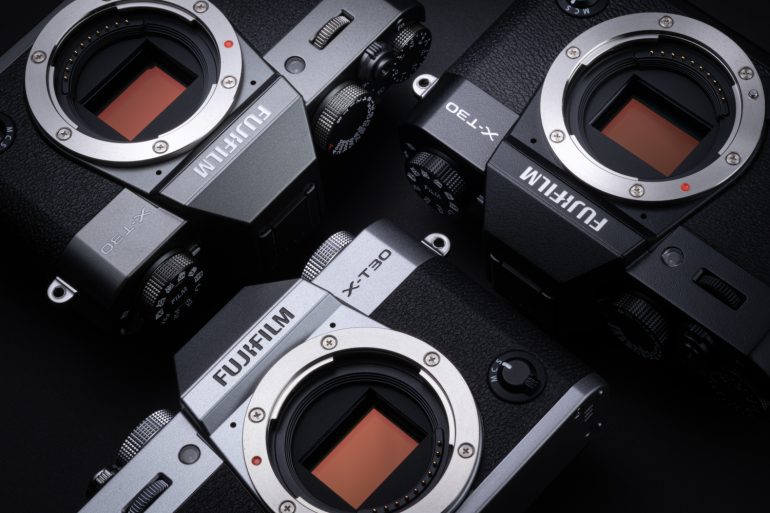
There’s a kind of honesty to the Fujifilm X-T30 III. It isn’t pretending to reinvent photography, or to turn every user into an auteur. Instead, it brings Fujifilm’s high-end engineering to a camera that’s designed to feel grounded — compact, familiar, and within reach.

Arriving in South Africa on 6 December 2025, the X-T30 III is the follow-up to 2021’s X-T30 II, and it quietly doubles the processing power of that model. Inside its 378g body sits the same 26.1MP X-Trans CMOS 4 sensor and X-Processor 5 found in the flagship X-T5. The combination gives it faster autofocus, cleaner image rendering, and the kind of responsiveness that makes a photographer feel more capable — not more automated.
The new Film Simulation dial is the detail most likely to win people over. Sitting on the top-left shoulder, it offers twenty colour profiles that echo Fujifilm’s analogue past — from the faithful realism of REALA ACE to the soft nostalgia of NOSTALGIC Neg. It’s a small but deliberate piece of design, turning digital choice into something tactile again — the same design philosophy we saw in the GFX100RF, where Fujifilm doubled down on the idea that creative control should feel intentional, not automated
For video users, the X-T30 III now shoots 6.2K footage at 30P in 10-bit 4:2:2, with 4K/60P and high-speed 1080/240P modes also available. A built-in stabilisation system keeps handheld footage steady, and a vertical Short Movie Mode caters to the rhythm of social platforms without sacrificing quality.
Fujifilm is also pairing the release with a new XC13–33mm F3.5–6.3 OIS lens — a lightweight zoom equivalent to 20–50mm in full-frame terms. Weighing just 125g, it fits the X-T30 III like a glove, turning the setup into something genuinely portable.
Pricing starts at R19 560 for the body, or R23 000 with the lens kit. Those numbers place it squarely in a space that used to barely exist: serious performance for creators who don’t want (or can’t justify) pro-level pricing. It’s the middle ground that the photographic industry often overlooks — where most working shooters, content creators and design-minded hobbyists actually live.
What Fujifilm does better than most is resist the urge to flatten everything into software. The X-T30 III keeps its dials, switches and small mechanical hesitations — reminders that good tools can slow you down in the right ways. In a world of invisible upgrades, this one feels solidly, reassuringly visible.