

Generative AI in South Africa is being hailed as the next frontier in business innovation, but nobody’s asking who actually knows how to use it.
According to new research by World Wide Worx, conducted in collaboration with Dell Technologies and Intel, 62% of South African enterprises have already deployed Generative AI tools in some form, and another 24% plan to do so within the next year. It sounds like a revolution. Except it is not clear who, if anyone, is steering it.
This is not a story about cautious experimentation or careful pilots. It is a story about a corporate sector throwing itself into the deep end of algorithmic productivity without checking if anyone knows how to swim.
The problem is not adoption. It is depth. Only 34% of the businesses surveyed have appointed dedicated teams or individuals to manage their Generative AI efforts. That means the majority are integrating powerful, business‑altering tools without a clear understanding of how they work, what they need, or what can go wrong.
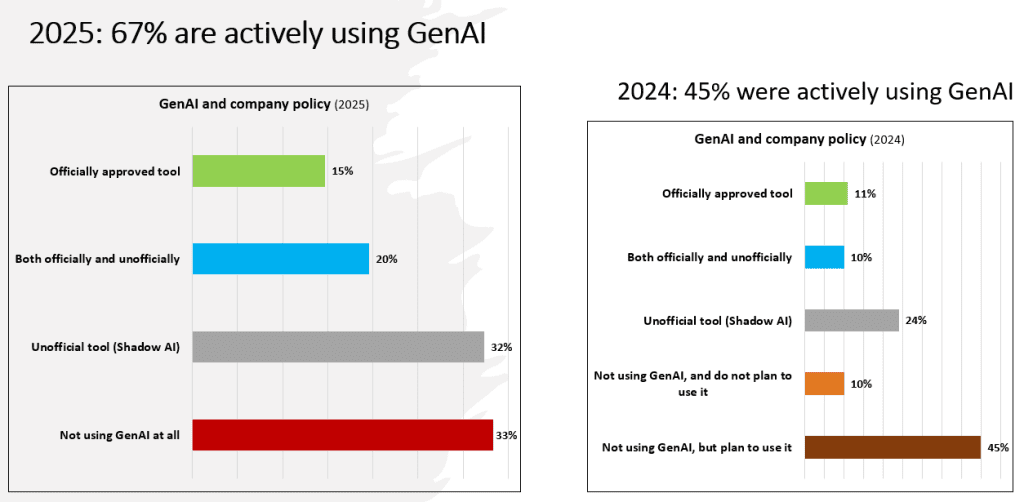
This data comes from the report SA Business Embraces Gen AI, a collaborative study between research firm World Wide Worx and tech giants Dell Technologies and Intel. The study surveyed more than 100 large South African enterprises and offers one of the clearest snapshots yet of how Generative AI is being used locally.
And what it reveals is sobering. While executives and decision‑makers are enthusiastic about AI’s potential, the structures to guide its responsible use are missing. The excitement is understandable. From customer‑service automation to internal communications and content generation, Gen AI promises major efficiency gains. But if those benefits are not backed by robust technical oversight, South African businesses could be scaling chaos, not solutions.
The confidence gap is striking. Nearly 70% of businesses already using Gen AI claim to be seeing tangible benefits. But few explain how they are measuring success, or what safeguards are in place to validate the output of the tools they are deploying.
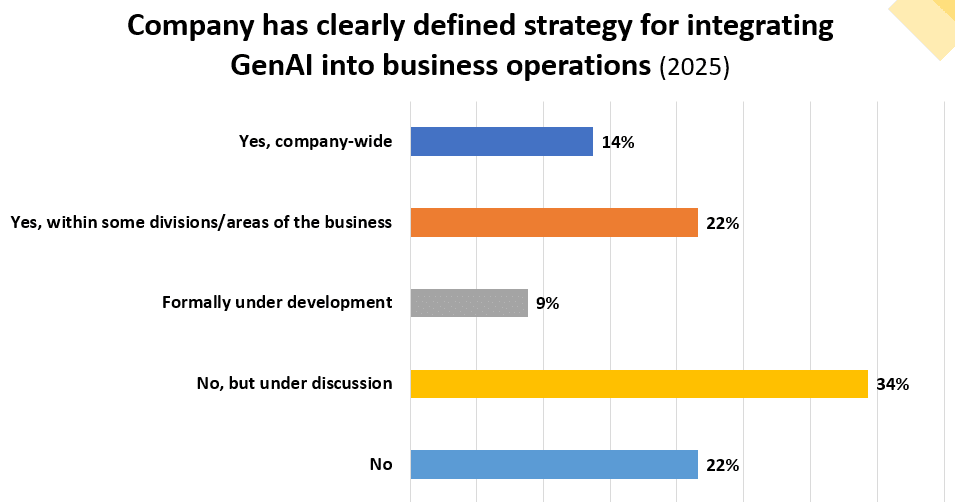
There is no dashboard to flag when an AI tool gets something wrong. There is no audit trail when a chatbot hallucinated a conversation or rewrote a contract clause. Without a layer of technical scrutiny or domain knowledge, companies risk embedding flawed logic into processes that were never designed to be run by machines.
This is not just a South African problem, but it is compounded by the country’s structural tech challenges. Most local companies are consumers of AI tools, not creators. There is limited in‑house capacity to fine‑tune models, manage datasets or build localised AI systems. Generative AI in South Africa is being adopted, but not yet understood.
Then there is the issue of trust. Around 18% of the businesses surveyed said they were avoiding Generative AI because of concerns about accuracy, data privacy and compliance. These concerns are not overblown. In a country still navigating how to align enterprise systems with data protection laws like POPIA, using Gen AI responsibly is more than just a technical challenge. It is a legal and ethical one too.
The study also reveals that adoption is not being led by IT departments. In most cases, it is being driven by senior leadership and C‑suite executives. That is a red flag. It shows that strategic decisions about how and where to implement Gen AI are being made by people with enthusiasm, but often without technical expertise or policy support.
There is a path forward, but it requires more than excitement. South Africa needs to develop its own Gen AI fluency. That means training people, building internal capacity and treating these tools as infrastructure, not magic. The companies that succeed with Gen AI will not be the ones that implement it first. They will be the ones that understand what it does, what it cannot do and where it needs human intervention.
Generative AI in South Africa is not just a technology trend. It is a test of how the country approaches innovation. Without the right structures in place, what looks like progress may turn out to be automation without accountability. And in that scenario, everyone loses.
🔗 Related: Cloud migration is the first real step to unlocking AI’s business value