

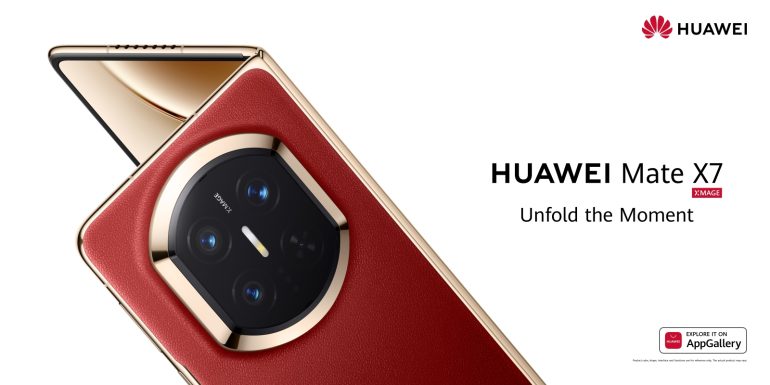
Huawei’s held another launch event in Dubai, and this time it’s brought the Mate X7 foldable, a pair of open-ear earbuds that want to be jewellery, a luxury smartwatch aimed squarely at people with diving ambitions (or at least deep pockets), and a tablet aimed at young creators. It’s a product spread that leans heavily into premium aesthetics and ecosystem building, though calling any of this truly surprising would be a stretch.
The centrepiece is the Mate X7, a foldable phone that continues Huawei’s commitment to making book-style foldables thinner and harder to break. This one draws design inspiration from centuries-old Chinese silk weaving, specifically the “light-woven brocade” tradition, which translates into a nano-fibre finish Huawei’s calling Brocade White. There are also vegan leather options in Nebula Red and Black if you’d rather skip the textile references.
What Huawei’s really selling here is durability. The Mate X7 uses something called Ultra Durable Crystal Armor Kunlun Glass on its outer display, alongside Advanced Precision Hinges and a three-layer composite structure that’s meant to survive the kinds of drops and flexes foldables don’t typically enjoy. There’s also a 3,550mm² vapour chamber and graphene heat dissipation system paired with a 5,600mAh battery, all of which suggests Huawei’s trying to solve the twin problems foldables still face: overheating and dying halfway through the day.
The camera system gets an upgrade too, with a second-generation True-to-Colour Camera that Huawei claims delivers 43% better colour accuracy than its predecessor. Ultra Lighting HDR Video apparently hits 17.5 EV of dynamic range, which is an absurd number if it holds up in real-world shooting. Foldables have historically lagged behind flagship slabs when it comes to imaging, so if the Mate X7’s camera genuinely matches Huawei’s Pura or Mate series phones, that’s worth noting.
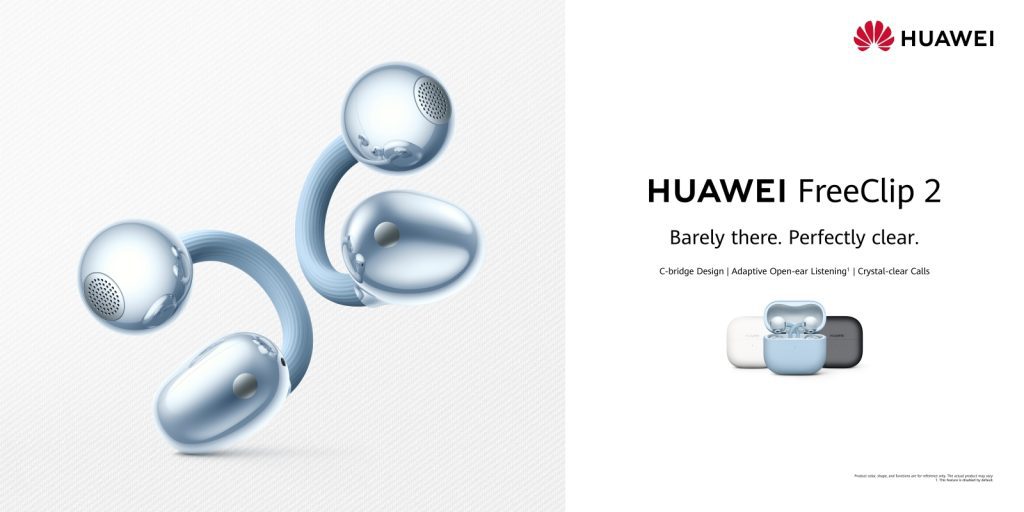
Then there’s the FreeClip 2, which weighs just 5.1g per earbud and looks like Huawei’s trying to split the difference between audio gear and earrings. The original FreeClip already committed to the open-ear clip-on design, and this sequel doubles down with Blue, White, and Black colourways that feel more accessory than gadget. Huawei’s packed in dual-driver units and an NPU AI processor it claims is 10 times faster than the first-gen model, which should theoretically improve call quality and audio processing. There’s also IP57 dust and water resistance, which is rare for this form factor, and up to 38 hours of total battery life with the charging case.
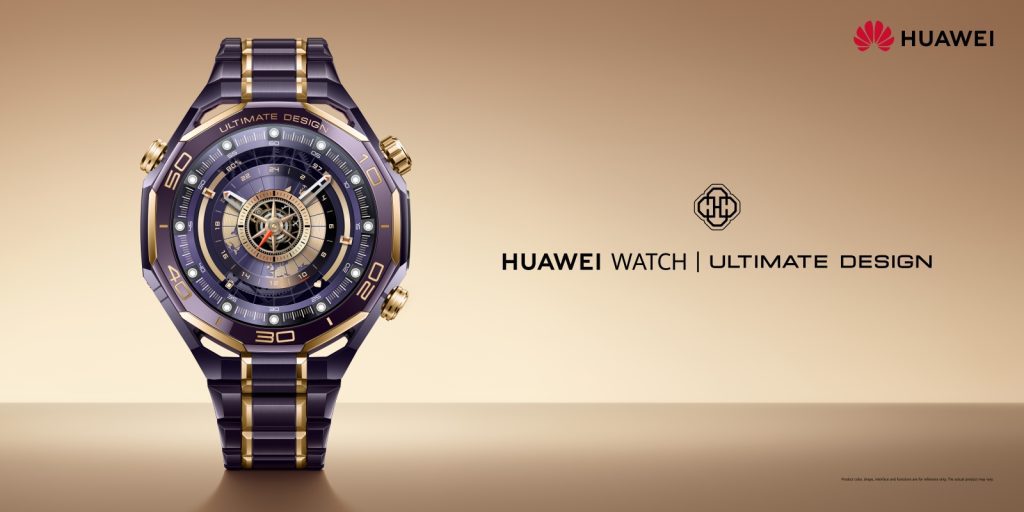
The WATCH ULTIMATE DESIGN gets a new Royal Gold Edition, featuring what Huawei’s billing as an industry-first rare-earth purple ceramic bezel paired with 18K gold, a zirconium-based liquid metal case, and a purple-gold titanium alloy strap. It’s not subtle. The watch includes features for deep-sea divers, like an upgraded waterproof system and sonar-based underwater communication, alongside AI noise cancellation for calls and Huawei’s Sunflower Positioning System for GPS accuracy. Whether anyone buying a watch this expensive actually plans to dive with it is another question entirely.
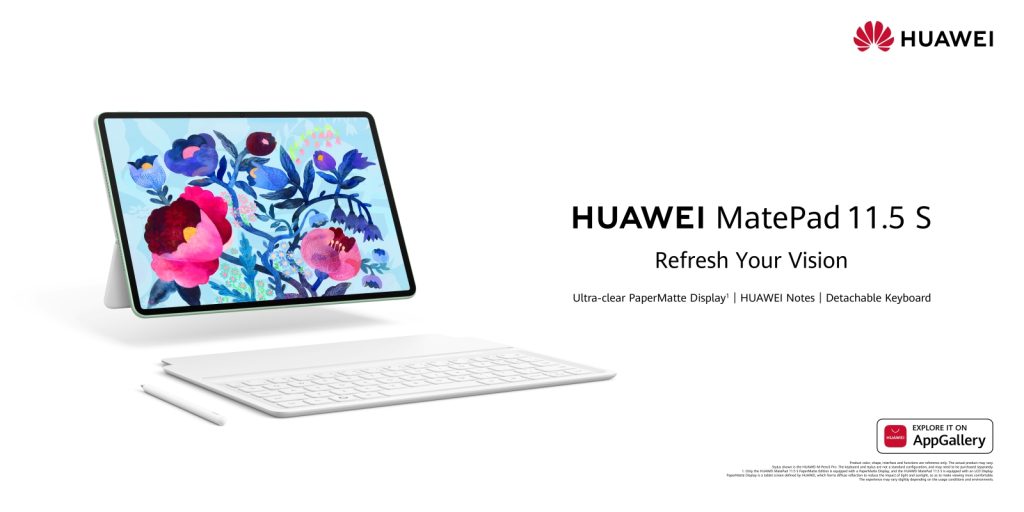
The MatePad 11.5 S rounds out the lineup with a tablet built for creators. The PaperMatte display is the main attraction, offering a matte, paper-like texture that’s easier on the eyes than glossy tablets whilst still managing a 144Hz refresh rate. It ships with Huawei’s M-Pencil Pro stylus and a magnetic keyboard, plus localised content additions like Arabic and African-themed covers, papers, and stickers in the Huawei Notes app. GoPaint gets new animation tools, and Wondershare Filmora now supports shortcut keys for video editing, which should speed up workflows for creators who’ve been managing without them.
Huawei’s framing all of this under the “Now Is Yours” brand messaging, which translates roughly to: we’re building an ecosystem that works well if you’re already deep into Huawei hardware. The devices sync smoothly with each other, from drag-and-drop file sharing to answering calls and messages across phones, tablets, and laptops. It’s a pitch that mirrors what Apple’s been doing for years, and Huawei’s clearly banking on ecosystem stickiness to offset the challenges it still faces in markets where Google services remain the default.
What’s less clear is how much any of this matters outside Huawei’s existing user base. The Mate X7 looks competitive on paper, but foldables remain a niche category with high price tags and durability concerns that haven’t entirely disappeared, even with reinforced hinges and tougher glass. The FreeClip 2 enters a crowded open-ear market where brands like Shokz and Bose have already staked claims, and luxury smartwatches with diving features still feel like solutions hunting for problems. The MatePad 11.5 S is genuinely good for creative work, but tablet adoption in markets like South Africa lags behind phones and laptops, and Huawei’s app ecosystem still requires workarounds for anyone used to Google’s services.
Huawei’s launch events have become reliable markers of where the company’s priorities sit: premium materials, cross-device integration, and features that look impressive in spec sheets. Whether that translates into devices people actually need or want depends largely on how much they’re already invested in what Huawei’s built so far.