
The Huawei Pura 90 series is now official, and its most significant spec is one nobody else in the market currently has: a 200MP RYYB periscope telephoto sensor on the Pura 90 Pro Max, built on a 1/1.28-inch sensor with a 4x optical zoom. The launch happened in Guangzhou on 20 April, covers three devices, and comes without a confirmed global release date.
The three phones are the Pura 90, the Pura 90 Pro, and the Pura 90 Pro Max. Each sits at a different price point and hardware tier, and together they replace the Pura 80 Pro lineup from last year. Notably absent is a direct successor to the Pura 80 Ultra, which was arguably Huawei’s most technically ambitious phone to date. Whether an Ultra arrives separately later is unconfirmed.
The Pro Max and its telephoto
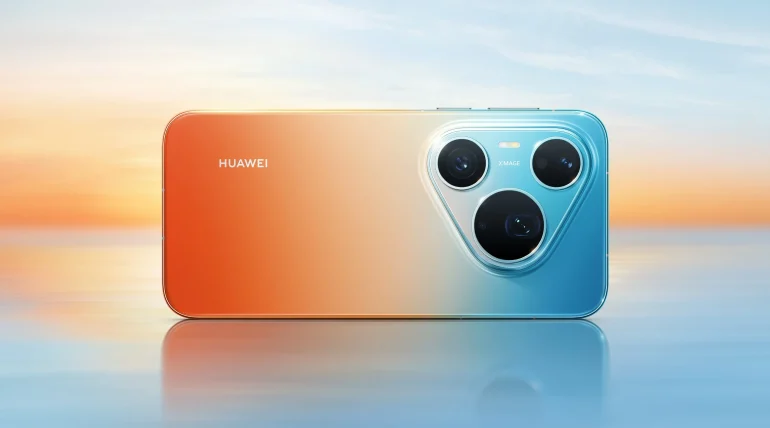
The headlining spec on the Pura 90 Pro Max is the telephoto. A 200MP RYYB (Red-Yellow-Yellow-Blue) sensor at 96mm equivalent, f/2.6 aperture, with CIPA 7.0 image stabilisation rated at 7 stops. Huawei says it supports 200MP RAW capture and near-optical-quality video at 20x zoom. There’s also an optional add-on lens kit that extends reach to roughly 27x, priced separately at CNY 1,899 (approximately R6,400 at current rates).
Where it differs from OPPO’s Find X9 Pro/Ultra and Vivo’s X300 Pro/Ultra is the sensor type. Both of those use 200MP RGB telephoto cameras. Huawei’s is RYYB, a configuration it’s been using since the P30 Pro era that swaps green pixels for yellow ones to capture more light. On paper, that’s a meaningful distinction in low-light telephoto photography.
The main shooter on the Pro Max is a 50MP RYYB sensor with a variable aperture from f/1.4 to f/4.0, OIS, and support for LOFIC HDR. LOFIC is an imaging architecture that handles blown highlights more precisely than conventional HDR processing. Xiaomi’s 17 Ultra also has it on its main sensor, so it’s not unique to Huawei, but the Pura 90 Pro Max is the first Huawei phone to support it. The third lens is a 40MP ultrawide at f/2.2.
The Pro Max ships in Orange Ocean, Sunset Purple, Emerald Lake, Dawn Gold, and Obsidian Black. The gradient finishes are a conscious callback to the Huawei P20 and P30 era, which is either nostalgic or a sign that the brand knows exactly which chapter of its history it wants people to think about.
Pricing starts at CNY 6,499 (roughly R23,000) for the 12GB/256GB variant and tops out at CNY 8,499 (around R30,000) for 16GB/1TB.
The Pro
The Pura 90 Pro shares the same Kirin 9030S chipset and 6,000mAh battery with the Pro Max, along with the same 1/1.28-inch 50MP RYYB main sensor with variable aperture. The telephoto drops to 50MP with a 4x optical zoom at f/2.1, and the ultrawide comes down to 12.5MP. It’s a 6.6-inch LTPO OLED to the Pro Max’s 6.9-inch, but both run FHD+ at 1-120Hz with second-generation Kunlun Glass, IP68/69 ratings, and 100W wired plus 80W wireless charging.
Colours: Pink Guava, Orange Soda, Coconut White, and Mulberry Black. The gradient palette applies here too, though with lighter, more saturated tones than the Pro Max. Pricing starts at CNY 5,499 (approximately R19,400).
The base model worth noticing
The standard Pura 90 doesn’t just sit quietly at the bottom of the range. It brings the largest battery in the lineup: a 6,500mAh cell in a body just 7.0mm thick and 210g. That’s thinner than both Pro models despite having more battery capacity, which is an engineering choice that will matter to anyone who’s used a flagship for more than a day away from a plug. In South Africa specifically, where power reliability is still a daily conversation, that battery story isn’t trivial.
The camera setup is a triple system: a 50MP main at f/1.8, a 50MP periscope telephoto at f/2.2 with 3.7x optical zoom, and a 12.5MP ultrawide. It also gets a 50MP front camera, which is more than either of the Pro models’ 13MP selfie sensors. The chipset here is the Kirin 9010S rather than the 9030S in the Pro range, and wireless charging is 50W rather than 80W. The display is a 6.8-inch LTPO OLED with 2856x1320px resolution, 1-120Hz, and 300Hz touch sampling, covered by Kunlun Glass.
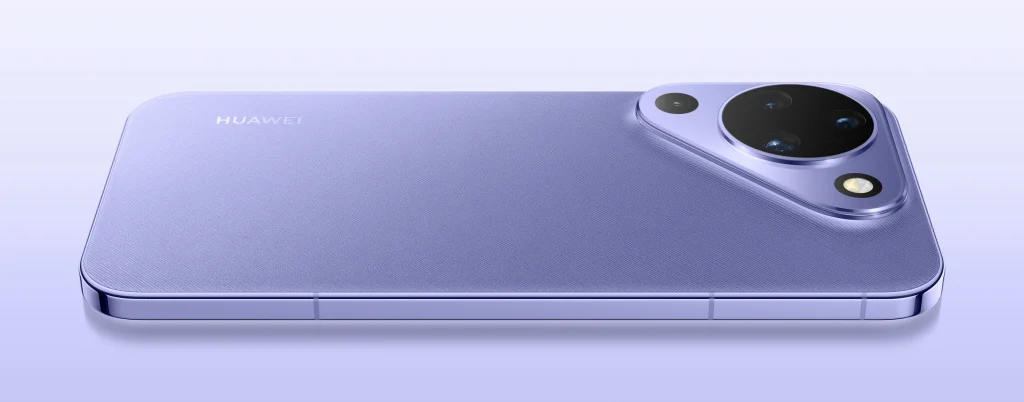
The design departs from its siblings: the camera island is asymmetrical, pairing one large circular lens with smaller surrounding sensors rather than the symmetrical triple layout on the Pros. It’s a different look, and not everyone will prefer it.
Pricing starts at CNY 4,699, which converts to roughly R16,600 at current rates. Available in Snow White, Velvet Black, and Roland Purple.
Software and what it adds
All three phones run HarmonyOS 6.1 with a native agentic AI assistant, AI-driven image editing tools, and an object removal feature. Huawei also baked in a posture recommendation tool that analyses your positioning in frame and suggests adjustments for social media. It’s a genuinely different use of AI in photography rather than just another sharpening algorithm, though how useful it proves in practice depends entirely on whether people are willing to listen to their phone tell them to stand differently.
Huawei says HarmonyOS 6 is now running on over 55 million devices, up 23 million in under six months. That’s a genuine platform play, not just a phone launch. The interface on the Pura 90 series reportedly borrows visual cues from Apple’s Liquid Glass design language, which is either convergence or flattery depending on how charitable you’re feeling.
The availability question
China sales open on 29 April for the Pro models, with the base Pura 90 following before 13 May. That’s where confirmed availability ends. Huawei hasn’t announced a global rollout, and given the US sanctions landscape, certain markets will remain complicated regardless of intent.
South Africa got the Pura 80 Pro and 80 Ultra last year, with pricing that started at R19,999 and ran to R39,999. Whether the Pura 90 series follows the same path will depend on Huawei Mobile SA’s own timeline. It’s reasonable to expect an announcement eventually. It’s not reasonable to expect Google services, which remain absent on all Huawei devices and still represent the most significant practical barrier for the majority of South African smartphone users.
The Pura 90 series is technically the most capable set of phones Huawei has put out in this line. The 200MP RYYB telephoto is a genuine first. The LOFIC main sensor on the Pro Max is a meaningful upgrade. The base model’s battery-to-thinness ratio is better than most. But until there’s a local price and a launch date, the series exists for most people here as a camera spec sheet rather than a purchase decision.