

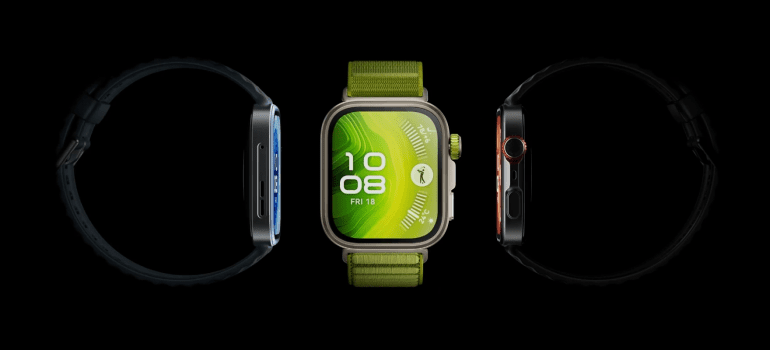
The Huawei TruSense System is not just a smart sensor suite. It is the company’s clearest signal yet that it sees wearables as more than accessories. They are diagnostic tools, health coaches and, potentially, real-time health surveillance platforms.
Positioned as the core framework behind Huawei’s latest generation of wearables, TruSense underpins the Watch 5 and Fit 4 series with an integrated architecture of custom sensors, proprietary algorithms and improved battery management. From sleep cycles to glucose risk, Huawei is betting on a future where health monitoring is ambient, always on and deeply personal.
It is also betting that users will trust it with some of their most sensitive data.
“We believe that data ownership belongs to the user,” said Mr Rico Zhang, President of Smart Wearable and Health Product Line at Huawei Consumer BG, during a closed-door media briefing in Berlin. “Data can be stored locally or on the cloud, but it will not be with the service provider.” Huawei’s global expansion plans rest heavily on this promise. While the company is collecting more data than ever before, it is also giving users greater control over it.
Smarter sensors, smaller batteries, longer life
Every new health sensor added to a smartwatch brings with it an engineering problem: power. But Huawei says it has rethought the way hardware and software communicate. From chip design to algorithm refinement, the company claims it has rebuilt its stack to accommodate new features without sacrificing battery life.
The result, according to Zhang, is a new generation of wearables that not only monitor more health metrics than ever before, but also last longer between charges. “Even with long-cycle monitoring, diversified algorithms and additional sensors, we can still guarantee long battery life,” he said.
The Watch 5 and Fit 4 series are the first consumer devices to showcase this. Huawei says these devices feature a redesigned power system, smaller batteries with higher endurance and a more efficient architecture. Independent testing has yet to confirm the real-world performance, but the claims suggest a strong focus on usability without compromise.
Not all features are available everywhere, and users are starting to notice
Despite the TruSense System’s growing list of capabilities, not every feature is available globally. Health tools such as noninvasive glucose risk detection or ovarian cycle tracking often launch first in China, where Huawei has more established partnerships with medical institutions and quicker regulatory pathways.
During the closed-door media Q&A, questions were raised about regional disparities. Some journalists noted that key features are often missing from global versions of Huawei wearables, even when the hardware is identical. The concern reflects a broader issue for consumers, who feel that geography is determining the capabilities of their devices.
Mr Rico Zhang responded by explaining that these limitations are driven by compliance rather than strategy. “We have to cooperate with the local medical institutions,” he said, “to integrate the technologies locally for local customers.”
That explanation may be reasonable, but it has not silenced user frustration. Across forums and social media, Huawei customers in markets such as South Africa, the Middle East and parts of Europe have expressed concern that they are not receiving the full value of the product they paid for. While there is no evidence of deliberate feature withholding, the reality is that access to Huawei’s most advanced health tracking depends heavily on geography.
Zhang reiterated that Huawei’s long-term vision is for synchronised global rollouts. For now, however, the TruSense experience remains uneven. Even in a connected world, regulatory borders continue to shape what your wearable can actually do.
How accurate is noninvasive glucose monitoring?
Perhaps the most attention-grabbing capability in Huawei’s wearables is noninvasive glucose risk detection. The feature, already embedded in the Watch 4 and improved in the Watch 5, uses optical sensors and AI to identify elevated blood sugar risk without drawing blood.
Huawei is clear that this is not yet a medical-grade diagnostic tool. “The classic invasive method can generate very precise results. Noninvasive methods cannot yet reach that level,” Zhang said. “But they offer earlier awareness.”
The company hopes that by flagging early-stage risks, it can nudge users to seek formal diagnosis and lifestyle changes. It is also investing in research partnerships to improve the accuracy of noninvasive methods, with the ultimate goal of clinical validation.
Beyond the Wrist: The TruSense Ecosystem
The plan for TruSense goes beyond smartwatches. Huawei is working on extending its health monitoring capabilities to other wearables, including headphones and smart glasses. The idea is to create a multi-site biometric network using different sensor locations on the body to build a more complete health profile.
This is Huawei’s vision of the future: an always-on, distributed health system powered by wearables you hardly think about. The system does not just track your fitness; it watches for chronic disease risk, stress, fertility changes and even cardiovascular events. Many of these metrics require little or no user input.
Huawei says this approach is about empowerment. Critics may point to the blurred lines between wellness tracking and persistent surveillance.
In a market dominated by Apple and increasingly influenced by AI health start-ups, Huawei is taking a different path. It leans on hardware customisation, local partnerships and a slow, deliberate rollout strategy. The technology is ready. The trust, and regulatory alignment, will take longer.
For now, the Huawei TruSense System is one of the most ambitious wearable frameworks in the industry. What it actually delivers, and where, is still developing.