
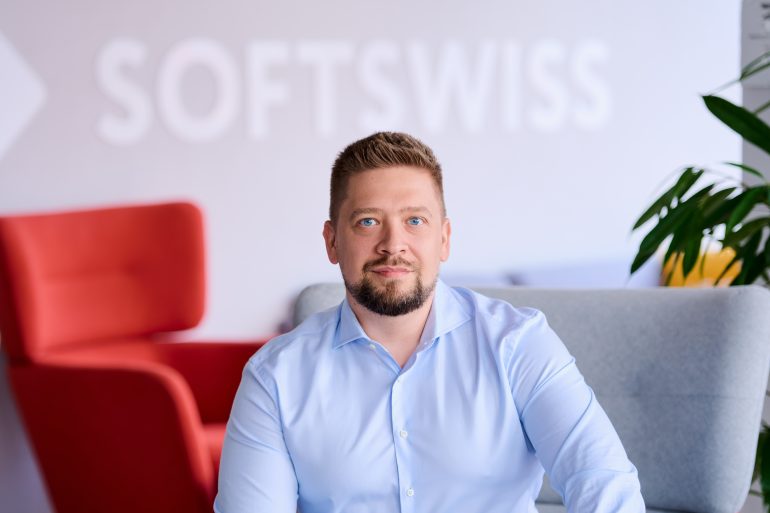
iGaming software provider SOFTSWISS is expanding into South Africa — and it’s doing so off the back of serious momentum.
Fresh from a high-profile debut at Africa Tech Week and Deputy CTO Sergey Kastukevich being named CTO of the Year (EMEA) at the 2025 Oracle Excellence Awards, the company isn’t just bringing its global gaming infrastructure to the region. It’s rebuilding it — from the ground up.
“We don’t just want to participate – we want to help shape the ecosystem,” says Kastukevich.
Instead of lifting its Latin America or European playbook, SOFTSWISS is rethinking everything — starting with a secure-by-design architecture that puts infrastructure realities front and centre. In a market where users range from flagship Androids to budget 3G devices, that’s not just technical diligence — it’s survival strategy.
Built for South Africa, not copied into it
The company has already adapted its frontend for load speed across unreliable bandwidth, deploying CDNs and local servers to handle static assets, and designing interfaces that prioritise functionality over flash.
“People shouldn’t be held back by infrastructure,” says Kastukevich. “UX consistency is critical — even when bandwidth isn’t.”
At the platform level, SOFTSWISS monitors login behaviour, runs continuous vulnerability testing, and alerts its SOC on repeat authentication failures. The goal: security embedded at every layer, not tacked on at the end.
AI is hot — but measurable
Kastukevich, who leads a large global team, is cautious when it comes to buzzy trends. “We’ve seen AI hype cycles before,” he says. “The difference now is computing power — but that doesn’t mean we chase novelty.”
SOFTSWISS uses an internal “tech radar” to classify emerging tools — whether they’re being observed, tested, or actively discarded. For things like AI-assisted coding, the team benchmarks impact by tagging tasks and logging manual vs AI-assisted completion times. Only what saves time and reduces error makes the cut.
Transparency, data control, and explainability are baked in — not just for compliance, but because the company sees them as essential to scaling ethically across jurisdictions.
A CTO who translates, not just architects
Kastukevich isn’t just the guy behind the platform design. He’s the bridge between engineering and business logic.
“When I talk about data governance, I don’t pitch it as a framework. I explain how it improves reporting, speeds up processes, and sharpens decision-making,” he explains. That translation work is what turns a compliance checklist into a business priority.
For SOFTSWISS, the long-term play isn’t just market access — it’s ecosystem participation. And South Africa, Kastukevich says, reminds him of the UAE in the early 2010s: fast growth, strong infrastructure, and an economy starting to pivot toward tech and services.
“There’s no playbook,” he says. “You have to build with the market, not just in it.”
For a company already active across four continents, SOFTSWISS’s bet on Africa isn’t surprising. But the fact that it’s not taking shortcuts? That’s the real headline.re as a translator-in-chief. “When I pitch something like data governance, I don’t talk about frameworks — I talk about reporting accuracy and operational efficiency,” he says. It’s the kind of internal storytelling that turns a dev tool into a business priority.
With Amazon Web Services, Oracle, and Teraco already deepening their South African footprint, SOFTSWISS’s timing may be right — even if local regulation still lags behind the pace of innovation. Whether it can meaningfully influence the gaming ecosystem here — or merely adapt to it — is a different question.
But one thing’s clear: the iGaming software provider isn’t phoning this one in. It’s betting that long-term value in Africa won’t come from scaling fast — but from building slow and smart.