

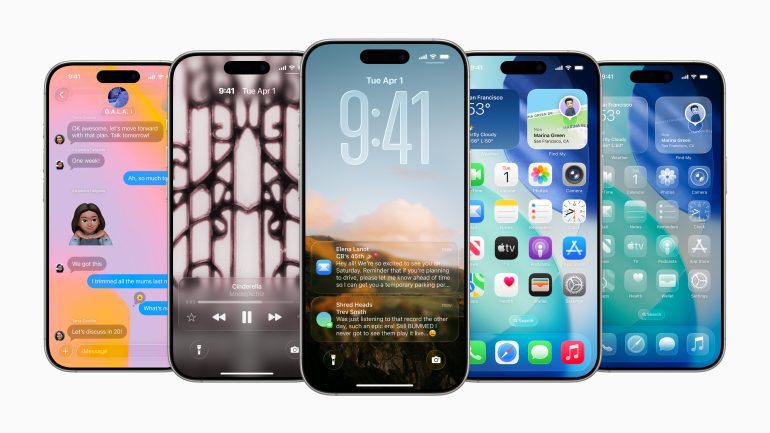
Smartphone revenue is up. Way up. Globally, the industry crossed the US$100 billion mark in Q2 2025 — a record that, on the surface, suggests a booming market. But this revenue spike didn’t come from a surge in shipments. In fact, global smartphone sales only grew by 3 percent. Instead, that extra money is coming from a shrinking pool of buyers spending more on premium models.
This widening gap between volume and value is the shape of the industry now. It’s also the pressure point.
According to Counterpoint Research, Apple remains the undisputed revenue leader, claiming 43 percent of all smartphone revenue globally in Q2 2025 — its highest share to date. And the company’s third-quarter results show that dominance isn’t just symbolic. iPhone sales rose 13 percent year-over-year, and services revenue hit a new high of $27.4 billion. Apple is still winning — but how long it stays ahead may depend on its ability to keep pace with the industry’s shifting focus: AI.
Apple has publicly acknowledged it’s behind. In July, CEO Tim Cook said the company would “dramatically accelerate” its AI strategy. That’s included high-profile internal reshuffles, with Mike Rockwell — formerly head of Vision Pro — now leading the AI effort. The company is reportedly in talks with OpenAI and Anthropic to catch up on generative AI features, which competitors like Samsung, Oppo, and Vivo have already integrated into their devices.
The gap is already showing. Android OEMs are baking real-time translation, summarisation, and smarter assistants into their user experiences. Meanwhile, Apple’s long-awaited Siri upgrade remains elusive. The iPhone 16 lineup may feature some of these tools, but so far, Apple’s AI narrative feels like a roadmap, not a product.
Samsung’s strategy is more balanced. It still leads in overall shipments, thanks to a strong mid-range lineup that coexists with its flagship foldables. Oppo and Vivo are inching toward the premium segment too, with Oppo’s average selling price jumping 14 percent year-on-year. The shift across all three brands is clear: drive profitability through more expensive hardware, even if overall volumes stay flat.
That same strategy comes with trade-offs, especially in emerging markets like South Africa. The middle tier of smartphones isn’t vanishing, but it’s under pressure. Brands are putting their loudest innovation bets on flagship models, leaving mid-range devices feeling increasingly like afterthoughts. For South Africans — where carrier subsidies are limited and trade-in programmes are rare — this limits upgrade paths and risks widening the digital divide.
It’s not just about price. Premium models are where the software innovation is happening. Generative AI features, enhanced imaging, and context-aware assistants are largely gated to the top end. For users stuck in the middle, the tech gap becomes a usability gap — and that creates a long-term problem.
As we recently explored here, access to cutting-edge technology without meaningful localisation often leads to shallow benefits. South Africa’s digital infrastructure is improving, but devices remain the bottleneck. If premium becomes the only path to innovation, then affordability becomes a tech access issue — not just an economic one.
The tension in the smartphone industry today isn’t whether innovation exists. It’s where that innovation is allowed to live, and who gets to access it. Smartphone revenue in 2025 might be breaking records, but the future of the industry depends on whether that growth can be made more inclusive — and more sustainable.