

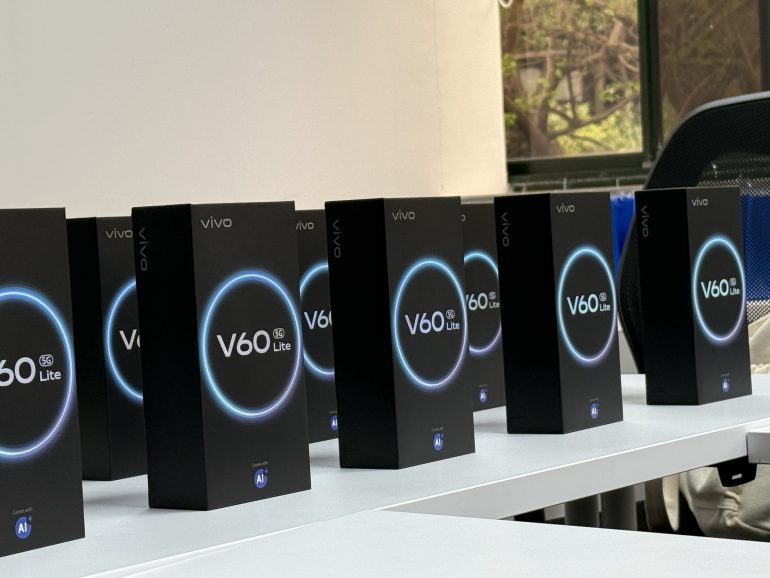
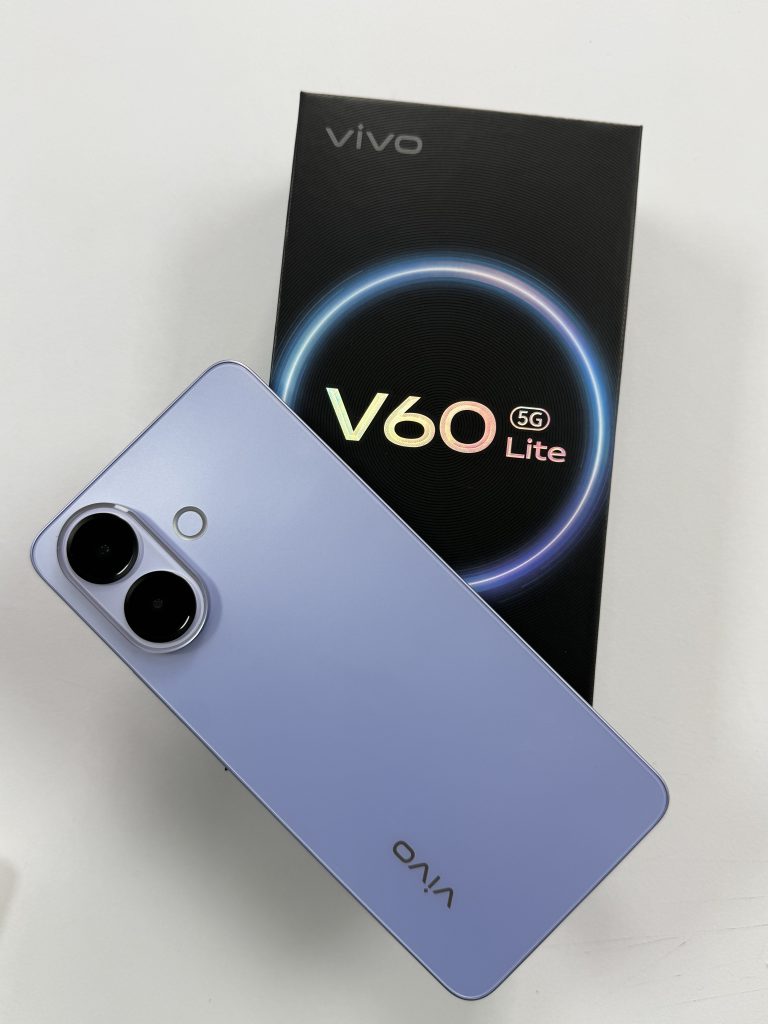
The Vivo V60 Lite 5G has officially landed in South Africa at R12,999, bundled with a free smartwatch if you buy through Vodacom or Cell C. On paper, it looks like one of the most ambitious mid-range phones of the year — a massive 6,500mAh battery, a Sony camera sensor, 4K video recording on both sides, and enough durability certifications to make even rugged phone makers blush.
But Vivo has a problem: in South Africa, most people still don’t know who it is.
That’s the tension here. Globally, Vivo is huge — it shipped more than 100 million phones last year and holds the top spot in China. Locally, it’s fighting just to be noticed, stuck behind Samsung, Apple, and even Huawei. The V60 Lite 5G is supposed to change that, but whether it can break through the noise is another question.
A battery that wants to outlast your contract
The headline feature is the battery. At 6,500mAh, Vivo claims it’s the biggest cell in the thinnest frame in this price range. Pair that with 90W charging and the company’s promise of 80 percent capacity after five years, and it’s clear Vivo is going after longevity — something that matters in a market where phones are often used long after their 24-month contract ends.
There’s also “Bypass Charging” for gamers, which pushes power straight to the system instead of the battery to keep heat down and extend overall health. If Vivo delivers here, it’s a strong differentiator in a sea of mid-range devices that usually cut corners on long-term endurance.
Cameras built for TikTok and Instagram
Photography is another big focus. The V60 Lite uses Sony’s IMX882 sensor, backed by Vivo’s “Aura Light” portrait system that tweaks colour temperature to suit the scene. The AI suite adds reflection removal, night algorithms, and 4K video recording on both the front and rear cameras. There’s even a Film Camera mode with retro filters — a transparent pitch to creators who live on TikTok and Instagram.
It’s the kind of spec sheet that reads better than most phones at this price. The question, as always, is execution: can Vivo’s AI really hold its own against Samsung’s Galaxy A56 or Huawei’s Nova 14, or Oppo’s Reno 14? of which are already reliable mid-range shooters?
More than just numbers — at least on paper
Durability is where Vivo tries to outdo its rivals. The V60 Lite has MIL-STD-810H military-grade certification, SGS drop resistance, IP65 dust and water resistance, and a one-year accidental damage cover that includes screen, back glass, and even the camera module — a package valued at R4,000. You also get a TPU case and a charger in the box, things Samsung and Apple no longer bother with.
It’s a compelling value story, and Vivo knows it. “From its 6,500 mAh BlueVolt battery and Sony IMX882 camera to our unique 7-Star Quality Promise, it’s built as an all-day powerhouse that performs reliably in real life, not just on paper,” says Tony Shi, General Manager at Vivo South Africa.
The uphill battle
The real challenge is that Vivo’s hardware isn’t the issue. Its marketing is. South Africans don’t buy phones based on spec sheets alone. Samsung owns the mid-range by sheer visibility, trust, and ecosystem lock-in. Oppo has started building similar recognition. Vivo, despite its size globally, is still treated like the new kid here.
That’s why the V60 Lite 5G matters. It’s less about the phone itself — which looks like one of the most well-rounded mid-rangers at this price — and more about whether Vivo can finally establish a foothold in a market that doesn’t really know it yet. If the company wants to climb higher than fourth place among Android brands locally, it will need more than a big battery and a free smartwatch. It will need to convince people to actually care.