
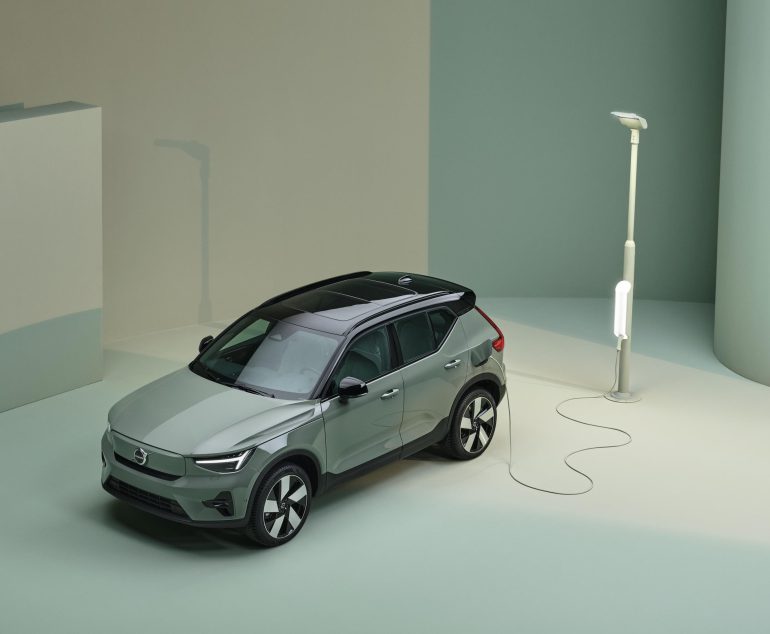
Volvo South Africa included a curious benefit with the XC40 P8 Recharge when it opened orders in May 2021. Buy the R1.2 million electric SUV and Volvo would lend you a petrol-powered XC40 for up to two weeks a year during the first three years of ownership, specifically for longer trips. The offer was part of the Volvo Care package.
It was unusually frank. Volvo was confident enough in its first fully electric car to bring it to South Africa when the local EV market was barely established, but it also knew what someone spending R1.2 million might be wondering before committing to one: what happens when I want to drive somewhere the charging network doesn’t really reach?
There was also Eskom. South Africa experienced 48 days of loadshedding in 2021, amounting to 1,153 hours, and the situation became substantially worse over the next two years. The original material supplied by Volvo puts that figure at 200 days in 2021, but that isn’t correct.
None of that stopped the first local allocation of the XC40 Recharge from selling out within four days. The car’s twin electric motors produced 304kW and 660Nm, Volvo claimed 418km of range and a fast charger could take the battery to 80% in around 40 minutes. At the time, those were strong numbers for a South African EV.
According to Volvo’s figures, 49 were sold during its first year on the market. That was never going to trouble the sales charts, but only 218 battery-electric vehicles were reported to Naamsa across South Africa in 2021, so even a few dozen cars were noticeable in a market that small.
What has happened since is less straightforward than the early forecasts for electric cars suggested.
Loadshedding isn’t the first question anymore
Five years later, asking whether an EV makes sense because South Africa can’t keep the lights on feels somewhat dated.
In its 21 August 2026 system update, Eskom said South Africa had gone 462 consecutive days without loadshedding since 16 May 2025. Its energy availability factor for the financial year to date had reached 67.79%, the highest level since 2020. That doesn’t mean electricity supply is equally reliable everywhere, particularly once municipal outages and load reduction are taken into account, but the national generation system is in a very different state from the one Volvo was selling an EV into five years ago.
Charging is still more dependent on where and how someone lives than the industry sometimes admits. If you have a garage and can plug the car in overnight, most day-to-day charging can happen while you’re at home. If you live in a flat without dedicated charging or regularly travel through areas where public fast chargers are sparse, buying exactly the same car requires more planning.
Long-distance charging has improved, although the network remains uneven. The Volvo EX30 Cross Country’s trip up Sani Pass was a useful example of where the infrastructure discussion is heading. The car itself could manage the trip without much drama. Getting electricity to the places where an EV might need it was the more practical problem, which is why the solar-powered charging installation used for that drive was worth more attention than the fact that an electric Volvo had made it up a mountain.
That problem won’t be solved simply by increasing the total number of chargers. Drivers need them on the routes they actually use, and they need enough confidence in those chargers that a trip doesn’t have to be planned around several backup options.
The XC40’s old specifications show how quickly EVs have changed
The XC40 Recharge’s 418km claimed range is still perfectly usable, but it no longer looks unusual. The same is true of its roughly 40-minute fast-charge time.
Volvo’s ES90, now listed for sale in South Africa, shows how far the hardware has moved. It uses an 800-volt electrical system, and the Single Motor Extended Range version is listed with up to 755km of WLTP range. Volvo says the ES90 can add around 300km of range in 10 minutes when connected to a suitable 350kW charger.
Of course, a car capable of accepting 350kW and finding a charger capable of supplying it are separate things. South Africa has high-powered chargers, but that speed isn’t what an owner can expect every time they stop. The latest EVs are developing more quickly than some of the infrastructure they depend on.
The original XC40 Recharge was also early in treating the car as something that could change after it left the dealership. Its infotainment system ran Android Automotive with Google services built in, rather than simply displaying apps from a connected phone, and it was Volvo’s first car to receive software updates over the air. Volvo’s first OTA update for the XC40 Recharge arrived in 2021 and included changes to charging, range and the Android-based infotainment system.
None of that sounds particularly exotic in 2026. Software has become a much larger part of how new cars work, while over-the-air updates have spread across the industry. The XC40 hasn’t become a bad EV with age, but some of the things Volvo had to explain when it launched are now familiar.
The strange part is what happened to sales
With loadshedding greatly reduced, better charging infrastructure and much more capable cars available, you might expect South Africa’s battery-EV sales to be climbing quickly.
They fell last year.
Naamsa-reporting manufacturers registered 1,088 battery-electric vehicles in 2025, down 13.4% from 1,257 a year earlier. Those numbers aren’t complete because BYD, Geely and some other manufacturers don’t report sales to Naamsa, but BEVs are clearly still a very small part of a South African new-car market that reached 596,818 units last year. Naamsa’s 2025 new-energy vehicle figures also show that the wider electrified market behaved very differently.
Plug-in hybrids jumped from 738 sales in 2024 to 2,810 in 2025, an increase of 280.8%. Total new-energy vehicle sales, which include conventional hybrids as well as PHEVs and BEVs, reached 16,716 units.
A plug-in hybrid fits South African driving habits without requiring quite as much faith in the charging network. Someone who can charge at home can do much of their normal driving on battery power, then use petrol for a long trip without having to care whether the guesthouse has a charger or whether the only fast charger along a route is working.
There’s a cost to that compromise. A PHEV carries a battery and a combustion engine, adding complexity and weight, and its environmental benefit depends heavily on whether the owner actually plugs it in. But the sales figures suggest plenty of buyers are happier with that arrangement than they are with removing the engine entirely.
Price is becoming a less convincing explanation for the difference. The XC40 Recharge cost R1.2 million in 2021, when the South African EV market consisted largely of expensive cars. Today, the iCAUR V23 starts at R519,900, putting a new electric SUV at less than half the XC40’s original launch price.
That still doesn’t make EV ownership equally practical for everyone. Where you park matters. The availability of home charging matters, particularly for people living in apartment buildings, and buyers entering the used market have to think about battery condition in a way they haven’t had to with petrol cars.
These aren’t dramatic objections. They’re ordinary car-buying concerns, which may be part of the reason they have proved harder to remove than the fear that loadshedding would leave an EV stranded in the driveway.
Volvo changed its 2030 plan
Volvo has also become less prescriptive about how quickly buyers will make the switch.
When the XC40 Recharge went on sale, the company was working towards becoming fully electric by 2030. In September 2024, Volvo revised that target. It now wants between 90% and 100% of global sales in 2030 to be either battery-electric or plug-in hybrid cars, with mild hybrids allowed to account for the remaining 10% if demand requires them.
Volvo blamed changing market conditions and customer demand, along with slower-than-expected charging infrastructure in some markets and changes to government incentives. The company still says its long-term intention is to become fully electric, but it has stopped insisting that every customer needs to be there by the end of this decade.
That makes the petrol XC40 Volvo offered its first South African EV buyers worth remembering. It wasn’t evidence that the electric XC40 couldn’t do the job. It was an acknowledgement that buying a car also means accounting for the odd trip, the place you can’t charge and the day when you don’t want to plan around the car.
The circumstances are much better now. South Africa has gone well over a year without national loadshedding, an EV can travel considerably further than the first XC40 Recharge could, and the entry price has come down sharply.
Yet in 2025, the manufacturers that report to Naamsa sold about 2.6 plug-in hybrids for every battery-electric car. Five years after Volvo offered XC40 Recharge owners a petrol car for the occasions when electric driving became inconvenient, South African buyers are increasingly choosing cars that keep that petrol backup with them all the time.