
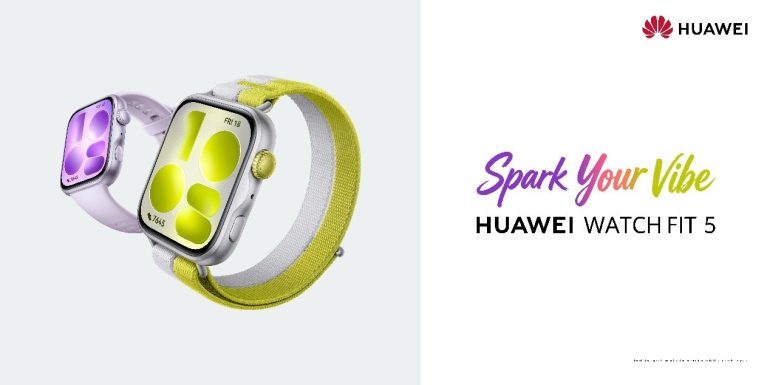
The smartwatch industry has settled into a predictable rhythm of brighter displays, thinner bezels, incremental health tracking updates, and slightly more premium materials. The HUAWEI WATCH FIT 5 Series enters that environment with Huawei focusing less on invention and more on refinement.
Most smartwatch brands are now competing on polish rather than capability. Screen quality across the category is already strong, battery life improvements tend to be incremental, and fitness tracking features have become broadly similar across competing devices. As a result, design, comfort, materials, and lifestyle positioning are starting to matter more.
That shift is visible across the market. Apple continues framing the Apple Watch as both a wellness device and fashion accessory. Samsung’s Galaxy Watch lineup has become noticeably more design-conscious over the past two generations. Even Garmin, traditionally focused on serious athletes, has softened its industrial design language to appeal to users who want a fitness watch that doesn’t look like expedition equipment.
Huawei’s wearables division has spent the better part of the past few years shifting towards this blend of fashion, fitness, and premium industrial design, with its broader strategy increasingly revolving around premium materials, long battery life, lightweight construction, and more sophisticated health tracking. The HUAWEI WATCH FIT line, however, sits slightly differently within that ecosystem. It has traditionally been Huawei’s more accessible, fashion-oriented range, positioned somewhere between a fitness band and a full smartwatch.
The HUAWEI WATCH FIT 5 Series largely continues that formula, with Huawei focusing on refinements to materials, display quality, comfort, and outdoor fitness functionality rather than attempting a major reinvention of the range.
According to Huawei, the WATCH FIT 5 Series introduces slimmer bezels, brighter displays, upgraded materials, new strap options, and improved outdoor sports support, particularly on the Pro model. Golf, trail running, and cycling receive specific attention this year, continuing a broader trend across the smartwatch industry where brands are targeting niche lifestyle and fitness communities rather than chasing generic “wellness” messaging alone. Early reviews suggest Huawei has also pushed the FIT 5 Pro closer to dedicated fitness watches than previous FIT devices, particularly around GPS tracking, cycling metrics, and outdoor visibility. Stuff described the watch as a “very capable fitness wearable”, whilst Forbes specifically highlighted the quality of its cycling tracking performance.
The emphasis on outdoor sports and more premium finishes reflects how Huawei increasingly sees wearables as one of its most stable consumer technology categories. Wearables have become one of Huawei’s strongest categories globally, especially as its smartphone business continues navigating restrictions in Western markets. Smartwatches are one of the few areas where Huawei still competes aggressively on hardware rather than ecosystem lock-in. Battery life remains a differentiator, particularly against the Apple Watch, and Huawei has spent the past few years repositioning its wearables as premium objects rather than simply affordable alternatives.
You can see that progression in devices like the HUAWEI WATCH GT 6 Series, where Huawei leaned heavily into engineering claims around endurance, precision tracking, and advanced materials. The FIT 5 appears to borrow some of that thinking whilst keeping the slimmer, more fashion-oriented identity that defines the FIT range.
Much of this positioning also mirrors what is happening across the wider smartwatch industry, where smartwatch launches in 2026 increasingly sound similar. Nearly every brand is talking about thinner bezels, brighter screens, improved health analytics, more premium finishes, and AI-assisted wellness insights. The language changes slightly from company to company, but the positioning rarely does. Huawei’s challenge is that many of these upgrades now feel expected rather than distinctive. Slimmer bezels, titanium accents, sapphire glass, ECG support, dual-band GPS, and brighter AMOLED panels have already filtered through much of the premium wearable market over the past two years.
Huawei’s messaging around the FIT 5 Series leans heavily into “modern elegance”, craftsmanship, personalisation, and versatility. Apple talks about seamless integration and wellness. Samsung focuses on AI-powered health insights. Garmin emphasises performance and durability. The underlying reality is that most smartwatch companies are now trying to make wearables feel less like gadgets and more like personal accessories that happen to contain advanced sensors.
The smartwatch market is also entering a more mature phase where annual upgrades are becoming harder to justify for existing users. For many users, especially in South Africa, the question is less about whether to buy a wearable and more about whether replacing an existing one changes anything meaningful.
The WATCH FIT 5 Series probably won’t fundamentally alter user behaviour for existing smartwatch owners. Most people will still use it for notifications, step tracking, sleep data, workout monitoring, and battery convenience. But Huawei isn’t necessarily trying to reinvent behaviour here. It’s trying to make the upgrade feel more desirable.
Huawei’s focus appears less centred on changing how people use smartwatches and more on making the upgrade itself feel worthwhile, particularly for users who spend more time outdoors. Improved cycling and trail-running support reflects how fitness tracking is becoming increasingly specialised, with buyers expecting watches to cater to specific activities rather than generic exercise logging. Huawei also appears to be positioning the FIT 5 Pro closer to Garmin’s Forerunner range and Apple’s more fitness-oriented Ultra lineup, albeit at significantly lower pricing. Several reviewers have noted that the watch now feels closer to a dedicated sports wearable than earlier FIT devices did, even if Huawei’s software ecosystem and third-party app support still lag behind Apple and Samsung.
A large part of the strategy, though, has very little to do with fitness tracking alone, with Huawei clearly wanting the FIT 5 Series to feel aspirational without drifting into luxury-watch pricing. The emphasis on colour palettes, breathable straps, texture, and comfort suggests the company understands that wearables now sit closer to fashion purchases than traditional consumer electronics.
That could resonate in South Africa, where smartwatch adoption continues growing but remains highly price sensitive. Huawei has generally positioned the FIT range below flagship Apple and Samsung devices whilst offering stronger battery life and broader cross-platform compatibility. Assuming Huawei maintains aggressive local pricing, the WATCH FIT 5 Series could appeal to buyers who want a more premium-looking wearable without moving into the R10,000-plus territory occupied by high-end smartwatches.
Huawei’s Watch FIT 5 Series is ecpected to launch in South Africa in mid-May starting at R3499.00. That pricing window has become increasingly competitive, particularly as brands like Xiaomi, Amazfit, Samsung, and Garmin expand their mid-range wearable portfolios.
The FIT 5 Series is less about introducing new technology and more about refining the kind of smartwatch many people already seem comfortable buying. That broader shift has pushed smartwatch brands closer to fashion and lifestyle positioning than traditional consumer electronics marketing, with wearables increasingly expected to balance utility with appearance. The WATCH FIT 5 Series fits neatly into that direction, particularly for buyers who want a smartwatch that feels more premium without moving into luxury pricing territory.