
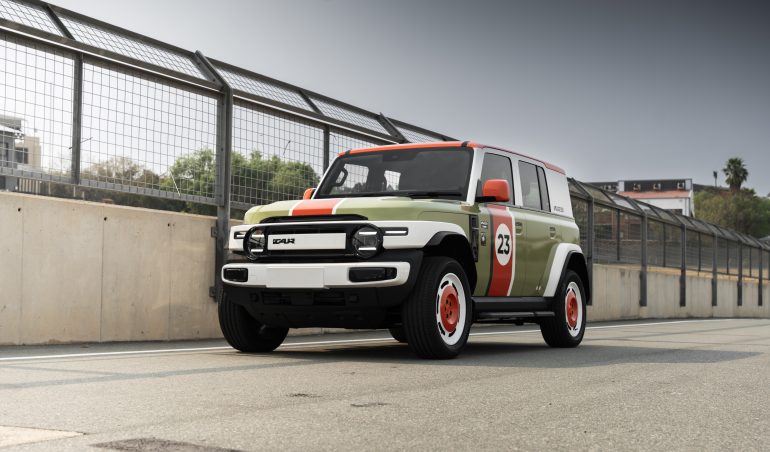
Chery’s newest sub-brand enters the local EV market with a design-forward, spec-rich package that takes aim at a buyer base that didn’t exist two years ago.
The iCAUR V23 electric SUV has been revealed for South Africa, arriving alongside the 03T as the entry point into iCAUR‘s local line-up. Priced from R519,900 for the 2WD and R669,900 for the AWD, it positions itself in a segment that was largely theoretical in South Africa until very recently. The fact that it now has real competitors, real buyers and a genuine conversation around affordability is itself the more significant story.
The South African EV market has moved from a curiosity to a credible category faster than most expected. EV searches on Autotrader jumped 220% between March 2025 and March 2026. Price compression has been real, with entry-level electric options now sitting below R400,000. The V23 doesn’t play in that space; it aims higher, betting that design identity and specification depth are worth a premium over the cheapest options available.
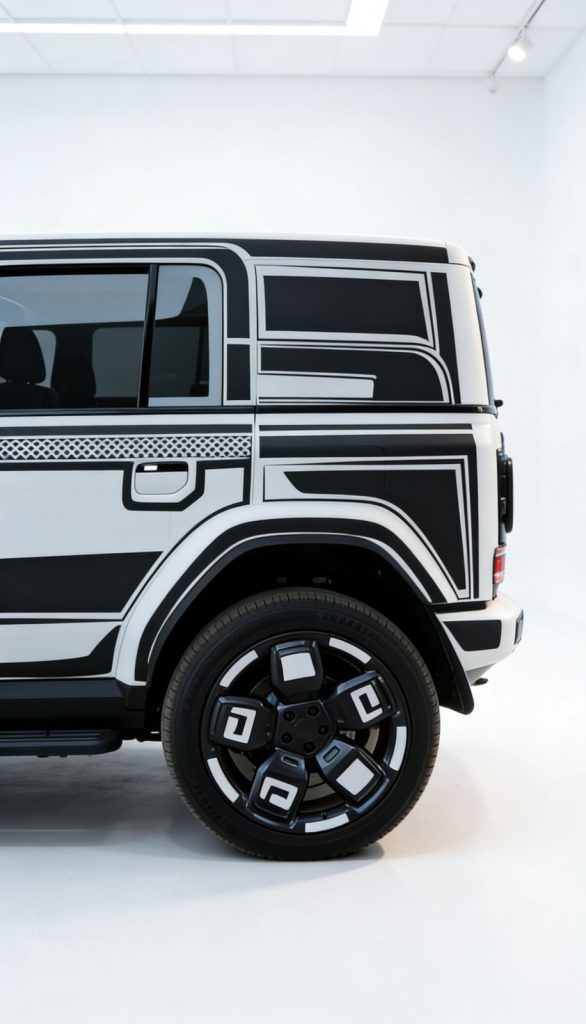
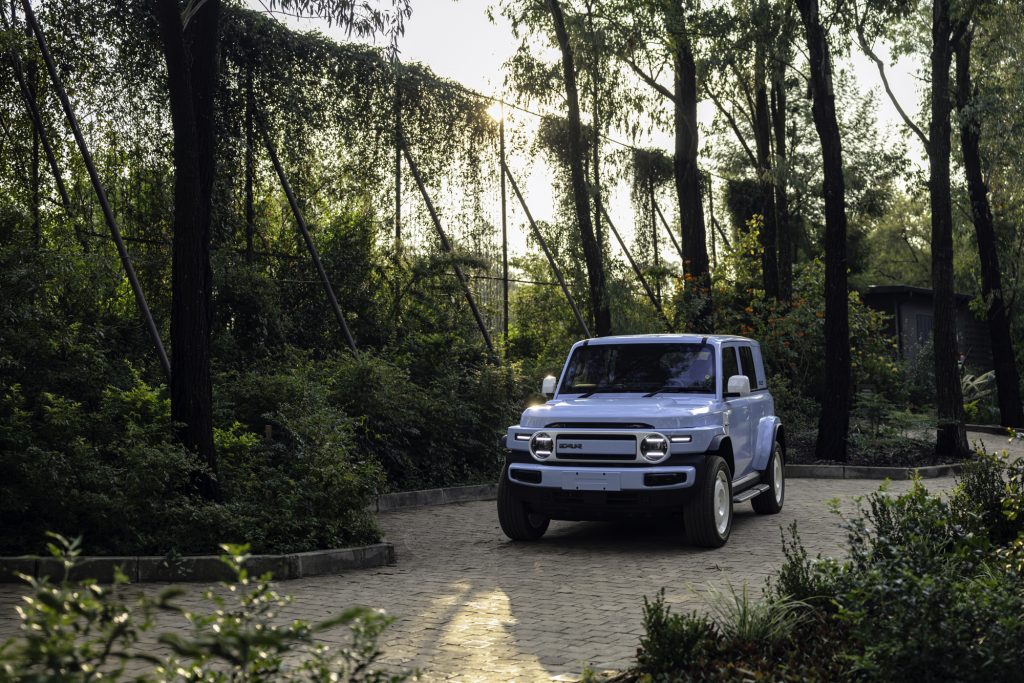
On design, that bet has something to stand on. The V23’s upright, squared-off proportions, circular headlamp surrounds, pronounced wheel arches, and Lego-inspired tailgate brake light give it a visual identity that stands apart from the anonymous crossover styling that defines most of this segment. It’s a design language that references the Land Rover Defender, the Toyota Land Cruiser 40-series, and the Mercedes-Benz G-Class without directly copying any of them. Whether that registers with South African buyers or reads as derivative will depend on who’s looking.
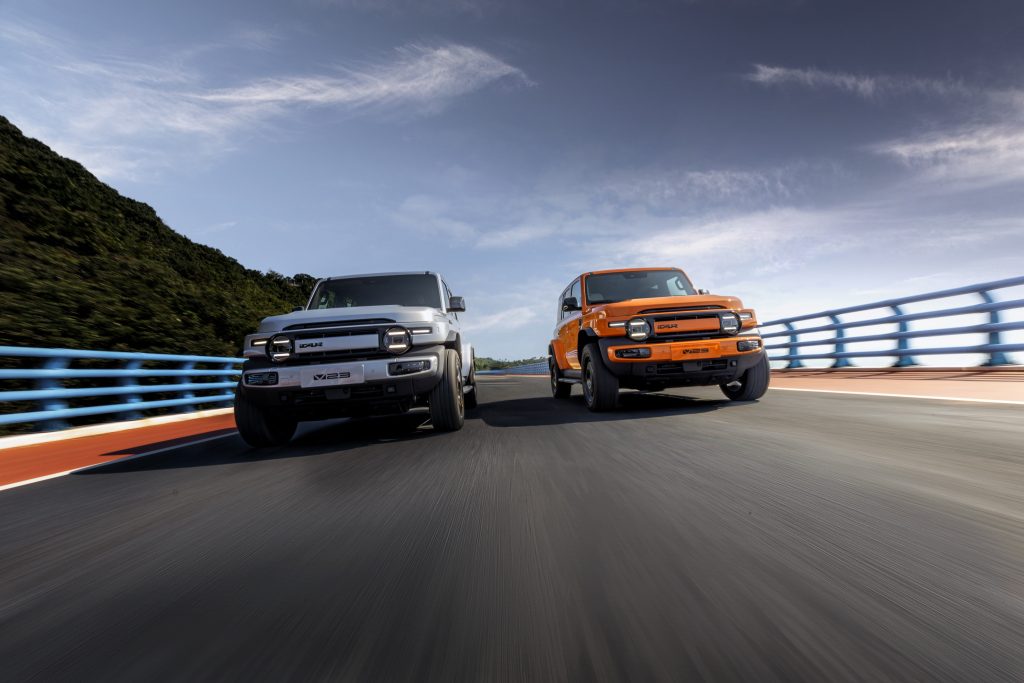
Mechanically, the 2WD variant uses a rear-mounted single motor producing 100 kW and 180 N.m, fed by a 59.93 kWh battery. NEDC-estimated range is 360 km, which, like all NEDC figures in this market, represents an optimistic ceiling rather than a reliable daily expectation. Real-world range under SA conditions will be lower, particularly on highways where the 2WD’s 140 km/h top speed leaves little in reserve. The 36-minute DC fast-charge window from 20-80% is practical and competitive. The AWD’s dual-motor setup brings 155 kW, 292 N.m, a larger 81.8 kWh battery, and an NEDC-estimated 430 km range, reaching 80% in 42 minutes.
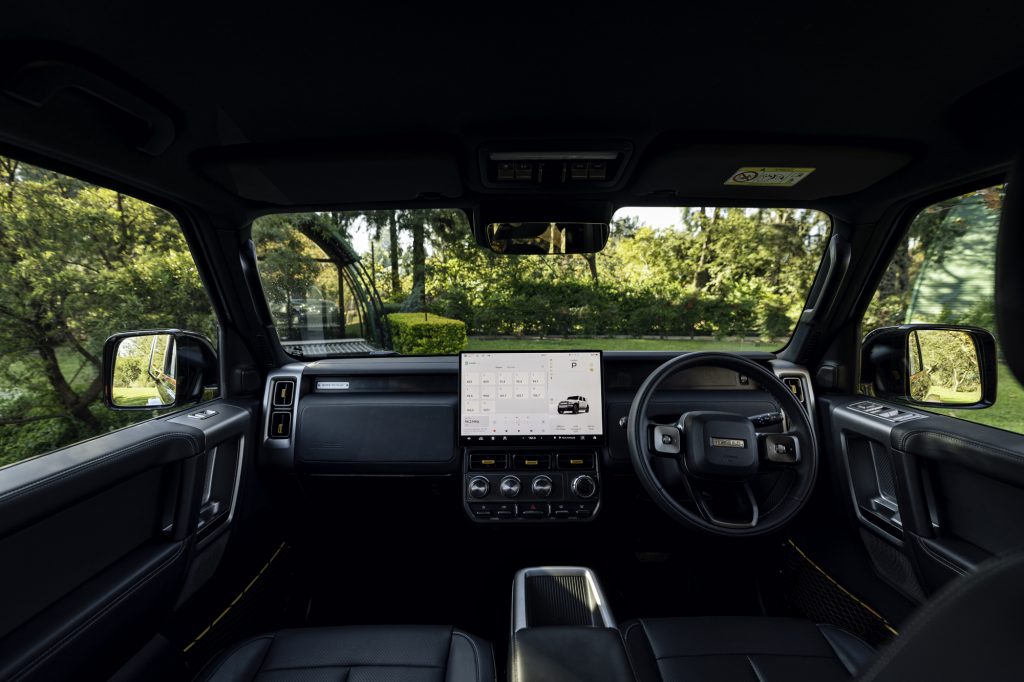
The specification story is stronger than the powertrain specs alone suggest. Both derivatives get a 15.4-inch touchscreen, wireless Apple CarPlay and Android Auto, leather upholstery, ventilated front seats, and a seven-speaker iCAUR sound system as standard. That’s a genuinely competitive list at R519,900. Where the gap between derivatives becomes more significant is in safety technology: the AWD receives Automatic Emergency Braking with vehicle, pedestrian and bicycle recognition, Adaptive Cruise Control, Traffic Jam Assist, Lane Departure Warning and Prevention, and Blind Spot Detection. The 2WD gets cruise control and a reverse camera. Buyers comparing the two purely on driving assistance capability will find the R150,000 difference increasingly easy to justify.
The brand context matters here. iCAUR sits under Chery South Africa alongside OMODA and JAECOO, and the latter’s performance locally provides useful reference. OMODA & JAECOO South Africa recorded 12,597 vehicle sales in 2025, up 147% year-on-year, driven by spec-competitive pricing, hybrid options, and growing dealer reach. iCAUR is applying the same logic to a dedicated EV line, with national brand and marketing manager Shannon Gahagan noting that the V23 2WD “delivers an exceptionally strong value proposition, combining distinctive design, practical packaging, generous standard specification and efficient electric performance in a package that makes a compelling case for everyday electric SUV ownership.”
Both variants are backed by an eight-year/200,000 km vehicle warranty, an eight-year/160,000 km power battery warranty for the first owner, a five-year/100,000 km service plan, and eight-year/200,000 km roadside assistance. The first-owner battery warranty caveat is worth noting for buyers who plan to sell within the warranty period; it’s a common structure in this segment, not a red flag, but worth understanding before purchase.
iCAUR also has a third model planned for South Africa: the V27, a range-extended electric vehicle (REEV) due in Q4 2026. For buyers who want the brand’s design language but are uncertain about committing to a pure EV around SA’s charging infrastructure, that model may be the more practical fit when it arrives.
For now, the V23 enters a market that’s more ready for it than it would have been even 18 months ago. The design stands out. The spec is credible. The pricing is competitive without being desperate. That’s a reasonable opening position for a new brand in a segment that’s still defining itself.