
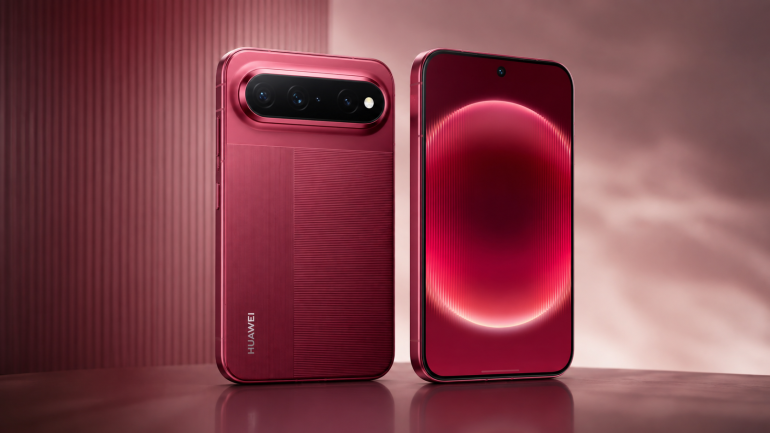
Huawei has spent the past 18 months arguing, mostly to Chinese buyers, that smartphones don’t have to be as tall and narrow as the industry has decided they should be. The Huawei Pura X View is its latest attempt to make that argument, except this time there’s no hinge involved.
The company has started taking reservations in China for the Pura X View, a conventional glass smartphone built around an unusually wide 6.39-inch OLED display with a 16:9.5 aspect ratio. Pricing and a full release schedule haven’t yet been announced, and there’s currently no confirmation that the phone will be sold internationally.
That makes the Pura X View an interesting product in its own right, but its timing is probably more important. Huawei introduced the original Pura X in China on 20 March 2025, taking the clamshell foldable idea and effectively turning it sideways around a 16:10 display. The much larger Pura X Max followed on 20 April 2026 with a 7.7-inch internal display and 5.4-inch cover screen, turning the same thinking into a passport-shaped book fold. Neither phone has officially escaped China, which made the whole exercise look like a particularly Huawei-shaped experiment until the rest of the market began moving in roughly the same direction.
Wide phones are starting to look less unusual
Samsung’s Galaxy Z Fold8 has given the wide-fold idea its first significant test outside China, and buyers appear to have responded. The Fold8 accounted for around 70% of the record 1.44 million Galaxy Z8 series pre-orders in South Korea, while Counterpoint Research data cited by Seoul Economic Daily showed global Z8 pre-sales climbing by more than 30% year-on-year.
The proportions were a significant part of what changed. Unlike the taller Galaxy Z Fold8 Ultra, the Fold8 opens into a wider 4:3 display and folds into something closer to the dimensions of a passport. It’s the same device that led us to argue that the Galaxy Z Fold8 may have found the foldable sweet spot, largely because Samsung stopped treating a folding phone as a narrow smartphone that happened to become a tablet.
Apple could add considerably more weight to that argument. Its first foldable iPhone is widely expected to arrive in 2026 with similarly wide proportions, although even the name remains unsettled. Recent reports have referred to it as the iPhone Ultra as well as the iPhone Fold, so neither branding nor the device itself should be treated as official until Apple announces it. Huawei was already building around these proportions before Samsung’s Fold8 arrived, but the significant change is that the company no longer looks quite so alone.
The Pura X View removes the expensive part
The Pura X View takes the same basic idea and removes the flexible display, second screen and hinge that make folding phones expensive and mechanically complicated. Its 6.39-inch OLED has a resolution of 2,232 x 1,320 and a claimed peak brightness of 6,500 nits, although the proportions make that diagonal measurement slightly misleading. A 6.39-inch 16:9.5 panel occupies its space very differently from the 19.5:9 and 20:9 screens that have become normal on modern smartphones, with Huawei effectively giving up some vertical reach for more width.
The rest of the hardware makes the strange shape harder to dismiss as a concept device. The Pura X View is reportedly 6.68mm thick, weighs 201g and contains a 7,000mAh battery. Huawei hasn’t yet disclosed the complete specification sheet, including some of the details that will determine where the phone sits in its range, so there’s still a lot we don’t know.
For years, the smartphone industry has treated tall and narrow as though it were the natural shape of a phone. It isn’t, but it is the shape manufacturers eventually converged on, helped along by one-handed use, vertical social feeds and the need to fit increasingly large screens into something people could still grip. The Pura X View gives Huawei a way to test what happens when that assumption changes without asking buyers to accept the additional cost and complexity of a foldable.
A wider conventional phone should have obvious disadvantages. Reaching across the display could be awkward, pockets haven’t become wider simply because phone designers are curious, and a device that looks comfortable in two hands can become irritating when you’re standing in a supermarket trying to reply to a message with one thumb. Those problems won’t disappear because a wider screen looks better beside a Pura X Max in a product photograph.
There are advantages too. Video doesn’t have to surrender as much of the display to black bars, keyboards get more horizontal room and documents can feel less cramped without forcing the user into a foldable. The Pura X View is therefore less a cheap substitute for the Pura X Max than a test of whether some of what people like about wide foldables actually depends on the folding part.
Huawei’s international question hasn’t gone away
Huawei’s choice to keep the Pura X and Pura X Max in China has limited how much influence either phone could have on the wider smartphone market. The Pura X Max beat comparable Samsung and Apple wide foldables to market, but only in China, which considerably reduced the advantage of getting there first.
There is at least one small reason not to assume the Pura X View will follow exactly the same path. Huawei filed an EU trademark application for the Pura X View name on 17 June 2026. A trademark isn’t evidence of an impending European launch, much less confirmation that the phone is coming to South Africa, but registering the name outside China gives Huawei the option to use it there.
The same possibility now hangs over Huawei’s folding models. Samsung has shown that buyers will respond to a shorter, wider Fold, while Apple could put an enormous spotlight on similar proportions if its rumoured foldable arrives as expected. Huawei already has two generations of hardware built around the idea, and keeping both Pura X models confined to China made sense when the format was largely its own experiment. That calculation could look different if wide foldables become a recognisable premium category elsewhere.
There’s no evidence yet that Huawei has decided to export either one, and the company’s international smartphone business still has complications its Chinese operation doesn’t, including the absence of Google Mobile Services. The Pura X View doesn’t resolve any of that, but it does suggest Huawei’s interest in wide phones is no longer tied to showing off what can be done with a folding screen.
The company now has a small foldable, a large foldable and a conventional phone built around broadly the same idea of what a smartphone display should look like. If the market follows Samsung’s early Fold8 buyers in the same direction, Huawei may eventually have to decide whether the Pura X family is meant to remain a Chinese experiment or become one of its international product lines.