
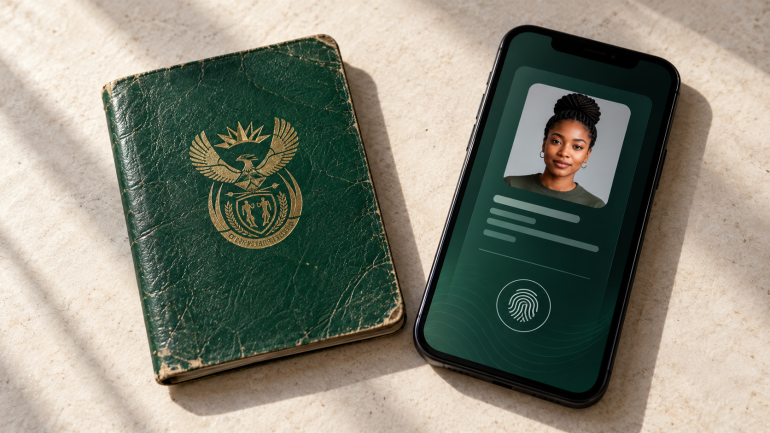
Home Affairs wants us to be able to renew a passport without spending a day trying to get the application done. Its proposed Digital ID service would send you a renewal application six months before your passport expires, already filled in. You’d check it, confirm your identity, pay and have the new passport delivered. We can’t use that service yet, but it’s the sort of change that could save people a lot of trouble.
At Constitution Hill on 1 October, Minister Leon Schreiber demonstrated a working Digital ID on his own phone and announced dates for retiring the green ID book. Production is due to end on 31 March 2027, and the books will stop being recognised as valid identification on 31 March 2028. Anyone still relying on one will need to replace it with a Smart ID card.
There’s an appeal to doing more of this on a phone. An application at Home Affairs can take up time we’d otherwise spend at work, and a wasted trip costs money even when the application itself is free. Moving the service closer to people, whether through a bank branch or a phone, could make a difference long before anyone starts talking about AI.
The card stays
Despite the phone demonstration, Schreiber hasn’t announced when the public will be able to get a Digital ID. Home Affairs is still working through comments on the draft regulations. He says using it will be voluntary, and the physical Smart ID card will remain available.
So there’s no need to assume that replacing your green book means putting your identity on a smartphone. The card is still part of the plan. That’s reassuring for anyone who doesn’t want to use the digital version, as well as people whose phones won’t support it.
The department will also have to make sure people can get help without using the app. We already know how easily people get left behind when services move online. Someone trying to correct an error in their records shouldn’t have to find a relative with the right phone before Home Affairs will deal with them.
Replacing the green book
Schreiber says 515 bank branches now offer walk-in Smart ID replacements, with applications taking as little as five minutes. That’s the application, though. You won’t walk out five minutes later with a new card, and you’ll need to check whether the branch you’re visiting offers the service. He discussed the expansion in an interview about the announcement.
There are still 14.7 million people whose only ID is a green book, according to the minister. Home Affairs says the remaining excluded groups, including naturalised citizens and permanent residents, and South African citizens abroad, will be able to get Smart IDs before green book production stops.
That leaves a substantial job to do before March 2028. A quick application at a nearby bank sounds good if your records are correct and you can get to a participating branch. Home Affairs needs to be just as clear about what happens when they aren’t, or you can’t.
What happens when something goes wrong?
In the speech, Schreiber said Digital ID users would be able to see when their data is accessed, and promised limits on what it could be used for. Those rules are still being finalised. Being able to spot an unfamiliar entry would help, but people will need a way to report it and get an answer too.
The same goes for the proposed passport renewal service. Having Home Affairs prepare the application is useful, provided you can fix a mistake without being sent back to an office to start again. The speech describes how the service should work when everything goes well. We still need to hear how the department will help when it doesn’t.
Home Affairs is also preparing a campaign for the 2028/29 financial year to document undocumented South African citizens. The plan includes reviewing late birth registration requirements and sending officials into communities as digital services free up their time.