
South African companies are under growing pressure to bring AI compute closer to home. They want more control over sensitive data, fewer surprises on the cloud bill and less exposure to global supply chains. Regulators, boards and customers are asking harder questions about where enterprise data lives and who can access it.
Local data centres look like the obvious answer. But there’s a catch: the infrastructure needed to run AI doesn’t only need GPUs, fibre and cooling. It needs electricity, and South Africa doesn’t have much room to spare.
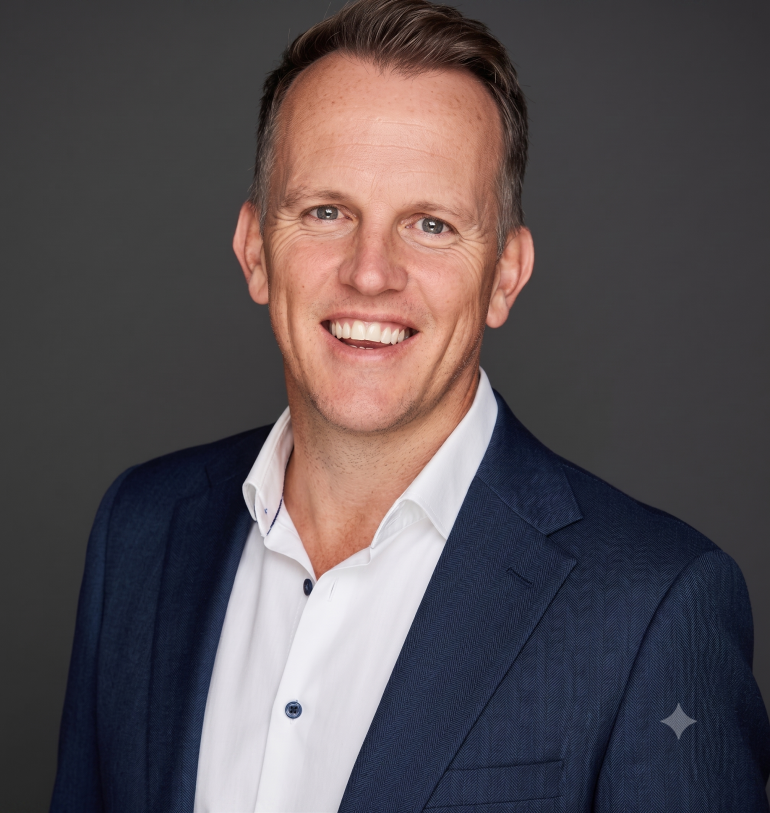
Warren Olivier, regional vice president for Africa at Cloudera, believes many organisations have focused on the wrong constraint. The usual question is how much AI compute a business can buy. The more urgent one, he argues, is where it can afford to run that compute.
“What turns silicon into a working AI model is power, and power is the input this country has very little room to spare on,” Olivier says. “In that sense, a less obvious binding constraint compared to ‘how much’ compute an organisation can buy, is actually ‘where’ it can afford to run it, and what happens when it cannot.”
In Cape Town, four proposed data centres would require about 580 MW between them, just over a third of the city’s current peak electricity demand of 1 676 MW. Meanwhile, Eskom’s planning points to a large reduction in coal capacity from 2029. The country’s AI repatriation push may therefore run straight into the same constraint it was meant to escape.
The problem isn’t only GPUs
For much of the past few years, the AI supply story has been about chips. Companies have competed for access to Nvidia GPUs, while cloud providers have struggled to keep up with demand for high-end compute.
Olivier doesn’t dismiss that pressure. But he thinks it misses the point.
“Bringing a GPU to a warehouse does nothing,” he says. “What turns silicon into a working AI model is power.”
The GPU market has also eased since its worst shortages. Nvidia has said lead times exceeded 12 months during shortage periods, but more recent procurement reporting suggests H100 purchase lead times have fallen to roughly 10 to 14 weeks, even though guaranteed large-scale rental capacity remains scarce and expensive.
That shift makes electricity more important, not less. A company may be able to secure hardware more easily than it could in 2023, but it still needs somewhere to run it: reliable grid capacity, cooling, network connectivity and a contract that doesn’t become unaffordable the moment workloads scale.
Olivier sees cost unpredictability as a central part of the problem. Cloud providers meter AI differently, and finance teams that spent years learning to forecast cloud spend are finding that AI doesn’t behave like conventional workloads.
“The more capable the AI model, the more it gets used, increasing costs on a curve that hasn’t been drawn in the budget or even really plotted,” he says. “These days a workload can double in cost between board meetings, and a CFO who cannot predict a number that large cannot control it either.”
That is why some businesses want compute closer to home. But local infrastructure only solves the cost and control problem if the underlying input costs are predictable too.
Coal is leaving, whether AI is ready or not
Eskom’s coal exit is no longer a distant prospect. The 2025 Integrated Resource Plan assumes a phased shutdown from 2029, with about 8 GW of coal capacity reduced between 2029 and 2030, and a further 15 GW between 2034 and 2042. Eskom has also said its current plans provide for about 7.4 GW of net coal capacity to shut by 2030.
Olivier’s “roughly 5 GW” is therefore on the cautious side. The more important planning number is closer to 7 GW or 8 GW by the end of the decade.
Eskom’s recent performance gives the government room to argue that the worst is behind it. The utility reported its strongest year-to-date energy availability factor in six years in August 2026, with diesel use down sharply and OCGT load factor at 1.17%. Diesel spend for the year to 27 August fell 82.38% year on year to R1.04 billion.
That’s genuine progress. It’s also not the same as having spare capacity. Using less emergency diesel means the system is healthier. It doesn’t mean it can absorb hundreds of megawatts of concentrated new AI demand without new generation, transmission and storage.
Olivier’s concern is that AI repatriation could create a false sense of security. Companies may believe they’ve reduced their dependence on global cloud providers, only to discover they’ve tied their operations to a single national grid.
“Many people may not have realised that the national grid constraints South Africa could face again even represented a single basket for their AI repatriation efforts,” he says. “Many baskets are invisible for a long time.”
Diesel won’t save the AI factory
Backup generators are the obvious answer to grid risk, at least for a single office park. They’re a much weaker answer for a hyperscale AI campus.
Eskom’s four quick-response gas turbine stations have an installed capacity of 2 426 MW, while its two largest diesel-fired sites, Ankerlig and Gourikwa, have nominal capacities of 1 338 MW and 746 MW respectively. These are national peaking assets built for short bursts, not a private power plan for data centres that need hundreds of megawatts.
Olivier calls diesel backup for facilities of that size in one city “an enormously difficult task”.
He also expects the market to respond with more complicated commercial terms. If power becomes scarce, data centre operators may need to price continuity differently, reserve capacity or introduce conditions that shift more risk onto customers.
“There will be terms and conditions that develop to cater for these looming possible scenarios,” he says. “That will add more layers of complexity to the business continuity and corporate recovery plans that motivated for hedging against global risk in the first place.”
In other words, the very decision to bring AI home could create a new form of exposure: a company may have escaped volatile global cloud pricing, only to face volatile local power pricing.
Local compute still makes sense
None of this means South African businesses should abandon the idea of local AI infrastructure. Olivier is careful not to oversell the problem.
“None of this is to say that local compute isn’t a solution,” he says.
There’s a real case for keeping AI infrastructure in South Africa. Data sovereignty, latency, regulatory scrutiny and control over sensitive enterprise data all matter, especially in finance, healthcare and the public sector. Reframed has reported that data sovereignty in South Africa now has regulatory teeth, and local infrastructure is one credible response, though it isn’t automatically the right one for every organisation.
But sovereignty isn’t achieved by planting a server farm on local soil. That facility still depends on South African power, water, fibre and maintenance capacity. If the grid tightens, “local” doesn’t automatically mean “resilient”.
Olivier’s answer is architectural flexibility rather than a wholesale retreat from the cloud. Keep data where regulation or business risk requires it to stay. Send processing to the data where possible. Use local capacity where it makes commercial sense. But don’t build an AI estate that depends entirely on one facility, one provider or one grid.
“Keep data where it lives; send the processing to it,” he says. “Bring in compute capacity to your data from one cloud environment or hyperscaler this month and move to a different one next month to handle spikes during peak usage in a more cost-effective way.”
That’s easier said than done. Data gravity, proprietary cloud services, model dependencies, compliance rules and egress costs all make workload portability harder than a vendor pitch suggests. The realistic goal isn’t seamless movement between providers. It’s avoiding an architecture where one outage, one price shock or one grid constraint can stop the business.
Data centres aren’t simply parasites
It’d be lazy to cast every data centre as a drain on the grid. Business Maverick managing editor Lindsey Schutters has reported for Daily Maverick that these facilities can anchor investment in substations, transmission, local manufacturing and skilled jobs.
High-tier facilities need redundant power systems and utility-scale substations, which can unlock infrastructure that benefits the wider network. A well-planned hyperscale campus can, in theory, help pay for upgrades a municipality would otherwise struggle to justify.
The catch is timing. A data centre that arrives before the substation, transmission capacity, renewable procurement and storage are in place doesn’t strengthen the grid. It adds load to a system that may not be ready for it.
Renewables are part of the answer, but they’re not a magic one. Schutters has also noted that a 120 MW solar plant doesn’t equal 100% green power because solar output is intermittent, and utility-scale renewable projects may cover only part of a facility’s critical load. Wheeling renewable electricity can reduce carbon exposure and support new generation. It doesn’t, on its own, guarantee firm power when the sun sets or the wind drops.
The investment is coming either way
South Africa is likely to get more data centres whether or not it has a coherent energy plan. As we reported, the 2026 State of the Nation Address confirmed R50 billion in expected data centre investment over three years, with 55 facilities already operational, while the local cloud market is projected to grow from an estimated R49.6 billion in 2025 to R101.5 billion by 2029.
The risk is that the country treats those numbers as proof of success while leaving the underlying constraints unresolved. It needs public disclosure of data centre electricity and water use, clearer grid-connection priorities, enforceable efficiency standards, renewable procurement and storage requirements, and honest rules about when diesel backup is acceptable.
Bringing AI home is a rational response to cloud costs, sovereignty pressure and global supply risk. It only works if the power behind it is planned as carefully as the compute.
Olivier’s warning is that companies may be solving one concentration risk while creating another. Local compute can give South African businesses more control over cost, data and continuity. But if the electricity behind that compute is unreliable, opaque or diesel-dependent, they haven’t removed their risk.
They’ve moved it closer to home.