
Long before eSIMs became commonplace, KnowRoaming was selling an unusual product through iStore in South Africa: a tiny electronic sticker that you attached to your SIM card to save money on international roaming.
I first heard about it from tech journalist Nafisa Akabor, who went on to found Recharged, when I was just starting out in tech media. I remember thinking it was pretty clever. You’d remove your SIM card, carefully place the ultra-thin sticker over its metal contacts and put it back into your phone. When you travelled overseas, it could connect you to KnowRoaming’s partner networks, potentially saving you a fortune on roaming charges without having to buy a local SIM.
That was back in 2014. More than a decade later, the South African-founded company has launched KR.One, a travel eSIM that does away with both the sticker and the need to install a new eSIM every time you travel.
One eSIM, multiple holidays
Travel eSIMs have made it considerably easier to get mobile data overseas, but setting one up isn’t always as simple as buying a package. Depending on the provider, you might have to scan a QR code, install a new profile and adjust your phone’s mobile settings before leaving South Africa.
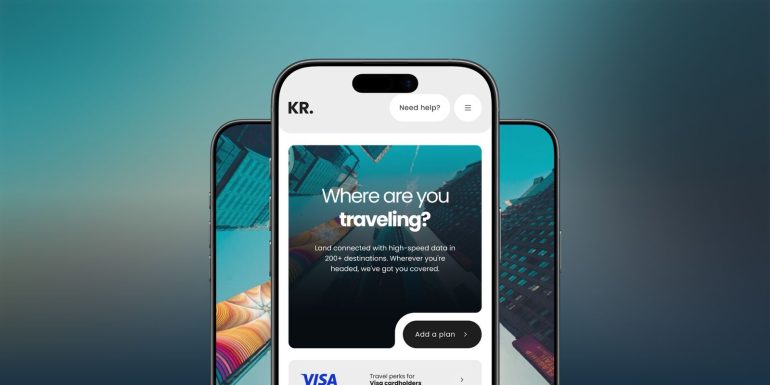
With KR.One, the eSIM stays installed on your phone. You buy destination-specific data packages through the KnowRoaming app whenever you need them, without going through the installation process again. The company says its service covers more than 200 destinations, with access to multiple mobile networks in supported markets.
“Travellers tell us they love the flexibility and savings that eSIMs offer but hate having to install a new one for every trip,” says Michael Roffey, KnowRoaming’s executive director.
KnowRoaming has also redesigned its app, allowing customers to buy data packages, check their usage and manage their connectivity.
You’ll need an eSIM-compatible phone to use KR.One. On devices that support using two SIMs simultaneously, you can generally keep your South African number active for calls and messages while using the travel eSIM for mobile data. Just make sure your home operator’s data roaming settings won’t leave you with an unexpected bill.
Haven’t other eSIM companies already figured this out?
Well, yes. KnowRoaming isn’t the first company to offer reusable travel eSIMs. Airalo, for example, already offers rechargeable eSIM products, and there are plenty of competitors selling international data packages through their apps.
eSIMs have also become increasingly common in South Africa, with local operators embracing the technology. Melon Mobile, for example, introduced eSIM support alongside its family plans, allowing customers to activate a mobile connection without needing a physical SIM card.
KnowRoaming’s approach is convenient, but whether KR.One is worth using will depend largely on how much its data packages cost.
The company claims travellers can save up to 75% compared with traditional international roaming. That’s a potentially substantial saving, although it’s a comparison with conventional roaming rather than competing travel eSIM providers.
KnowRoaming hasn’t included destination-specific prices in its announcement, making it difficult to compare KR.One with services such as Airalo and Holafly. Package validity, network coverage and available data allowances will also influence which provider offers better value.
And despite the company’s ‘one eSIM for life’ marketing, you’re not getting unlimited or lifetime data. You’ll still need to pay for your data packages.
KnowRoaming wants a bigger piece of the African travel market
KnowRoaming also plans to expand its presence across Africa over the next 12 to 24 months.
International roaming can be particularly expensive when travelling between African countries, with prices varying considerably depending on your mobile operator and destination. Travellers visiting several countries can also find themselves dealing with different networks and roaming arrangements along the way.
According to figures published by the International Air Transport Association (IATA), African airline passenger demand grew by 9.4% in 2025, compared with 5.3% globally.
And there’s plenty of money to be made in travel connectivity. Juniper Research forecasts a 380% increase in global travel eSIM revenue between 2025 and 2030.
KnowRoaming hasn’t said which African markets it plans to prioritise or how its pricing will compare with local operators.
Where to get KR.One
KR.One is available through the KnowRoaming website and its app on the Apple App Store and Google Play Store.
I haven’t tried KR.One yet, so I can’t comment on its performance or how its pricing compares with the travel eSIMs I’ve used in recent years. I’d be particularly interested to see how its packages stack up for South Africans travelling to Europe, where there’s already plenty of competition.
It’s also quite something to see KnowRoaming still around after all these years. I remember when its solution to expensive roaming involved buying a R399 sticker from iStore and carefully attaching it to your SIM card.
Thankfully, nobody has to do that anymore.