
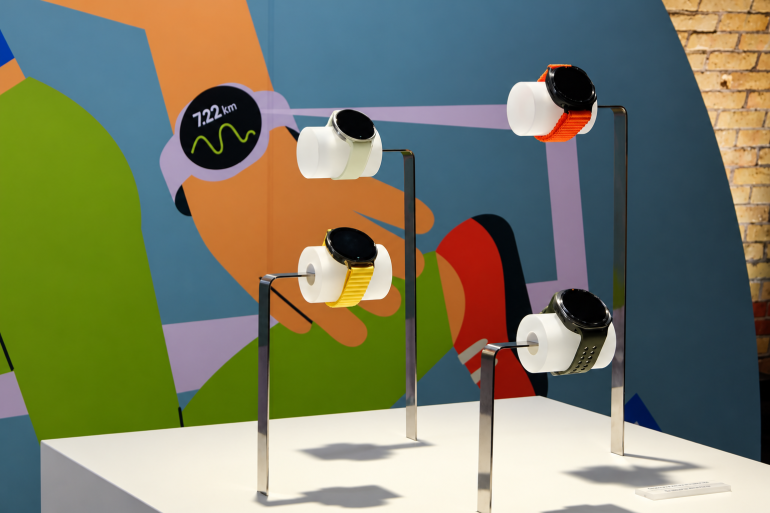
It’s been at least four years since I last reviewed a Samsung Galaxy Watch, and while there have been plenty of changes in that time, the core experience remains much the same. I don’t mean that in a boring way, or that you should hold onto your years-old Galaxy Watch because Samsung hasn’t done anything worthwhile since then. I mean it in a comfortable, reliable way.
It’s one of the things I genuinely appreciate about Samsung’s mobile devices. No matter how many new features arrive or how much the designs change, the basic experience remains familiar. There’s a consistency to Samsung’s products that I’ve come to appreciate, particularly when so many technology companies seem determined to change things simply for the sake of it. There’s something comforting about picking up a new device and immediately knowing how to use it.
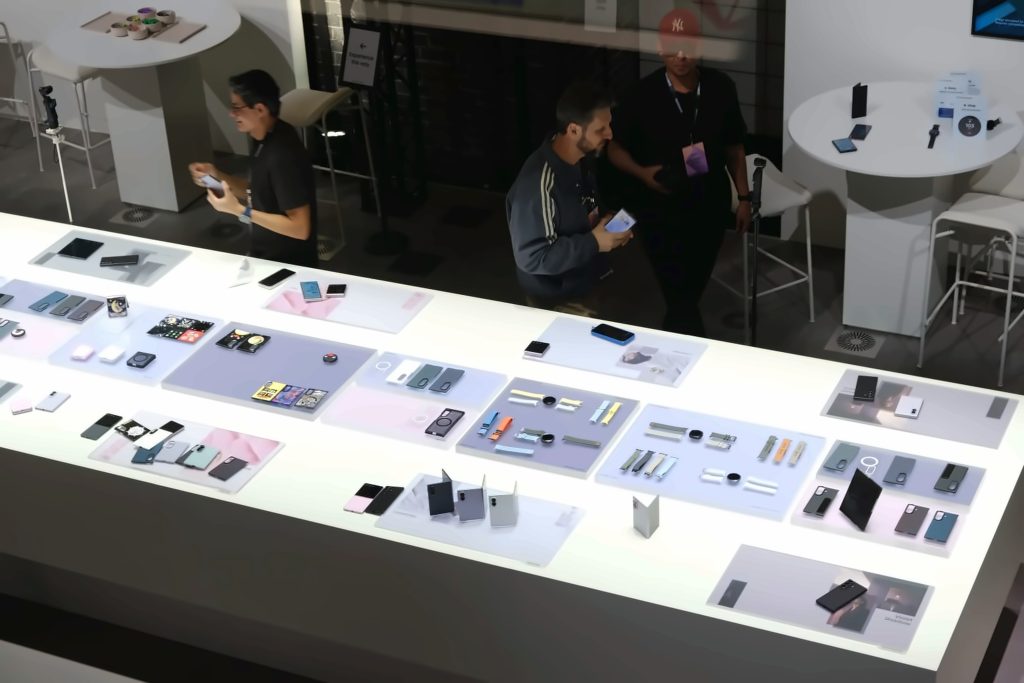
When I got to see the Galaxy Watch9 at Samsung’s Unpacked event in London in July, where it was unveiled alongside the Galaxy Z8 series, I knew almost immediately that this was a watch I wanted to spend some proper time with. I’d already fallen rather hard for the Galaxy Z Fold8, but the Watch9 caught my attention too. I liked its shape, the slimmer profile and the way Samsung had refined the design without making it look unnecessarily complicated.
A few months later, I’ve been using the 44mm Bluetooth model alongside my Fold8, and I’m pleased to say that I like it just as much as I thought I would. It’s comfortable, looks fantastic and has become one of those devices I wear without thinking too much about it. It’s also exceptionally good at documenting just how badly I sleep every night. Yay me.
One of the biggest changes since I last reviewed a Galaxy Watch is the arrival of artificial intelligence. Samsung started putting Galaxy AI at the forefront of its mobile products with the Galaxy S24 series in 2024, and its smartwatches have followed a similar path. The Watch9 can now do considerably more with the health information it collects, including interpreting patterns in your sleep, recovery and activity.
I’ve enjoyed exploring some of those features, but what I’ve appreciated most about the Watch9 has surprisingly little to do with AI.
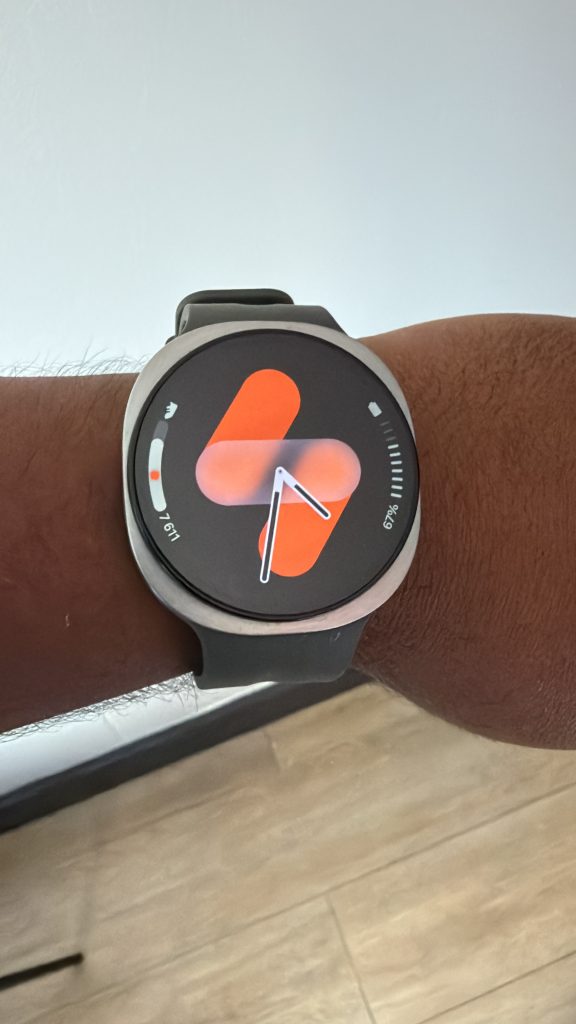
Samsung got the design just right
I think the Galaxy Watch9 is a particularly handsome smartwatch. Samsung has kept the circular display, but the surrounding case has a slightly squarer, cushion-shaped design that makes it look quite different from the company’s older watches. It’s striking without being flashy, and I like that Samsung hasn’t tried to make it look overly futuristic or sporty.
There’s something tasteful about the design. The proportions feel right, the edges are nicely rounded and it looks perfectly appropriate whether I’m wearing a T-shirt or something smarter. I’m rather fond of watches that have a little personality without looking as though they’re trying too hard, and I think Samsung has managed that here.
The 44mm model weighs just 34g without its strap and is 8.6mm thick, which helps explain why it’s so comfortable. I’ve worn it throughout the day and while sleeping, and I’ve never found myself wanting to take it off because it’s irritating my wrist. That’s important for any smartwatch, but particularly for one that Samsung wants you to wear overnight to monitor your sleep.
The 1.5-inch Super AMOLED display is lovely too. With a resolution of 480 × 480 pixels and a claimed peak brightness of 3,000 nits, there’s plenty of room for notifications, health information and Samsung’s selection of watch faces. The interface makes good use of the display, and I haven’t felt that I’m constantly trying to squeeze my fingers into tiny little areas of the screen.
One feature I’m especially happy Samsung has retained is the ability to scroll through the interface by running your finger around the edge of the display. If you remember the older Galaxy Watches with their physical rotating bezels, you’ll know exactly why I enjoy this.
I loved those rotating bezels. There was something so satisfying about turning the bezel to move between menus and notifications, and I was disappointed when Samsung started moving away from them on some models.
The Watch9 doesn’t have a physical rotating bezel, but the touch-sensitive alternative does a pretty good impression. I can move through menus and tiles with a circular movement around the watch face rather than repeatedly swiping across the display. I use it all the time, and it still reminds me of one of my favourite features from Samsung’s older watches.
The Fold8 and Watch9 make a lovely pair
I’ve already written about how much I love the Galaxy Z Fold8 in my review, and several months after Samsung unveiled it in London, I’m still rather obsessed with the phone. Using the Watch9 alongside it has been lovely, largely because of how naturally the two devices work together.
Notifications arrive on my wrist, I can deal with calls and messages without constantly reaching for the Fold8, and I have quick access to the things I use most frequently. None of these features is particularly new or groundbreaking, but they’re convenient, and the watch has become part of how I use the phone every day.
One of my favourite little discoveries is that I can control Apple Music from the Watch9 when I’m listening to music on my Fold8. I can pause a song, skip tracks or change the volume without touching my phone, and I love that it works even though I’m using Apple’s music service rather than Samsung’s or Google’s.
I know that might seem like a minor thing to get excited about, but these are the features I find myself using regularly. I’m not constantly asking my watch to do something extraordinary. Sometimes I simply want to skip a song without taking my phone out of my pocket.
The Watch9 runs Google’s Wear OS with Samsung’s One UI Watch interface, and it feels immediately familiar if you’ve spent time with Samsung’s smartphones. The interface is easy to understand, the menus are sensibly arranged and there’s a good selection of apps available through Google’s Play Store.
Underneath it all is Qualcomm’s Snapdragon Wear Elite processor, supported by 2GB of RAM and 32GB of storage. I’ve found the watch responsive in everyday use, and moving between the features I use regularly is quick and straightforward.
Of course, you don’t need a Fold8 to enjoy the Watch9. It works with compatible Android smartphones, although some of Samsung’s health features are restricted to Galaxy phones. But if you’re already using a Samsung smartphone, there’s very little effort involved in getting the two devices to work together.
I think Samsung deserves credit for how consistently well it handles this. The Watch9 doesn’t feel like something I’m carrying around in addition to my phone. It feels like another way of interacting with it.
My sleep is apparently a disaster
I’ve always been interested in sleep tracking, partly because my own sleep isn’t particularly good. I thought having a smartwatch that could tell me more about what happens while I’m asleep might help me understand why I sometimes wake up feeling as though I’ve barely rested.
The Galaxy Watch9 has been very helpful in confirming that I am, apparently, quite terrible at sleeping.
Every morning, Samsung Health gives me a breakdown of how long I’ve slept, how much time I’ve spent in different sleep stages and how often I’ve woken up during the night. The watch also monitors measurements such as heart rate, blood oxygen and skin temperature, giving me a fairly detailed picture of what happened while I was supposed to be resting.
I’ve found myself looking forward to checking the information in the morning, even when it’s not particularly encouraging. There are nights when I think I’ve slept reasonably well, only for Samsung Health to inform me otherwise. Other mornings, when I’ve woken up feeling absolutely exhausted, it confirms that things were indeed rather dreadful.
Thanks, Samsung. Much appreciated.
I like how Samsung presents all this information. You can look at an overall sleep score, see how much time you’ve spent in deep or REM sleep and compare your results across different nights. There’s plenty to explore if you’re interested, but you don’t need to understand every measurement to get a general idea of how you’ve been sleeping.
Samsung’s Energy Score is another feature I’ve been paying attention to. It looks at your sleep and activity information and gives you an indication of how well recovered you are. Some mornings, the score seems to reflect exactly how I’m feeling. Other times, I’m not entirely sure I agree with it.
The Watch9 also introduces more health monitoring features, including Vitals, which looks at several measurements collected during sleep and highlights changes from your usual patterns. Samsung has also expanded its sleep coaching capabilities, offering guidance based on the information it collects over time.
I’m interested in all of this, although I have to wonder how much of this information is genuinely useful without knowing what to do about it. Being told that you’ve had a poor night’s sleep is one thing. Actually figuring out how to sleep better is another matter altogether.
And while the measurements can help identify patterns, I wouldn’t mistake them for a medical assessment. Smartwatches have become remarkably sophisticated, but they’re still consumer devices interpreting information collected by sensors on your wrist.
For what it’s worth, I enjoy having that information available. Even when the results aren’t particularly flattering.
I thought wearing the Galaxy Ring would make things even better
I’ve also been wearing Samsung’s Galaxy Ring, which I’ve become rather fond of since reviewing it after four months of use. It’s a very different device from the Watch9, with no screen or notifications, and I’ve enjoyed how unobtrusively it collects health information.
Naturally, I was curious about what would happen if I wore both devices together. I assumed that having a smartwatch and a smart ring monitoring my heart rate, movement and sleep would give Samsung Health more information to work with, and that I’d see some improvement in the quality or detail of the insights.
But I haven’t really noticed any difference.
Whether I’m wearing both devices or just the Watch9, the information I see in Samsung Health looks much the same. My sleep reports don’t seem noticeably more detailed, and I haven’t found anything that makes me feel as though wearing the Ring alongside the Watch9 is giving me substantially better information about my health.
Maybe I’m missing something, and that’s entirely possible. But if Samsung is doing something particularly clever with the information collected by both devices, I’m not seeing an obvious benefit from it.
Samsung does have a system for managing how the Ring and Watch work together. Rather than having both devices continuously collect the same information, certain tracking functions can be managed between them to avoid unnecessary duplication and conserve battery power.
I understand the reasoning. If the Watch9 is already collecting the information Samsung Health needs, there’s not much point in making the Ring do exactly the same thing.
The Ring also remains useful when I’m charging the Watch9, because I can continue monitoring aspects of my health without having to wear the watch. That’s something I appreciate, particularly given my frustrations with the Watch9’s battery life.
I just expected a little more from wearing both devices together. Perhaps future software updates will make better use of the combination, but right now I don’t think there’s a compelling reason to buy a Galaxy Ring specifically to complement the Watch9.
I still love the Ring, though. It’s comfortable, discreet and its battery lasts considerably longer than the watch’s. There are also times when I simply don’t feel like wearing a smartwatch, and the Ring is a lovely alternative.
What about all the AI?
Samsung has been putting artificial intelligence into practically everything it makes, and the Watch9 is no exception. Some of the AI features are designed to interpret the health information collected by the watch, while Google’s Gemini lets you perform certain tasks or ask questions using your voice.
I understand why Samsung is doing this, particularly with its health features. A smartwatch can collect an enormous amount of information, and I suspect most people aren’t interested in studying graphs every morning to work out what the numbers mean. If AI can help explain the information and identify patterns that might otherwise go unnoticed, I’m all for it.
But I haven’t found myself thinking about AI very much while using the Watch9. I’m more interested in the sleep information, the notifications and the convenience of controlling things on my Fold8. The AI features are available when I want them, but they haven’t fundamentally changed how I use the watch.
I’m also a little sceptical of how much importance Samsung places on AI in its marketing. The company has built an excellent smartwatch, and many of the things that make it enjoyable have very little to do with artificial intelligence.
I don’t necessarily need a clever algorithm to tell me how much I’ve slept or how many steps I’ve taken. I appreciate the additional analysis, particularly when it identifies something I might not otherwise have noticed, but I don’t think AI alone is a particularly good reason to replace a relatively recent Galaxy Watch.
I really wish the battery lasted longer
For all the things I’ve enjoyed about the Galaxy Watch9, the battery life has been a bit of an irritation. Samsung equipped the 44mm model with a larger 445mAh battery, compared with 435mAh in the equivalent Watch8, but I can’t say that I’ve noticed a particularly meaningful improvement in everyday use.
According to Samsung’s specifications for the 44mm Bluetooth model, the Watch9 can last up to 40 hours with the always-on display switched off, or up to 30 hours with it enabled. In my experience, I need to charge the watch every day, either at night or first thing in the morning when I wake up.
I charge it in the morning because I want to wear it overnight to track my sleep. But that means I have to remember to put it on the charger when I get up, and there are mornings when I simply don’t have the time or forget to do it.
It’s irritating because the watch is designed to be worn throughout the day and while sleeping. Samsung’s put considerable effort into improving its sleep monitoring features, but taking advantage of them means having to find another time to charge the watch.
The Galaxy Ring helps because I can wear it while the Watch9 is charging, but buying another expensive device shouldn’t be necessary to work around a smartwatch’s battery life.
I know Samsung isn’t alone in this. Many premium smartwatches, including Apple’s standard models, need to be charged regularly. But there are also watches that can last several days, depending on their features and how they’re used.
I’d really like Samsung to give us a Galaxy Watch that can comfortably last two or three days without having to switch off half the features. I don’t think that’s an unreasonable expectation for a premium smartwatch in 2026.
And while I appreciate that the Watch9 is remarkably slim and comfortable, I would happily accept a little more thickness if it meant I didn’t have to think about charging the thing every single day.
I’m not expecting miracles. I just want to be able to go away for a weekend without necessarily having to take another charger with me.
Should you buy the Galaxy Watch9?
The 44mm Bluetooth Galaxy Watch9 is listed at R7,699 on Samsung’s South African store, although retail pricing and promotions can vary. That’s still a considerable amount of money for a smartwatch, but I think Samsung offers a very good experience for the price.
I’m also perfectly happy with the Bluetooth version. My Fold8 is almost always nearby, so I don’t particularly need the watch to have its own mobile connection. I still get my notifications, health tracking, apps and music controls, which are the features I use most.
If you’re someone who regularly goes running or exercising without taking your phone along, the LTE model might be worth considering. For my needs, Bluetooth has been more than sufficient.
I wouldn’t necessarily recommend upgrading if you already have a Galaxy Watch7 or Watch8 that you’re happy with. The newer health features and design refinements are welcome, but I don’t think the everyday experience is going to feel dramatically different. And if you’re hoping for a huge improvement in battery life, you’re probably going to be disappointed.
But if you’re using a considerably older Galaxy Watch, or you’re looking to buy your first Samsung smartwatch, I think the Watch9 is an excellent choice. It’s comfortable, looks great and has enough features to be useful throughout the day, even if you’re not particularly interested in fitness tracking.
Samsung has also resisted the temptation to completely overhaul something that already worked well, and I appreciate that. It’s still a Galaxy Watch in all the ways I’ve always liked, just with a more refined design and a few new tricks.
The verdict
I’ve really enjoyed my time with the Galaxy Watch9, and I think it’s reminded me why I liked Samsung’s smartwatches so much in the first place. It’s comfortable, looks fantastic and has become part of my everyday routine without requiring much thought. I particularly love how well it works with my Fold8, and I’m still rather fond of being able to scroll through the interface by running my finger around the edge of the display.
The health features have been interesting too, even if Samsung Health seems determined to remind me every morning that I’m absolutely terrible at sleeping. I’m a little disappointed that wearing the Galaxy Ring alongside the watch hasn’t given me noticeably better information about my health and sleep, but perhaps my expectations were a little ambitious.
What continues to annoy me is the battery life. For a smartwatch that’s supposed to monitor your health throughout the day and while you’re sleeping, having to find time to charge it every single day is frustrating. I’d love to get two or three days of use without worrying about the battery, and I don’t think that’s too much to ask in 2026.
Still, I’m genuinely happy with the Watch9. It’s a lovely smartwatch, and Samsung has refined the experience without losing the familiarity I’ve always appreciated about its devices. I wouldn’t necessarily rush to upgrade from a Watch7 or Watch8, but if you’re coming from something older, there’s plenty to enjoy.