
In the more than a decade that I’ve been a technology journalist, I’ve been to more electronics stores than I can remember, and while the products have become increasingly sophisticated, the experience of shopping for them hasn’t changed all that much. You usually find rows of televisions showing the same promo footage, refrigerators standing beside one another and washing machines covered in stickers advertising their various features. It’s functional, but it doesn’t always give you much of an idea of what living with those products would actually be like.
During my recent trip to South Korea with LG Electronics, I visited two of the company’s flagship showrooms in Seoul that take a very different approach. SKS Seoul is dedicated to luxury kitchen appliances, while D5 brings together much of LG’s consumer technology business across five floors. What I enjoyed about both was the attention given to the spaces themselves, with appliances, furniture, lighting and interior finishes considered as part of the overall design.
There are some extraordinarily expensive-looking kitchens, beautifully integrated appliances and a television so large that I can’t imagine where I’d put it. Much of what I saw isn’t available in South Africa, and I suspect the price of recreating some of these interiors would make even a relatively generous renovation budget look inadequate. But there’s something appealing about seeing household technology presented in surroundings that give you a better sense of how it might fit into your life.
I could happily spend hours at SKS Seoul
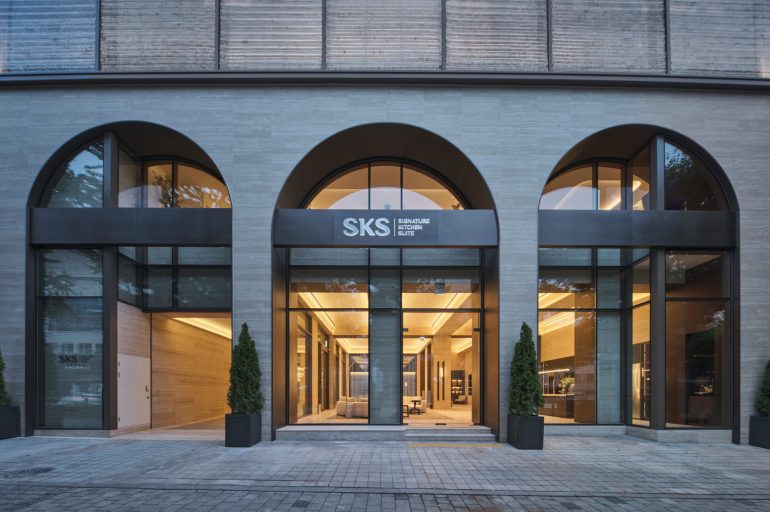
Of the two showrooms, SKS Seoul was probably the one I enjoyed exploring most. Located in Nonhyeon-dong in Seoul’s Gangnam district, the showroom is dedicated to LG’s ultra-premium built-in appliance brand, previously known as Signature Kitchen Suite.
The building was extensively renovated before reopening in October 2025, with Korean architect Min Sung-jin responsible for its design. It covers approximately 1,918 square metres across six levels, including a basement, and has ten exhibition spaces that bring together LG’s appliances with furniture and kitchen designs from Italian brands Molteni&C and Arclinea.
Having worked as a professional chef, I’m very much interested in how kitchens are designed. You become quite conscious of the distance between a refrigerator and a preparation surface, where the ovens are positioned and whether you have enough room to move around while cooking. The flow of a kitchen is something that matters more than you’d think. I’ve worked in kitchens where the layout was amazing and others where what should be a simple task became frustrating because somebody hadn’t properly thought about how the space would be used.
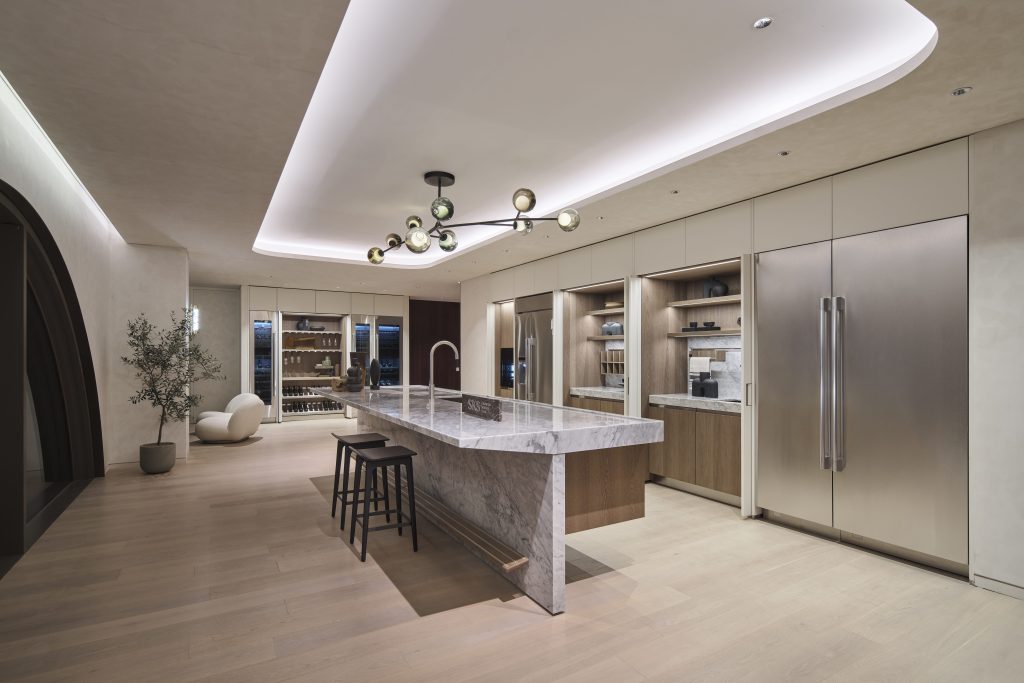
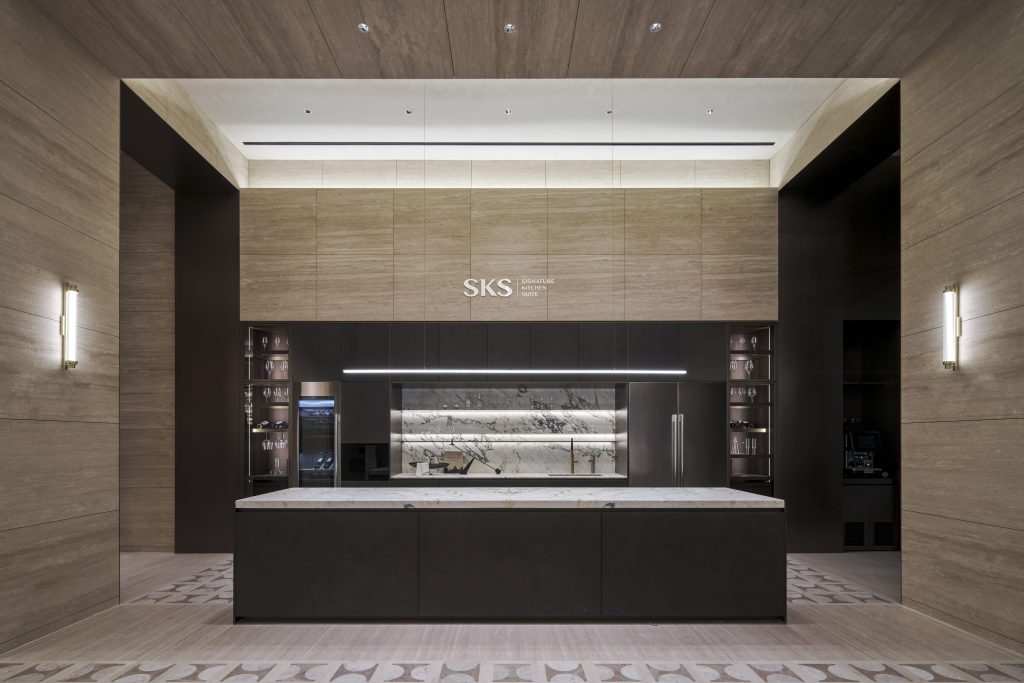
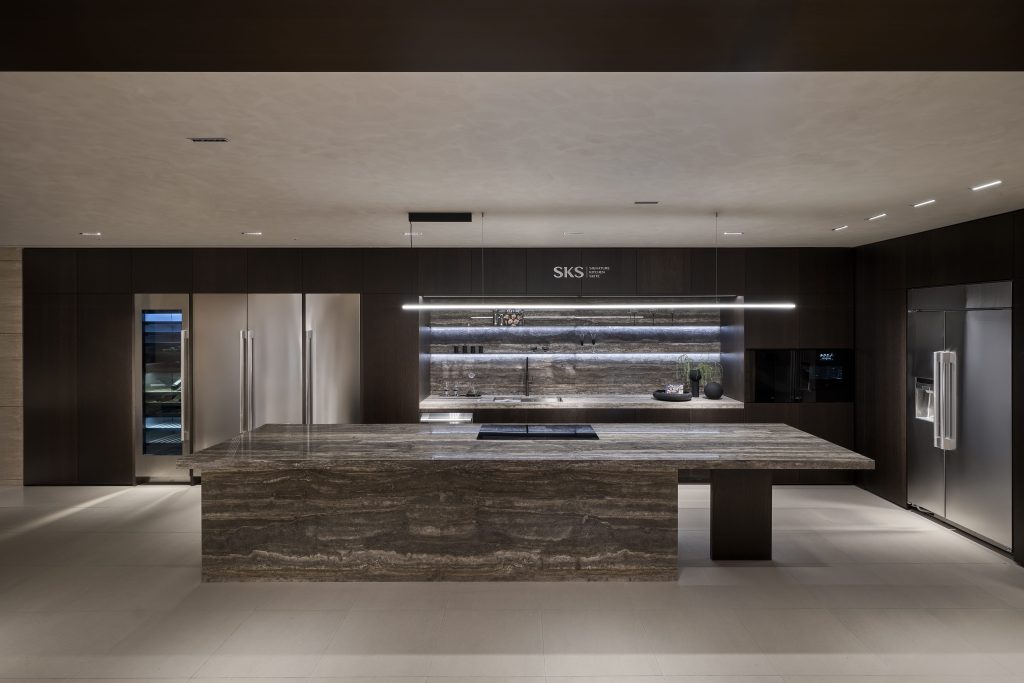
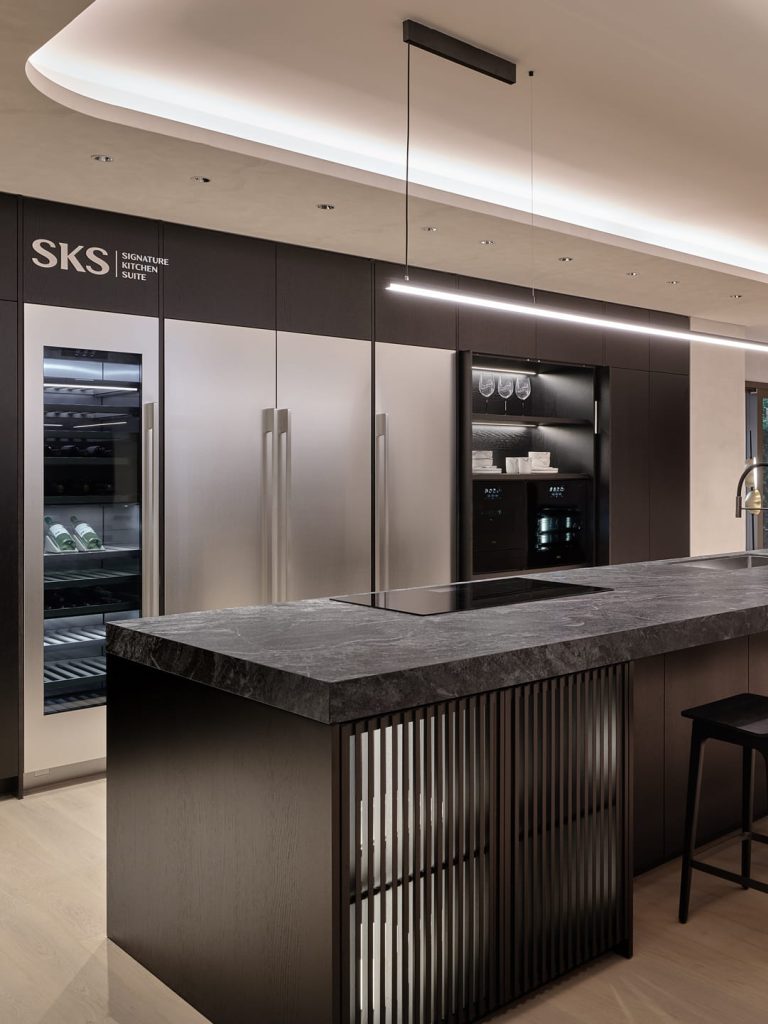
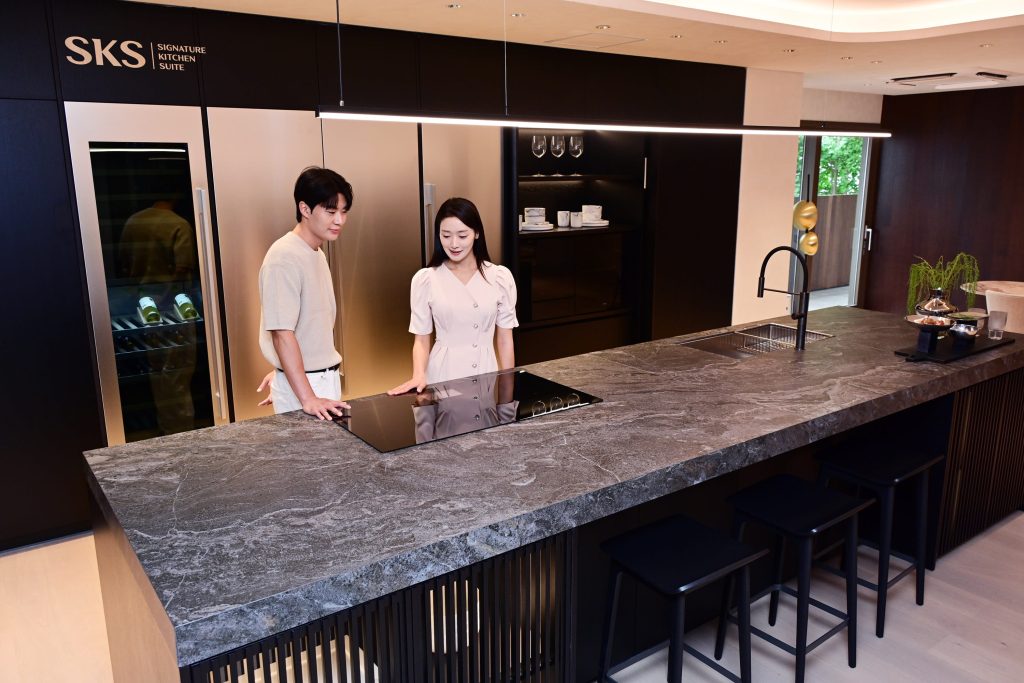
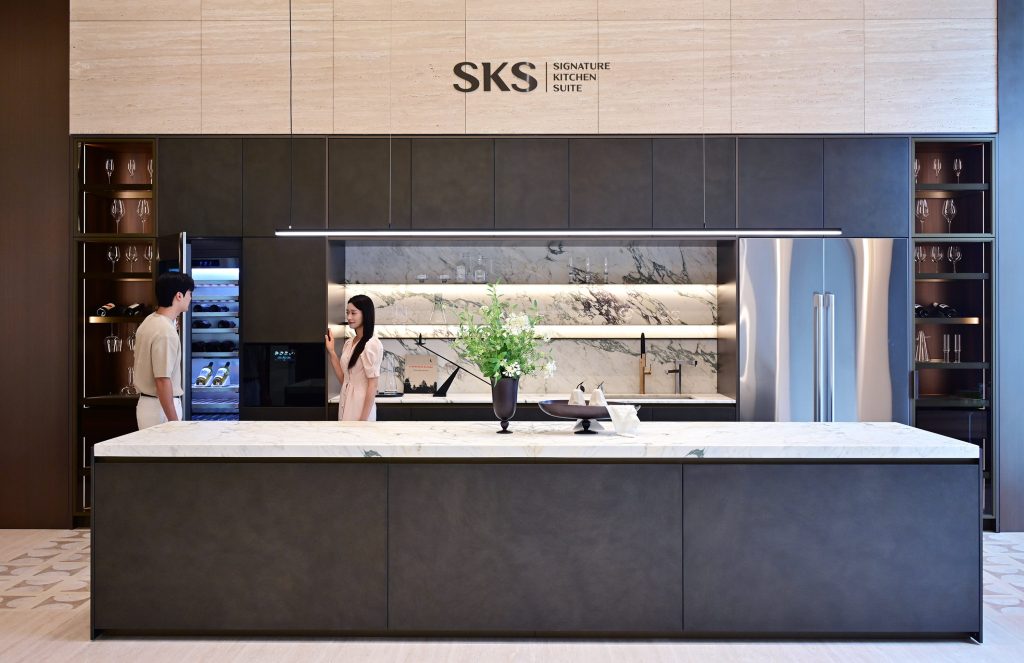
That’s one of the reasons I enjoyed SKS Seoul as much as I did. The kitchens are beautifully finished, but I was just as interested in how everything had been arranged. The ovens, refrigeration, wine storage and cooking surfaces have been integrated into the cabinetry, with large stone islands providing generous preparation areas. Even the lighting has been carefully considered, illuminating work surfaces and display shelves without making the rooms feel like commercial kitchens.
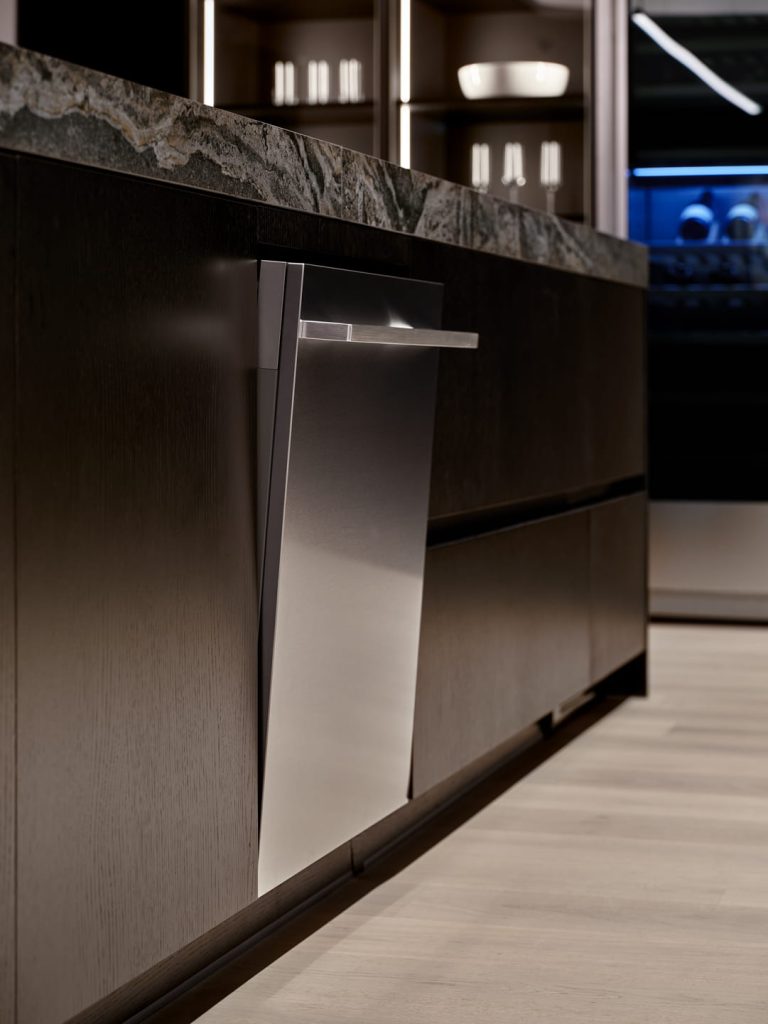
There’s a beautiful mix of materials throughout the building, from dark wood and richly veined stone to warmer, lighter finishes that give some of the kitchens a more relaxed feel. I found myself spending quite a bit of time looking at the cabinetry and how the appliances had been installed, because in several instances, they’re so neatly incorporated into the surroundings that your eye is drawn to the room as a whole before you start noticing the individual products.
I also appreciate that LG hasn’t tried to make every appliance look futuristic. There’s very little about these kitchens that screams technology, despite the amount of it built into them. They’re contemporary spaces with familiar materials and layouts, and I think that’s a far more appealing direction for kitchen design than covering every available surface with screens and touch controls.
There’s quite a lot of thought behind those refrigerators
One of the details that caught my attention was how closely some of the refrigerators fit against the surrounding cabinetry. It’s something that can make a considerable difference to the appearance of a kitchen, especially when you’re trying to create uninterrupted lines across an entire wall.
LG’s developed what it calls Zero Clearance Hinge technology for compatible refrigerators, which allows them to be installed with as little as 4mm of clearance from the surrounding cabinetry. The hinge mechanism allows the doors to open without requiring the usual amount of space at the sides, which gives designers more flexibility when planning a kitchen.
Anyone who’s had to work around an awkwardly positioned refrigerator will understand why this is such a game changer. Fridges are large appliances, and you can’t just ignore the space their doors need to open properly. A poorly positioned refrigerator can affect the entire layout of a kitchen, so a design that makes installation easier while also improving the appearance is something I really appreciate.
SKS also has a range of built-in ovens, induction hobs, dishwashers and wine storage cabinets, with several of the appliances displayed in cabinetry that makes them look almost like part of the furniture. I was drawn to the dark kitchen installations, where the black glass fronts of the ovens sit beneath illuminated shelving, surrounded by rich wood finishes and stone countertops.
The wine storage areas are equally attractive, with tall, glass-fronted cabinets allowing you to see the bottles inside, some of which also have the InstaView technology found in some of the brand’s fridges. In one of the spaces, the wine storage sits on either side of open shelving, creating an entire feature wall that would look just as appropriate in a dining room as it does in a kitchen.
It’s easy to imagine how much money someone could spend putting one of these spaces together, especially once you start factoring in custom cabinetry, stone worktops and the appliances themselves. But I love the idea of designing a kitchen around how you intend to use it, instead of choosing the appliances first and then trying to find somewhere to put them.
The showroom also has a premium dining space on the fourth floor and a private cooking studio on the fifth, where invited guests can participate in cooking classes. I’d love to spend more time in a space like that, because while I can appreciate how an oven looks, I’m considerably more interested in how it cooks. I’d want to know how evenly it distributes heat, how responsive the controls are and whether the steam functions genuinely make a difference when preparing food.
SKS isn’t officially available in South Africa, which is a pity because I’d be interested to see how the brand would perform in our premium kitchen market. We already have several established luxury appliance brands here, and LG would be entering a market where customers spending this kind of money tend to have fairly specific expectations about performance, installation and after-sales service.
D5 is a very different kind of LG store
During my time in Seoul, I also visited LG’s D5 flagship in Gangnam. The five-storey building covers approximately 2,700 square metres and opened in August 2025 following the renovation of LG’s former Best Shop Gangnam location.
D5 stands for Dimension 5, which LG uses to describe its approach to combining technology, art and design across the building. It’s quite an elaborate name for what is, at its core, an electronics showroom, although the experience is considerably different from walking into a conventional LG store.
The building itself is striking, with a terracotta facade and a large digital installation integrated into its exterior. Inside, the ground floor has a concierge area and an art exhibition featuring LG’s Transparent OLED technology. One of the installations draws on the work of Korean artist Kim Tschang-Yeul, who became known for his remarkably realistic paintings of water droplets.
I’ve seen Transparent OLED displays at several technology exhibitions, and while the technology is impressive, I’ve sometimes struggled to imagine where I’d actually want one. Seeing it used to display artwork makes a lot of sense to me. The transparency adds another dimension to the installation, allowing the images to interact with the surrounding space in a way that wouldn’t be possible with a conventional display.
LG has gone to considerable lengths to create a distinct atmosphere inside D5, including developing a signature fragrance for the building. It’s the sort of detail I wouldn’t normally associate with an electronics store, but it does make the experience feel closer to visiting a design gallery or hotel lobby or premium furniture showroom.
The second floor is where you’ll find products that are more familiar to South African consumers, including LG’s OLED televisions, CineBeam projectors, XBOOM audio systems and gram laptops. Instead of simply placing everything on shelves, LG has created dedicated areas where visitors can experience the products, with lighting and seating arrangements that better resemble how they’re likely to be used at home.
I much prefer this approach to TV demos. It’s difficult to judge a display properly when you’re standing in a brightly lit store with dozens of other screens competing for your attention. The picture settings are often configured to look as bright and colourful as possible, which isn’t necessarily how you’d want to watch TV in your living room.
Having somewhere to sit, with more controlled lighting and a proper audio setup, gives you a better opportunity to appreciate what the TV can do. It also makes it easier to understand why someone might want to spend considerably more on a premium OLED display rather than choosing a less expensive television based purely on screen size.
Even the washing machines get an interesting demonstration
The third floor is dedicated to household appliances, including LG’s TROMM washing machines, WHISEN air conditioners, DIOS refrigerators and air purifiers. There are more complete room displays, but LG has also included installations that explain some of the technology inside the products, which I found quite interesting.
One of these uses Transparent OLED to illustrate how the drum inside a TROMM washing machine moves during different washing cycles. LG’s 6 Motion technology uses a combination of drum movements designed to treat different types of laundry appropriately, while its AI DD system can adjust the washing process based on characteristics of the load.
It’s one thing to read about these features on a product page, but seeing the movements illustrated gives you a clearer understanding of what the washing machine is actually doing. I wouldn’t pretend that this tells you how well it washes clothes, because that requires proper testing, but it does explain the technology better than a collection of marketing terms on the front of the appliance.
There’s a similar installation dedicated to LG’s WHISEN air conditioners, where the internal components have been exposed so visitors can see how the system is constructed. I enjoyed this because we don’t often get to see what goes on inside the appliances we use every day, despite manufacturers regularly telling us how much work has gone into improving them.
I think there’s room for more demonstrations like these in electronics stores, especially as appliances become increasingly complicated. Features such as automatic load sensing, intelligent temperature management and energy-saving modes are genuinely useful when they work well, but consumers aren’t always given much of an explanation of what they’re paying for.
A 136-inch television is difficult to ignore
The fourth floor brings together LG’s premium home technology, including its Objet Collection appliances, SKS built-in kitchen installations and an enormous 136-inch MAGNIT Micro LED display.
The television is enormous. At approximately three metres wide, it’s the sort of screen that makes even a large conventional TV look relatively modest. LG designed it for ultra-premium home entertainment installations, with a 4K resolution of 3,840 x 2,160 and support for Dolby Vision.
Micro LED uses microscopic LEDs that generate their own light, allowing individual pixels to be controlled without a separate backlight. This gives the technology some of the picture quality advantages associated with OLED, including deep blacks and excellent contrast, although the two display technologies work differently.
I’ve seen some huge displays over the years, but that doesn’t make standing in front of a screen this size less impressive. I can’t imagine having enough space for it in my own home, and I’m a little hesitant to even wonder how much it would cost, but it’s easy to appreciate why LG would want to show off a product like this.
The rest of the floor is considerably more understated, with LG’s premium appliances integrated into carefully designed living spaces. The Objet Collection is a good example of how the company is thinking about the appearance of household technology, with refrigerators and other appliances available in finishes intended to complement furniture and interior decor.
I like this approach because I’ve never quite understood why appliances should automatically look out of place in a room. We spend so much time choosing furniture, flooring, lighting and paint colours, yet some of the largest objects in our homes are often selected with very little consideration given to how they’ll look alongside everything else.
Now, I’m not saying that looks should come at the expense of performance, and I’d still want to know whether an appliance works as well as LG says it does before spending money on it. But there’s no reason good design and good functionality shouldn’t go together, especially at the prices these premium products are likely to command.
LG has dedicated an entire floor to its history
The fifth floor is home to LG’s Heritage Lounge and Vision Hall, which look at the company’s history and the technologies it’s developing for the years ahead.
LG traces its consumer electronics history back to GoldStar in 1958, and the Heritage Lounge brings together exhibits showing how the company and its products have changed over the decades. I enjoy looking at older technology, partly because it reminds me how quickly things we once considered impressive become ordinary parts of our lives.
A television or washing machine that would have been a major household purchase several decades ago now looks remarkably simple compared with what manufacturers are producing today. Even refrigerators have changed considerably, with better insulation, more efficient cooling systems and increasingly sophisticated temperature management.
The Vision Hall is more elaborate, with kinetic art and a display installation made up of 28 transparent 55-inch OLED panels. LG uses the space to explore its work in areas including connected homes, mobility, air solutions and webOS, giving visitors a sense of how much broader the company’s business has become.
The installation is impressive, although I found the historical exhibits just as interesting. There’s something satisfying about being able to see the products that helped establish a company alongside the technology it’s working on today, especially when so much of that technology is now used in our homes.
I’d love to see more showrooms like these in South Africa
One of the things I kept thinking about while visiting SKS Seoul and D5 was how different the experience is from shopping for appliances in South Africa.
We certainly have premium kitchen showrooms and specialist home entertainment retailers, and some of them do an excellent job of demonstrating their products. But most people still buy their appliances from large electronics or furniture stores, where the shopping experience is largely built around comparing prices and specifications.
There’s nothing wrong with wanting to find the best deal, especially when household appliances are expensive purchases that people expect to last for years. I just think that there’s an opportunity for retailers and manufacturers to do more to help customers understand what they’re buying.
If you’re spending R50,000 on a TV, being able to watch it in a properly configured room would be useful. The same applies to a premium oven or washing machine, where understanding how the features work could make it easier to decide whether paying more is actually worthwhile.
And while I appreciate that not everyone’s going to be shopping for a kitchen that looks like something out of an architectural magazine, there’s still something to be learned from the way SKS presents its appliances. Seeing a complete kitchen makes it easier to understand how products fit together, how much space they require and what the finished installation might look like.
During the same trip, I also visited LG’s ThinQ Real demonstration home, where the company showed how connected appliances and intelligent home automation could take care of more everyday household tasks. I’ve written about that experience in Inside LG’s Zero Labour Home, where the future of living is already taking shape.
SKS Seoul and D5 offered a different look at LG’s thinking. While ThinQ Real focused on what the technology can do, these showrooms were about how the products look and feel in the spaces they’re designed for, and the experience of actually living with them.
I left SKS Seoul with a long list of things I’d love to have in my own kitchen, although I suspect my bank account would have some fairly strong objections. As much as I enjoyed theTV displays and the installations at D5, it was the kitchens that made the biggest impression on me. I loved the materials, the cabinetry and the way the appliances had been integrated into the interiors, and I could easily have spent several more hours exploring them.