

Ookla’s latest report paints a familiar story in new figures. Across sub-Saharan Africa, median download speeds are creeping higher — MTN South Africa hitting 74.76 Mbps, Vodacom claiming 5G median speeds of 174.9 Mbps — and Safaricom in Kenya showing 183 Mbps on 5G. On paper, operators are racing ahead. Look closer, though, and the sprint has a few trips, stumbles, and flat tyres along the way.
Take the DRC. Orange leads the local speed table with a median of 24 Mbps. Not terrible, but the country’s 4G coverage is patchy, energy costs spike unpredictably, and rural users often still get nothing beyond a few measly megabits. Fast speeds make good slides for investors. But if a clinic can’t reliably download patient records, the median doesn’t mean a thing.
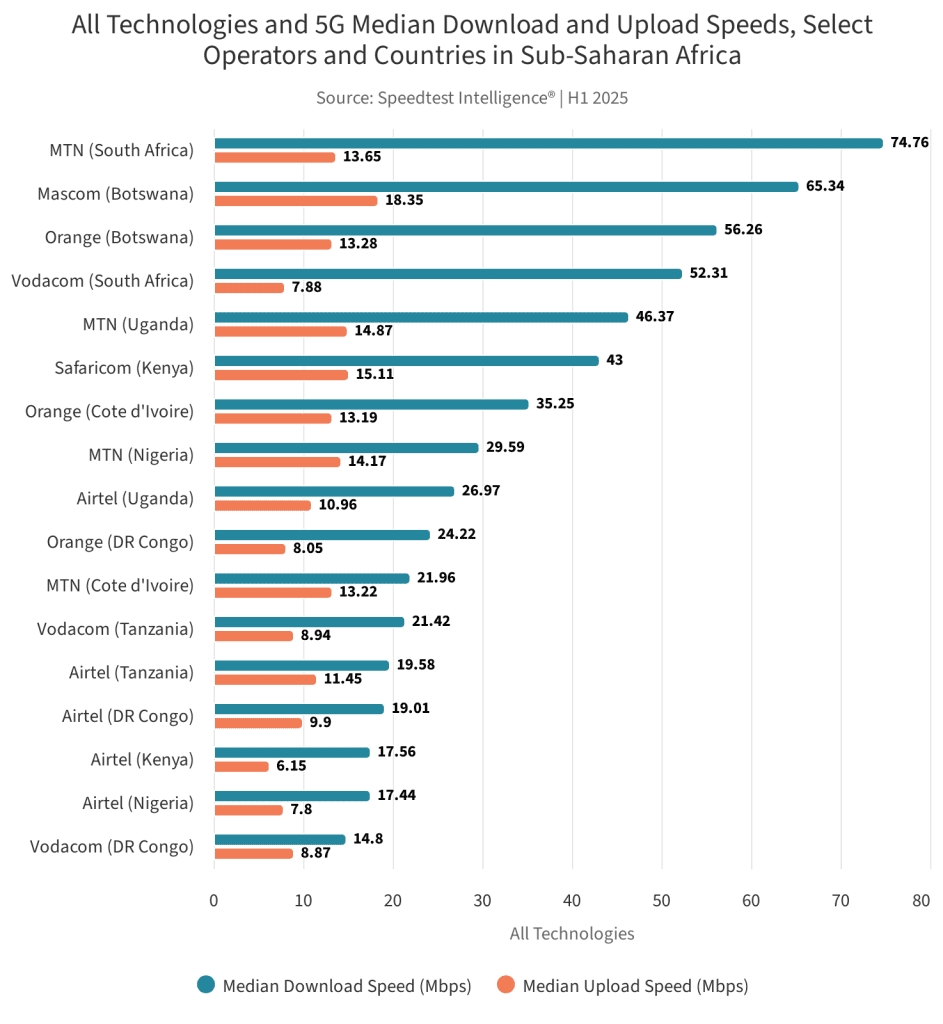
South Africa tells a similar story in a smaller frame. Vodacom leads on 5G median speed. MTN tops the overall median. Pick your headline. Either way, millions of users outside Johannesburg and Cape Town still contend with dead zones and slow streams. Speed isn’t a guarantee of consistency. And yet telcos trumpet it like a medal.
Across the continent, operators with commercial 5G and wider spectrum naturally top the medians. Safaricom in Kenya, MTN in South Africa — they’ve got the money, the urban users, and the infrastructure to deliver. Elsewhere, devices are older, coverage shallow, and power supply unreliable. Those same headline metrics that make PR teams salivate don’t capture the struggle of a township shopkeeper trying to upload sales records or a student in rural Uganda trying to join a Zoom class.
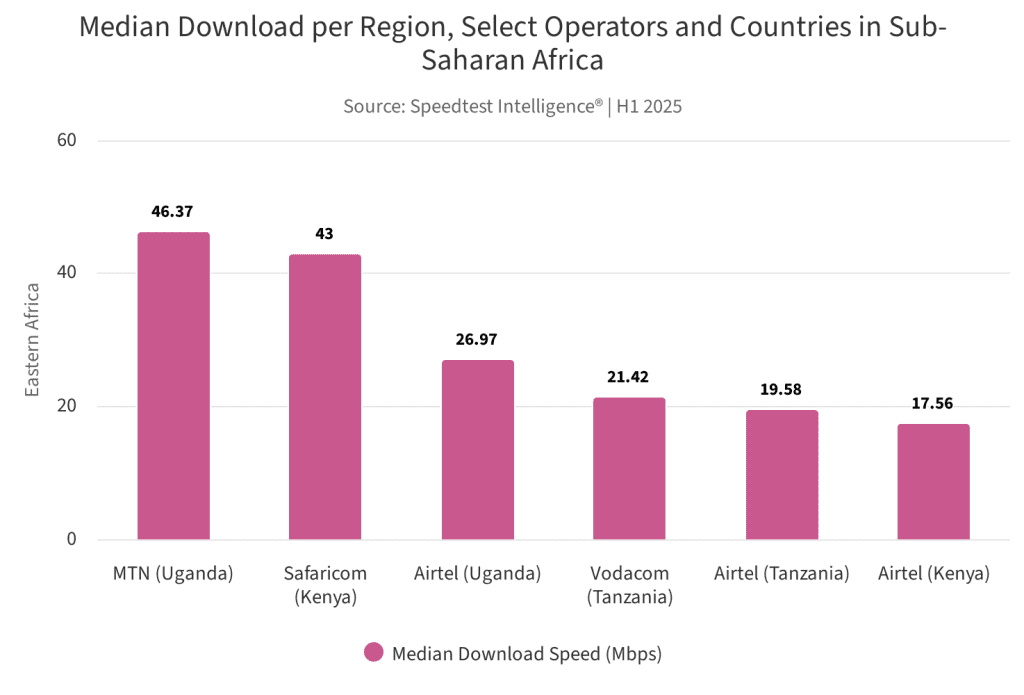
The numbers also hide incentives. Operators push 5G because it makes them look innovative. Regulators cut mobile termination rates, currencies wobble, backhaul costs rise. Fast networks make great marketing. They don’t always make life easier. And median speeds are silent on the user experience.
Mobile network performance in Africa is improving, sure. But headline figures are often just that: figures. Users want networks that work consistently, where they live, every day. Vodacom and MTN can claim medals in metros, Safaricom in Nairobi. Meanwhile, millions experience something closer to fiction than reality.
There is a subtle geography to all this. Urban centres get the shiny new kit. Rural and peri-urban areas get patched towers and promises. That matters because African telcos are increasingly building services — mobile finance, streaming, health apps — that assume reliable networks. A peak-speed PR figure won’t save a payment stuck halfway through, or a video lesson buffering in the middle of a township.
The story isn’t all bleak. Some operators are investing strategically, densifying urban sites, expanding spectrum wisely. Others, however, chase speed medals and ignore the messy work of coverage, backhaul resilience, and energy planning. The H1 2025 data is proof of progress — but also a warning. Without looking beyond the medians, telcos, regulators, and investors risk celebrating an illusion of connectivity.
For a closer look at how connectivity gaps still shape access and opportunity, see my piece on digital inclusion and infrastructure in Africa.
In short: Africa’s mobile networks are faster. But faster is not the same as fairer. Speed metrics may grab headlines, but they do little for the millions still left waiting for a connection that actually works.