
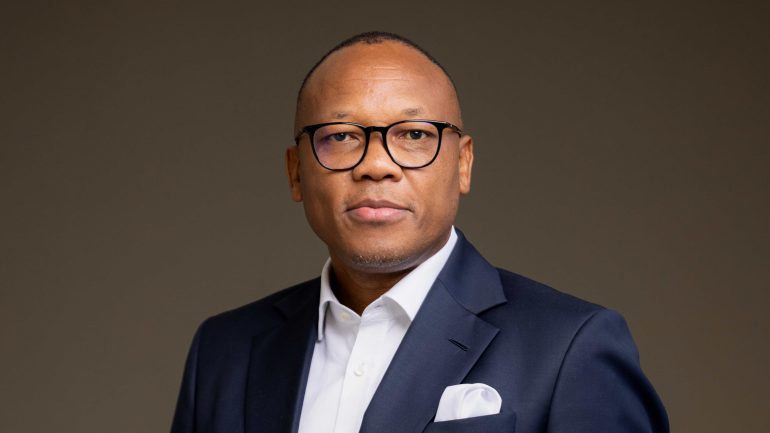
When a company appoints a new country head and frames it as a recommitment to the market, the instinct is to read it as corporate PR filling column space. The Ericsson South Africa leadership appointment of Siseko Ngxola deserves more attention than that, even if the press release language doesn’t earn it.
Ngxola’s appointment as Head of Ericsson South Africa is, on its surface, an internal promotion. He joined Ericsson in December 2024 as Key Account Manager, was part of the local leadership team, and had been serving as acting head since April 2025. By August, the acting title was dropped. The press release, predictably, does not volunteer this detail. It describes the appointment as a reaffirmation of Ericsson’s “dedication to the South African market,” which is technically true and strategically vague in equal measure.
What the release doesn’t say is that his predecessor left the company, and that Ericsson’s stated position was that its “strategy and commitment to the South African market remain unchanged.” That is a phrase companies use when there has been disruption, not when everything is running smoothly. The appointment of Ngxola is Ericsson stabilising its South African operation during a period that matters enormously for the company’s position on the continent.
That context is worth understanding. MTN South Africa became the first operator globally to complete automated in-service software upgrades on Ericsson’s Packet Core Gateway, positioning South Africa among global leaders in automated core network operations. Iafrica That milestone, achieved in late 2025, is not incidental. It is Ericsson’s clearest proof point that its African bets are paying off technically, and it happened on South African soil. Losing momentum in the SA market right now would be costly.
The “local talent” framing in the announcement is also doing specific work. Ngxola brings over 20 years of telecoms experience, including senior positions at Nokia, Cisco and Amdocs before joining Ericsson. That background is an asset in multiple directions: he understands the competitive landscape from inside competing organisations, he has existing relationships with South African operators, and his appointment pre-empts the narrative that global vendors parachute executives into African markets without building local depth. Huawei has been running a version of this playbook for years with its “In South Africa, for South Africa” positioning, which Ericsson now has a local credibility argument to counter.
The broader pattern is worth naming. Whether it is Huawei, Nokia or Ericsson, every major telecom infrastructure vendor is currently telling the same story in the African market: we are committed, we are local, we are here for the long term. The language is nearly interchangeable. What separates them is whether the infrastructure wins back it up. As we explored in our earlier conversation with Ericsson’s VP for West and Southern Africa, Majda Lahlou Kassi’s “Africa First” framing is about more than messaging. It is an attempt to translate genuine technology deployment into market positioning that competitors with similar budgets cannot simply replicate overnight.
According to the June 2025 Ericsson Mobility Report, 5G subscriptions in Sub-Saharan Africa are projected to surge from 11 million in 2024 to 400 million by 2030. Ericsson That trajectory is why every infrastructure vendor is jostling for position right now. South Africa is the continent’s most commercially developed 5G market, and whoever holds the deepest operator relationships here will have a significant structural advantage as the rest of the continent follows. An appointment like Ngxola’s is not just about managing existing accounts. It is about being the face at the table when MTN, Vodacom, and Rain make their next major capital decisions.
The load shedding angle is also underappreciated in how Ericsson frames its South African pitch. Ericsson uses AI to predict traffic patterns and dynamically adjust network energy consumption, an approach the company describes as “breaking the energy curve.” Developing Telecoms In a country where grid instability is not an edge case but an operational reality, that capability is a genuine differentiator. Ngxola’s task will be to translate Ericsson’s global energy efficiency story into language that resonates with operators dealing with diesel costs and Eskom unpredictability on a daily basis.
Two things can be true here. The “commitment” framing is corporate language doing what corporate language does, and the underlying appointment is genuinely significant. Ngxola is not an external hire brought in for optics. He is an operator who already knows the accounts, has spent time in the acting role, and carries experience from across the competitive landscape. Ericsson could have gone external and made a bigger splash. It didn’t. That restraint, more than any press release language, says something about where Ericsson thinks its South African operation actually stands.
The question is what Ngxola does with that foundation. South Africa’s 5G rollout is accelerating, the energy efficiency conversation is getting louder, and the competition from Huawei is not slowing down. This appointment sets the clock. Ericsson now has a stable leadership structure in a market it cannot afford to treat as secondary.