
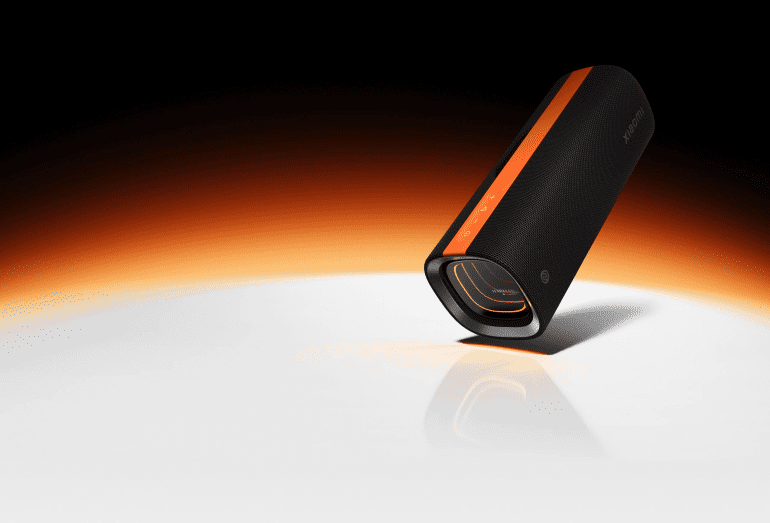
The Xiaomi Sound Party enters a crowded portable speaker market with a familiar pitch: more features, more power, and a lower price. It’s a strategy Xiaomi has used effectively elsewhere, but audio is less forgiving than most categories.
This isn’t just about output. It’s about balance, durability, and whether those extras actually translate into a better experience. Because in this category, you can’t spec-sheet your way past weak tuning.
Positioning
The Sound Party 50W is clearly trying to be a budget-friendly alternative to premium party speakers.
Xiaomi leans into 50W output with Harman-tuned audio, built-in lighting effects, and power bank functionality. It’s positioned as a social, multi-use speaker rather than a purist audio product. That’s intentional. This is a speaker designed to do more, not necessarily do one thing perfectly.
The competitive landscape
In South Africa, this speaker lands in a competitive mid-range tier where most brands are doing less on paper, but more where it counts.
The JBL Flip 6 focuses on reliable tuning and durability, with an IP67 rating but very few extras. The JBL Charge 5 pushes further with stronger battery life, deeper bass, and more premium build quality, though at a higher price. Sony’s SRS-XE300 sits in a similar tier, offering a wider soundstage and a more lifestyle-oriented approach, but with more conservative tuning.
What stands out is that none of these compete on features first. They compete on how the speaker actually sounds and how consistently it performs over time.
Category trends
All-in-one features like lighting and charging, rugged durability as a baseline expectation, and long battery life as standard increasingly define portable speakers.
Xiaomi leans heavily into features, but the category still rewards sound quality and reliability above everything else. Features get attention. Consistency keeps people from replacing the speaker a year later.
What works
It delivers real, usable volume. Not just loud on paper, but capable in outdoor settings and social environments without immediately falling apart.
The feature set is aggressive for the price. Lighting, stereo pairing, and power bank functionality make it feel more versatile than most competitors in this bracket.
The value proposition is obvious. You’re getting more functionality for less money, which is the clearest reason to consider it.
Where it falls short
The tuning lacks discipline. Bass is pushed forward but not always controlled, and at higher volumes mids thin out while vocals lose presence. It sounds exciting at first, but less convincing the longer you listen.
Build confidence isn’t fully there yet. It feels solid enough and the IP rating helps, but Xiaomi doesn’t yet have the same long-standing track record in portable audio as brands like JBL or Sony.
The lighting feels like a checkbox feature. It exists and works, but doesn’t meaningfully enhance the experience. It sells the idea of a party speaker more than it improves it.
Trade-offs
This is a clear features versus refinement trade-off.
You gain more functionality, lower cost, and greater versatility. You give up some balance, polish, and the reassurance that comes with a more established audio pedigree.
That trade-off will make sense for some buyers, but it becomes more noticeable over time.
How it compares
Against the JBL Flip 6, Xiaomi wins on features but loses where it matters most: tuning and consistency.
Against the JBL Charge 5, it’s cheaper and more flexible, but less refined overall. The Charge 5 feels more resolved, while the Xiaomi feels more energetic.
This reflects a broader trend across tech, where brands compete on specs and features to stand out. We’ve seen the same approach in smartphones, with devices like the HONOR X9d pushing durability and value as headline features.
The difference is that in audio, you notice refinement over time, not just features on day one.
South African context
Locally, the Xiaomi Sound Party is likely to undercut JBL and Sony on price, which makes it immediately appealing.
It fits well for outdoor gatherings, casual use, and load shedding scenarios where power bank functionality adds real value. But that same context also shifts expectations. When people keep devices longer, consistency and reliability matter just as much as price.
Verdict
The Xiaomi Sound Party is a good, feature-heavy speaker that prioritises versatility over refinement.
You should buy it if you want maximum features for your money, prioritise loudness and flexibility, and are buying for casual, social use.
Avoid it if sound quality is your top priority, you prefer a more refined listening experience, or you value a brand with a longer track record in audio.
The real story is simple: Xiaomi is trying to out-feature the category, but in audio, the products that last are usually the ones that get the fundamentals right first.