
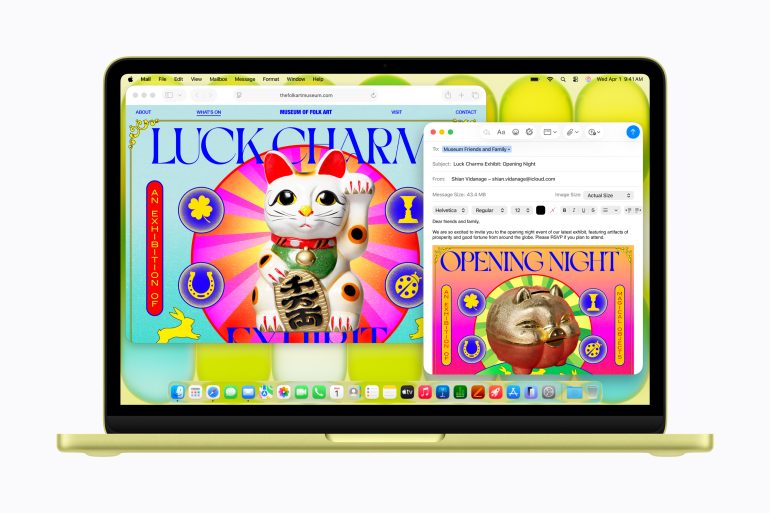
iStore is offering Windows users a guaranteed R3,000 to R5,000 towards a MacBook Neo when they trade in a qualifying PC. The offer makes sense because two things happened at once: Windows 10 died, and Apple finally built a laptop under R12,000.
Windows 10 reached end of support on 14 October 2025. Around 240 million PCs worldwide can’t meet Windows 11’s hardware requirements, and in South Africa the situation is compounded by mixed fleets of legacy hardware, particularly in education, small business and government. Many of those users are now six months past the deadline and still on unsupported machines. The replacement pressure is genuine and it was always going to create an opening for whoever had the right product at the right price.
The MacBook Neo, released on 11 March 2026, is Apple’s most affordable Mac ever, starting at $599 and positioned below the MacBook Air. iStore prices it from R11,999 for the 256GB model and R13,999 for 512GB. That’s still a deliberate purchase, but it’s a meaningfully different conversation from the R18,000-plus MacBook Air. The MacBook Neo is the product that makes iStore’s pitch credible in a way it hasn’t been before.
The Neo runs Apple’s A18 Pro chip, the same architecture introduced in the iPhone 16 Pro, with a 6-core CPU and 5-core GPU. Apple chose a mobile chip rather than the M-series silicon in the MacBook Air and Pro. For everyday use, the performance is strong. For anyone expecting Air-level headroom at a lower price, the distinction matters. The target buyer here is someone coming off a decade-old Windows machine, not someone spec-shopping between Mac tiers, and for that person the A18 Pro is more than sufficient.
The trade-in terms are worth reading carefully. Qualifying devices need to be Intel Core i5 10th generation or newer, with at least 8GB RAM and 128GB storage. That excludes a meaningful portion of the machines most likely to be stuck on Windows 10. A 2015 laptop with a 6th-generation processor won’t qualify, even though those are exactly the machines that can’t run Windows 11. The programme is strongest for someone with a 2019 or 2020 Windows laptop in reasonable condition, which after trade-in credit brings the MacBook Neo’s effective starting price down to somewhere between R7,000 and R9,000. At that number, the comparison against a mid-range Windows replacement looks very different.
Budget Windows 11-compatible laptops in South Africa are available from around R3,200, but those options typically run Intel Celeron processors, 4GB RAM and 128GB storage. Functional, not much more. Against that, a MacBook Neo after trade-in credit is a different category of machine. The fanless design, long battery life, and build quality carry real weight for anyone spending most of their day on a laptop. In a local context where power disruptions are still a factor, battery performance matters in ways that don’t show up in headline specs.
The ecosystem argument in iStore’s press release is real but conditional. Handoff, Universal Clipboard, and AirDrop work well between a MacBook and an iPhone. They work because both devices are already in Apple’s world. For the large share of South African users on Android, those benefits don’t transfer. The trade-in programme reduces the cost of entry. It doesn’t change what you need to already own to get full value from it.
Apple’s most effective market expansions start by widening the door rather than raising the ceiling. The MacBook Neo is that move. iStore’s trade-in programme is the mechanism that converts a market condition into a transaction. Neither created the opportunity. Windows 10’s death and Apple’s pricing decision did.
For Windows users with a qualifying laptop who are already in the iPhone ecosystem, this is a reasonable moment to run the numbers. Find out more at www.istore.co.za or at your nearest iStore.