
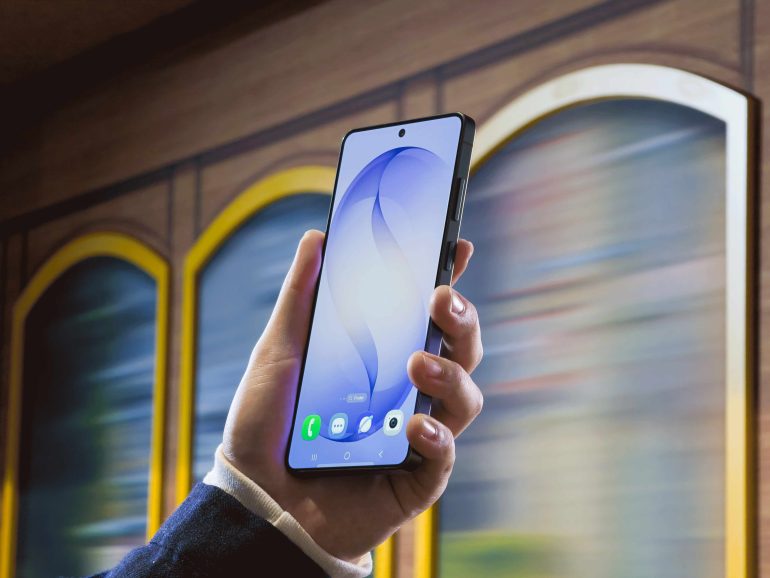
There was a time when I’d have looked at Samsung’s Galaxy S26 Ultra and dismissed it as another iterative update. Samsung had settled into a rhythm of refining rather than reinventing, and I’d often criticised the company for playing it too safe. Every year we’d get a faster processor, a brighter display, another AI feature or a slightly improved camera, but very little that fundamentally changed the experience. After spending the past few weeks with the Galaxy S26 Ultra, I’ve realised that I’d been looking at Samsung’s strategy the wrong way. What I’d been calling boring was actually consistency, and consistency has become one of Samsung’s greatest strengths.
That might sound like a backhanded compliment, but it isn’t. Smartphones have reached a point where genuine breakthroughs are becoming increasingly rare, yet manufacturers continue behaving as though every launch represents a revolution. The reality is that most people don’t buy a new flagship every year. They buy one every three, four or even five years, particularly in South Africa where premium smartphones represent a significant investment. Those buyers aren’t interested in whether Samsung has moved a camera sensor by a few millimetres or shaved a fraction of a second off an app launch. They want a phone they can depend on, one that feels as good in three years as it does on the day they take it out of the box, and that’s exactly what Samsung has become exceptionally good at delivering.
The first thing that struck me wasn’t an AI feature or a benchmark score. It was the colour. It sounds frivolous, I know.
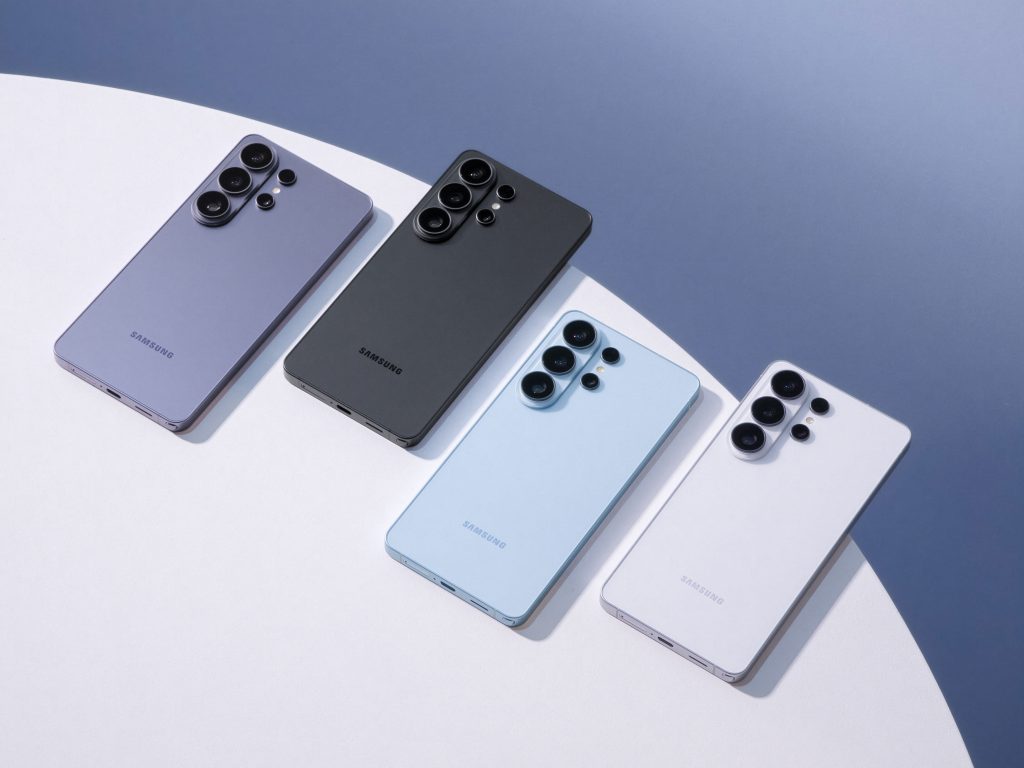
Samsung sent me the Cobalt Violet model and it’s one of the most attractive finishes the company has produced in years. Smartphone manufacturers have spent the better part of a decade either playing it safe with black, silver and grey or swinging too far in the opposite direction with colours that feel designed more for social media than everyday life. Cobalt Violet sits comfortably in the middle. It’s sophisticated without being stuffy, understated without disappearing into the background, and the way it shifts between deep blue and violet depending on the light gives it a depth that Samsung’s own marketing images don’t quite capture.
The finish also complements a design that’s become unmistakably Samsung. Critics will inevitably point out that it doesn’t look dramatically different from last year’s Galaxy S25 Ultra, and they’re right. Place the two devices next to one another and you’d need to know what you’re looking for to spot every change. I don’t think that’s a problem anymore because Samsung has reached the point where refinement matters more than reinvention. The company has gradually softened the sharper edges that once defined the Ultra range, improved the ergonomics and continued shaving away the little frustrations that only become apparent after living with a device for months rather than hours.
Those incremental improvements add up to something that’s surprisingly difficult to quantify until you actually use the phone. Despite its size, the Galaxy S26 Ultra feels remarkably comfortable in the hand and has a balance that immediately inspires confidence. It’s also one of those rare smartphones that genuinely makes you want to use it without a case. I’m not suggesting that anyone should because this is still a very expensive piece of technology, but the instinct is there because the hardware feels that good. That’s a compliment Samsung has earned over several generations rather than through one dramatic redesign, and it’s a reminder that industrial design isn’t always about creating something completely different. Sometimes it’s about perfecting something that’s already very good.
That same philosophy carries through to almost every aspect of the phone. Spend enough time around smartphone launches and you’ll notice that every company has a favourite story to tell. Apple talks about integration, Google talks about AI, Chinese manufacturers often lead with hardware specifications, while Samsung has quietly become the company that focuses on the complete experience. That might not sound as exciting as a one-inch camera sensor or 120W charging, but it’s arguably more valuable because the things you notice every single day aren’t the headline features. They’re the dozens of small interactions that either make your life easier or slowly become irritating over time.
That’s where Samsung continues to separate itself from much of the Android market. One UI has evolved into one of the most polished mobile operating systems available, not because it’s packed with endless features, but because almost everything feels considered. Menus are logically organised, multitasking remains the benchmark for Android, and Galaxy AI now feels integrated into the operating system rather than bolted on as a collection of disconnected tools. AI has become the defining talking point for every smartphone launch over the past two years, yet Samsung deserves credit for resisting the temptation to turn every feature into a gimmick. Many of the best AI additions are the ones you stop thinking about because they simply become part of how you use the phone.
That software maturity is also why I think Samsung remains the safest recommendation for anyone shopping in the premium Android market. Chinese manufacturers have made astonishing progress over the past few years and deserve enormous credit for pushing the industry forward. HONOR, vivo, OPPO and Xiaomi have produced some genuinely exceptional devices, particularly when it comes to camera hardware, battery technology and charging speeds. In some areas they’ve overtaken Samsung completely, and pretending otherwise would be doing them a disservice. The days when Samsung automatically had the best camera on a smartphone are behind us because the competition has become that good.
Where Samsung continues to lead is in bringing everything together. It’s the difference between building an impressive collection of features and building a genuinely cohesive product. Every part of the Galaxy S26 Ultra feels as though it belongs to the same experience rather than existing to win an individual comparison chart, and that’s surprisingly rare in a market where manufacturers often chase specifications at the expense of polish. You can see it in the way One UI behaves, the reliability of Samsung’s ecosystem, the quality of its long-term software support and the confidence that comes from knowing your flagship won’t feel abandoned after two Android updates.
I’ve made a similar point before when writing about Samsung’s more affordable devices because the company’s biggest strength isn’t limited to its flagship range. In my review of the Galaxy A37, I argued that Samsung had become exceptionally good at delivering a consistently polished experience regardless of price, and the Galaxy S26 Ultra simply represents the best possible version of that philosophy. It’s not trying to be the most outrageous Android phone on the market because Samsung seems far more interested in building one that people will still enjoy using several years from now.
That doesn’t mean the Galaxy S26 Ultra is beyond criticism because there are areas where Samsung has allowed the competition to pull ahead, and nowhere is that more obvious than the battery. In an era where manufacturers are beginning to ship smartphones with silicon-carbon batteries approaching 10,000mAh, Samsung’s continued caution is becoming increasingly difficult to defend. It’s impossible not to think that the shadow of the Galaxy Note7 still hangs over the company’s engineering decisions, even a decade later, and while that caution is understandable from a corporate perspective, consumers ultimately judge products on what’s in front of them rather than on the ghosts of products past. Samsung doesn’t need to chase headline numbers for the sake of marketing, but it does need to acknowledge that battery technology has moved on and that competitors are taking full advantage of it.
The battery discussion also highlights something that has changed dramatically over the past few years. It used to be that Samsung set the pace and everyone else tried to catch up. Today it’s often the Chinese manufacturers doing the pushing while Samsung decides which innovations are worth adopting and which are better left until the technology has matured. That’s a perfectly reasonable strategy most of the time because Samsung rarely ships features that feel unfinished, but battery technology has reached the point where caution is starting to look like hesitation.
The irony is that battery life itself isn’t a problem. The Galaxy S26 Ultra comfortably gets through a full day, even with heavy use, and most people will end the evening with charge to spare. That’s not the issue. The issue is that Samsung’s rivals have changed expectations. When devices are arriving with dramatically larger batteries and charging speeds that can refill them in a fraction of the time, simply being “good enough” no longer feels like enough for a phone sitting at the very top of Samsung’s portfolio. The Galaxy S26 Ultra deserves battery technology that’s as forward-thinking as the rest of the experience.
The camera tells a similar story, although the conclusion is rather different. Samsung still has an outstanding camera system, and I don’t think anyone buying this phone will come away disappointed. Images are detailed, colours remain pleasing without drifting too far into artificial territory, autofocus is fast and dependable, and the flexibility offered by the various focal lengths means there’s very little you can’t photograph. Whether I was shooting landscapes around Cape Town, taking portraits or grabbing quick photos in less-than-ideal lighting, the Galaxy S26 Ultra consistently delivered results that I’d happily share without feeling the need to edit them first.
Consistency, however, isn’t always the same thing as leadership. If you’d asked me five years ago which company made the best smartphone camera, I’d probably have answered Samsung without much hesitation. Today I’d have a much harder time making that argument because manufacturers like HONOR, vivo, OPPO and Xiaomi have invested heavily in larger sensors, imaging partnerships and computational photography. In certain situations they simply produce more impressive images, particularly when you’re looking at dynamic range, low-light performance or the more natural depth that comes from physically larger camera hardware.
That isn’t a criticism of Samsung so much as an acknowledgement of how much the competition has improved. Smartphone photography has become remarkably competitive, and being second or third best in one category no longer means you’re falling behind. It simply means the gap has narrowed. More importantly, cameras don’t exist in isolation. A great camera is only one part of a smartphone, and it’s here that Samsung’s philosophy starts making sense again because the Galaxy S26 Ultra isn’t trying to dominate one specification sheet. It’s trying to deliver the best overall experience.
That’s why I’d still recommend the Galaxy S26 Ultra to someone choosing between Samsung and one of the newer Chinese flagships. If your only priority is squeezing every last ounce of performance out of a camera system, there are alternatives worth considering. If you’re looking at the complete package, including software, long-term support, ecosystem integration, reliability and resale value, Samsung continues to make an incredibly compelling argument for itself.
That software advantage is easy to underestimate because it doesn’t reveal itself in the first hour of ownership. It reveals itself six months later when the phone is still receiving meaningful updates, when features continue to improve rather than disappear, and when the interface still feels coherent instead of becoming cluttered with competing ideas. Samsung has spent years refining One UI into something that feels approachable for newcomers without becoming limiting for power users, and I still think it’s the benchmark that every other Android manufacturer measures itself against.
It’s also worth acknowledging how much Samsung’s ecosystem has matured. Whether you’re using a Galaxy Watch, Galaxy Buds, a Galaxy Tab or one of the company’s laptops (which unfortunately are not available in South Africa), there’s a consistency to the experience that’s become one of the strongest reasons to stay within the Galaxy family. Apple has built an empire around that kind of integration, and Samsung has quietly assembled the closest Android equivalent. That’s not the sort of feature that appears in a benchmark chart, but it’s one that becomes increasingly valuable the more Galaxy devices you own.
If there’s one criticism I’d level at Samsung beyond the battery, it’s that the company occasionally seems too comfortable with its own success. Iteration is valuable, but there’s a fine line between refining a winning formula and becoming reluctant to challenge it. The Galaxy S26 Ultra succeeds because the underlying formula is already excellent. That doesn’t mean Samsung should assume it can continue making cautious improvements forever while competitors continue taking bigger risks. The pace of innovation across the Android market has accelerated dramatically, and Samsung can’t afford to let its software excellence become an excuse for standing still elsewhere.
That’s also why I think the Galaxy S26 Ultra represents an interesting moment for Samsung. It’s no longer the undisputed hardware leader, and I don’t think Samsung is trying to be. Instead, the company has become something arguably more important: the manufacturer that produces the most complete Android flagship. There are phones with bigger batteries. There are phones with faster charging. There are phones with cameras that edge ahead in specific situations. What I haven’t found is another Android phone that brings together hardware, software, AI, long-term support, productivity features and everyday usability quite as successfully as the Galaxy S26 Ultra.
That’s ultimately what changed my opinion during the time I spent with the phone. I started this review expecting to write about another predictable Samsung update and finished it appreciating why predictability has become such an underrated quality. There’s comfort in knowing exactly what you’re buying, particularly when what you’re buying is a flagship that’s been refined over years rather than reinvented every twelve months. Samsung hasn’t built the most radical smartphone of 2026, and I don’t think it set out to. Instead, it’s built one of the most complete, dependable and thoroughly enjoyable Android phones you can buy, and that’s an achievement that deserves far more recognition than another headline-grabbing specification ever could.
If you’re already using a Galaxy S25 Ultra, there’s probably not enough here to justify upgrading unless you simply enjoy owning the latest technology. If you’re coming from an older Galaxy device or you’re weighing up your options against the growing number of excellent Chinese flagships, the decision becomes much easier. Samsung may no longer win every individual battle, but it still wins the war because the Galaxy S26 Ultra is a better all-round package than almost anything else on the market.
Verdict
The Galaxy S26 Ultra doesn’t redefine what a flagship smartphone can be, and that’s precisely why it succeeds. Samsung has stopped chasing novelty for its own sake and instead focused on building a phone that gets almost everything right. There are areas where competitors have overtaken it, particularly in battery technology and, in some cases, camera hardware, but Samsung’s unmatched software experience, polished ecosystem and long-term support ensure that the Galaxy S26 Ultra remains one of the easiest flagship smartphones to recommend.