
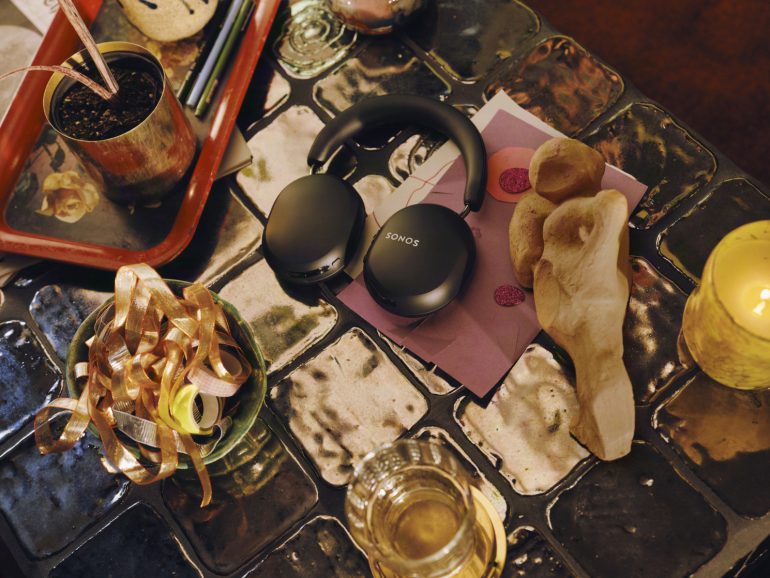
Sonos has announced the Beam Ultra soundbar and Ace Ultra headphones alongside Sonos 27, the latest version of the software connecting its speakers, headphones and home theatre products.
The Beam Ultra and Ace Ultra are available for pre-order globally from 1 September and go on general sale on 29 September. The Beam Ultra costs $699 in the US, while the Ace Ultra is priced at $449. Sonos hasn’t announced South African pricing or availability for either product.
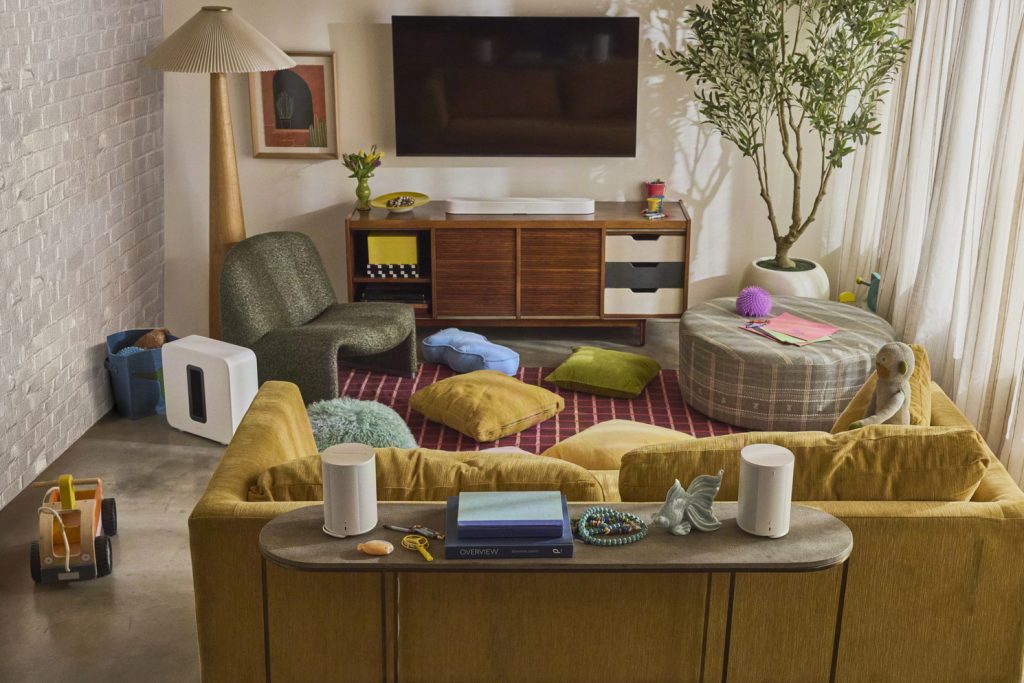
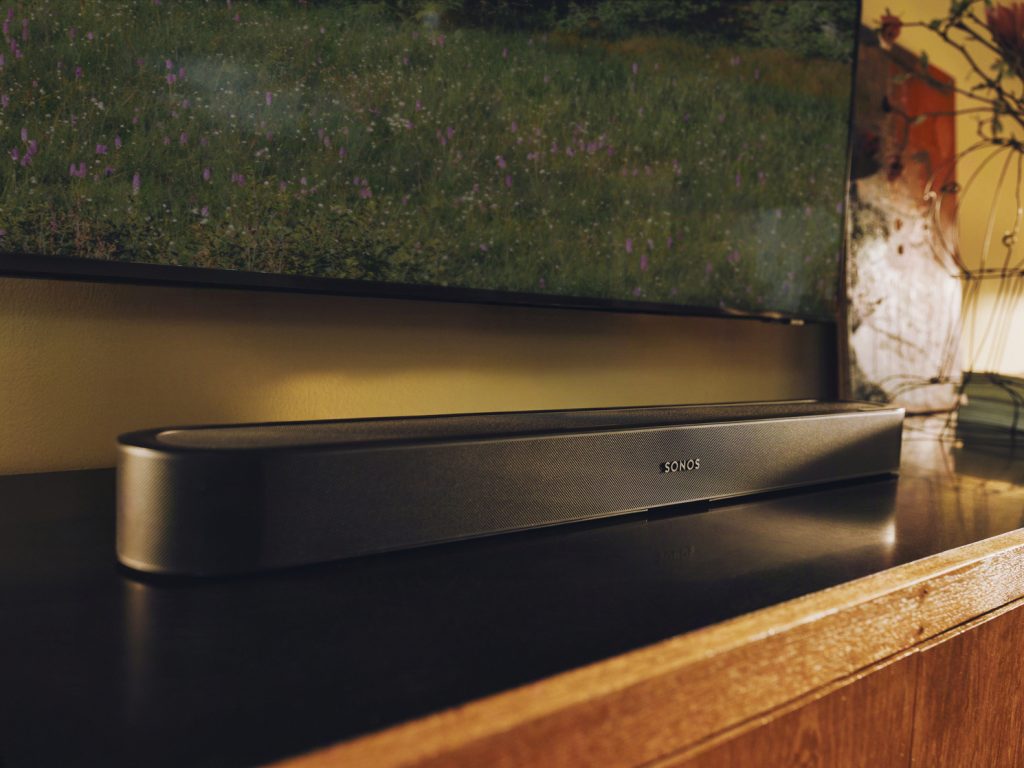
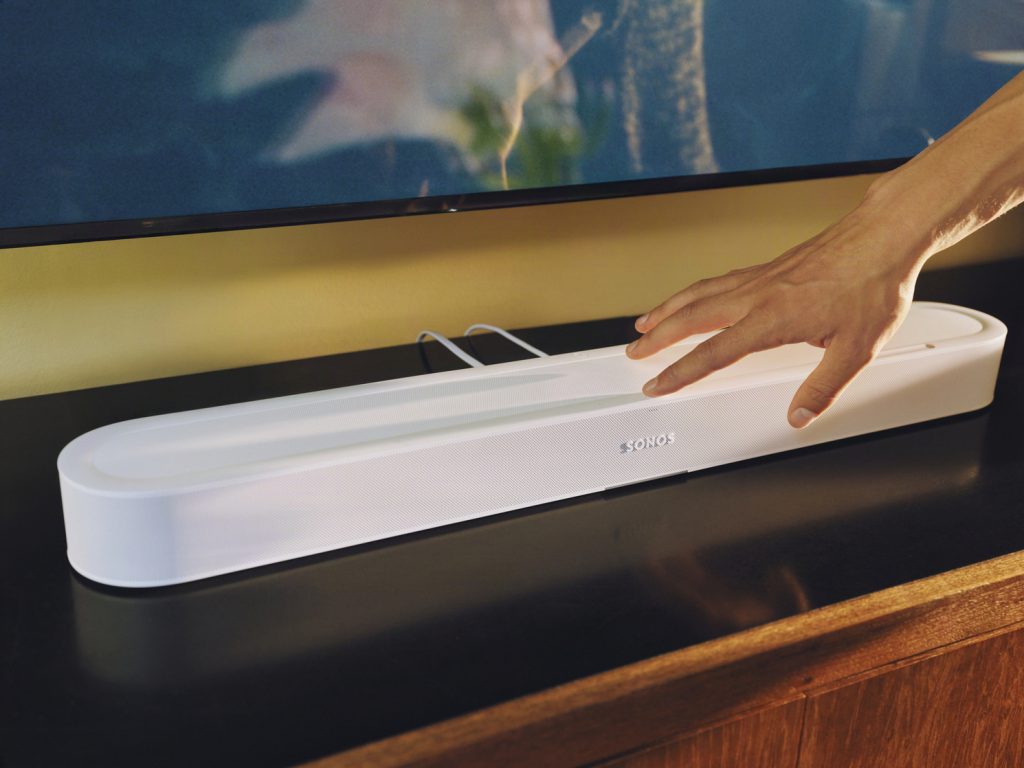
Beam Ultra keeps the relatively compact shape of the existing Beam but changes much of the hardware inside it. There are nine custom drivers, including two dedicated up-firing drivers, giving the soundbar a 7.1.2 Dolby Atmos configuration.
That’s a rather big change from the Beam Gen 2, which uses processing to create virtual height channels rather than dedicated upward-firing speakers. Sonos has also redesigned the centre channel, added four levels of AI Speech Enhancement for dialogue and retained Night Sound for reducing louder effects when listening at lower volumes.
The soundbar can still be expanded with a Sonos Sub and rear speakers, although Sonos 27 adds another option. Compatible portable speakers can temporarily become rear surrounds when they’re moved into position.
The feature uses Sonos Positioning Technology, which uses high-frequency sound to determine where a speaker is located and change its role in the system. Move 2 and the recently announced Sonos Play will support it.
Sonos Play is also coming to South Africa through local distributor Planet World alongside the Era 100 SL, making the portable surround feature potentially relevant to local Sonos owners once the required software reaches them.
Ace Ultra gets a new Sonos-designed 40mm driver, Adaptive Active Noise Cancellation using ten microphones and up to 35 hours of battery life with ANC switched on.
The far more significant update is its integration with the broader Sonos ecosystem.
Ace Ultra is the first Sonos headphone built on the company’s new Headphone Engine 2 hardware. Through a feature called headphone linking, it can connect directly to a Sonos system and move audio between nearby speakers and the headphones.
Pressing a button sends whatever is playing through the Sonos system to the Ace Ultra. Pressing it again moves the audio back. Sonos says it works without requiring a phone to remain in range.
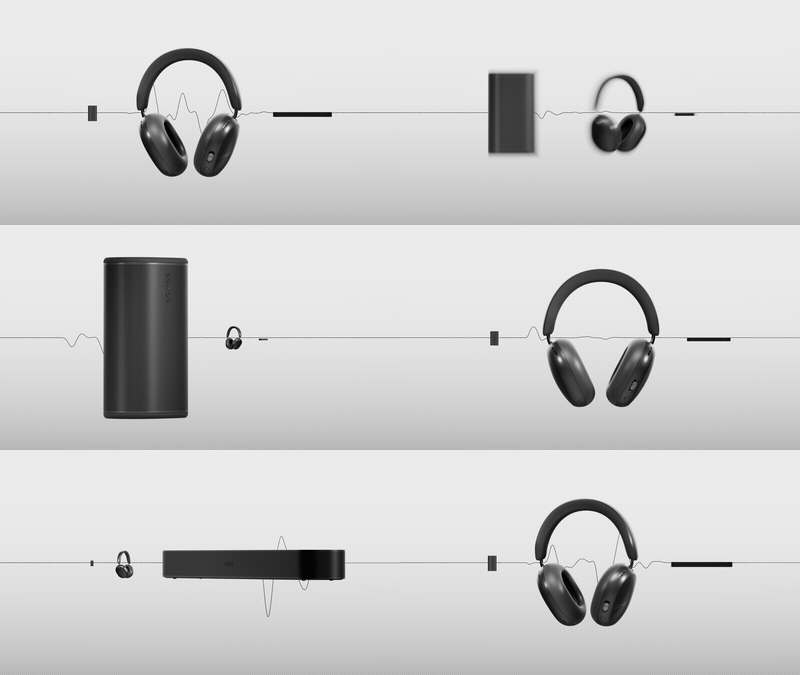
The original Ace already supports TV Audio Swap with compatible Sonos soundbars, but otherwise spends much of its time behaving like a conventional pair of Bluetooth headphones. Headphone linking gives the Ace Ultra a broader connection to the rest of a Sonos setup.
Sonos 27 opens the door to ChatGPT
The hardware arrives alongside Sonos 27, which adds new controls, changes to the Sonos app and support for outside AI assistants.
Sonos 27mcp allows external assistants and agents to connect to a Sonos system, including ChatGPT. Someone using ChatGPT on a phone or computer will be able to ask it to play music through their Sonos system without switching apps.
Sonos is also introducing Sonos 27voice, its own assistant for music and mood curation, and has previewed Custom Agents that will allow users to create individual agents using different models, voices and personas.
There’s an obvious question about how much of this people actually need. Voice control for music isn’t new, and another way to ask a speaker to play an album doesn’t automatically make the experience better. Opening the system to assistants people already use elsewhere is potentially more useful, particularly if Sonos 27mcp eventually allows those assistants to do more than replace the play button.
Sonos Fabric sits underneath some of the other changes in Sonos 27. It allows products to sense each other and change how they behave depending on where they are and what else is happening in the system.
The portable surrounds feature is one example, while headphone linking is another. In both cases, Sonos is making the role of a device less fixed. A portable speaker can become part of the television setup when it’s in the right place, while headphones can take over whatever is already playing elsewhere in the home.
The Sonos app is also getting revised navigation. Those changes start rolling out from 8 September, alongside Sonos 27mcp in Early Access and portable surrounds for Move 2 and Sonos Play. Headphone linking launches in Early Access with Ace Ultra on 29 September.
Sonos says the broader Sonos 27 update will be available for products running its S2 software, although individual features depend on the hardware being used.
Any major Sonos software update now comes with some baggage. The company’s May 2024 app redesign launched with missing features and reliability problems severe enough for then-CEO Patrick Spence to apologise publicly two months later. Sonos spent much of the following year fixing the software and dealing with the damage the rollout had done to customer confidence.
Sonos 27 is a much more ambitious update than the repair work that followed. It also gives the company another chance to prove that making the software underneath its products more complicated can produce something useful rather than simply giving owners more software to think about.
The original Ace had an odd limitation for a Sonos product: put the headphones on and much of the Sonos system effectively disappeared. TV Audio Swap was useful, but otherwise the Ace behaved much like any other premium Bluetooth headphones.
Ace Ultra fixes some of that. Headphone linking gives it a reason to exist specifically inside a Sonos home rather than simply competing with Bose, Sony and Apple on noise cancellation, battery life and sound quality. Whether that’s enough to justify $449 will have to wait until we’ve actually used it, but at least the second-generation Ace has a clearer answer to the question the first one never quite settled: what exactly makes a pair of Sonos headphones different?