

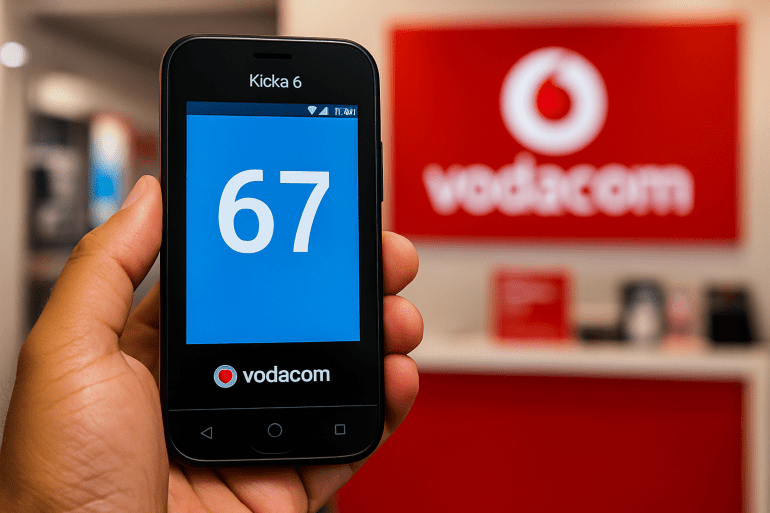
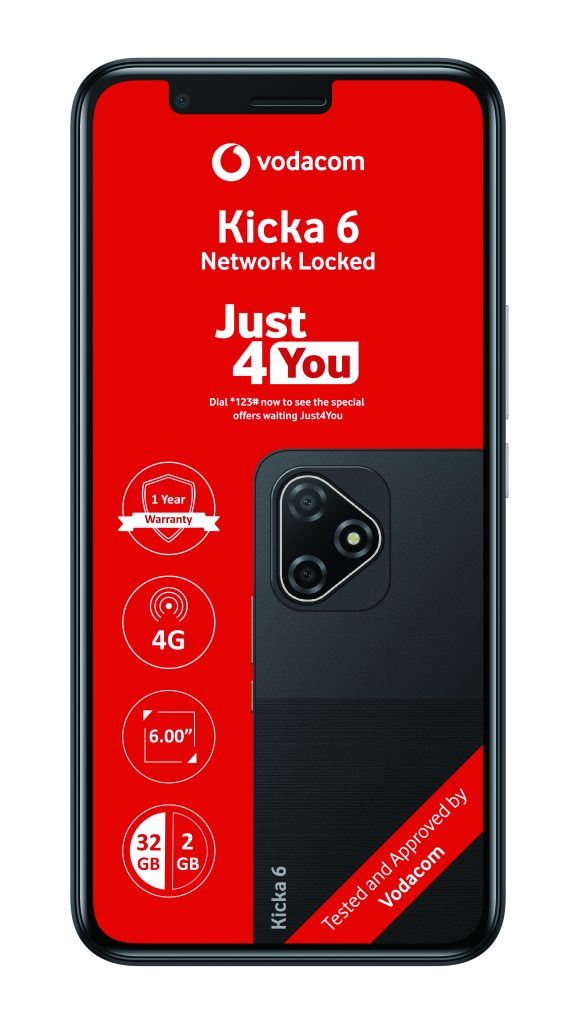
Vodacom’s Mandela Month campaign is offering some prepaid users the chance to upgrade from a 2G phone to a 4G smartphone for R67. This Vodacom R67 smartphone offer features the ultra-basic Kicka 6, which normally costs R699, and includes 20GB of data. That’s objectively a good deal, and yet it still feels like a Band-Aid on a bullet wound.
This is not a new phone. It’s not a good phone. But it is a lifeline. That’s what makes the R67 smartphone offer worth talking about. And also what makes it deeply frustrating.
Who still uses 2G phones in 2025?
More people than you’d think. Millions, actually. And not just by choice. The reasons are predictable: smartphones are still too expensive, mobile data is overpriced, and the structural poverty that keeps people off the grid has been sustained, and in some cases worsened, by a tech industry that continues to focus on top-end devices and not the bottom of the pyramid.
Mobile networks want 2G users off their legacy infrastructure, sure, but very few have managed to make the upgrade path this direct or this affordable. Vodacom deserves credit for trying. R67 is an aggressive price point, even for a handset this low-spec. But let’s be honest, this isn’t just about altruism. It’s also about user migration, network efficiency and eventually, ARPU (Average Revenue Per User).
Still, it’s rare to see something this clear-cut. Select customers on Vodacom’s prepaid network, still using 2G devices, are being offered the Kicka 6 for R67. The promotion started in KwaZulu-Natal and will expand to Limpopo and Mpumalanga. The 20GB Buy and Get data offer is included, provided the customer recharges with R29. It’s simple. It’s practical. And yes, it’s timed to align with Mandela Month.
It’s important to note that this offer is not available to all Vodacom subscribers. It is targeted specifically at new prepaid customers who meet Vodacom’s criteria. Post-paid and hybrid customers are excluded. To qualify, customers must purchase the device from select Vodacom stores and activate it on a new Vodacom prepaid number. They must also recharge with at least R29 within 30 days to redeem the data offer. This targeted approach limits the scale but keeps the offer focused on those Vodacom identifies as still on legacy 2G devices.
On Mandela Day itself, Vodacom will give away 67 smartphones through its “Surprise and Delight” campaign at Vodacom World in Midrand. Customers trade in their old 2G devices and walk away with a 4G replacement. It’s a symbolic gesture. It also happens to be one of the more useful things a corporate brand has done this Mandela Month because it isn’t just performative. It moves people from one level of access to another.
This is not a generosity story. It’s a logistics one.
The South African telecoms industry has known for years that its 2G users are not just a legacy segment. They are an indictment of how inaccessible basic mobile connectivity remains. R67 is an accessible price, but when you dig into the context, the number is only that low because Vodacom desperately wants these users off its outdated infrastructure.
4G is cheaper to maintain. Networks want spectrum back. Customers on 4G are more likely to use data, which means higher revenue. And once you’ve moved them onto a smartphone, the upsell opportunities multiply. This isn’t shade, just reality.
The South African government has set clear deadlines for shutting down legacy networks. The phased shutdown of 2G and 3G services will commence on 1 June 2025, with a total shutdown scheduled for 31 December 2027. This move aims to free up valuable spectrum for faster 4G and 5G networks. For millions still relying on 2G and 3G devices, this timeline means an urgent need to upgrade or risk losing mobile access entirely.
But what Vodacom’s campaign makes clear is that there is absolutely no reason why ultra-basic smartphones in this country should still be priced at R699. We know the cost of components. We know what’s happening in India and Southeast Asia, where entry-level 4G devices are meaningfully cheaper. So why is it only during Mandela Month that these devices reach the people who need them?
This is what makes the R67 smartphone offer both a win and a warning. It proves that affordability is possible, but it also shows just how much margin sits between the cost of manufacture and the price tag most South Africans are expected to pay.
A better phone? No. A better future? Maybe.
The Kicka 6 isn’t going to run anything heavy. It’s likely running Android Go, it probably has 1GB of RAM, and multitasking will be a nightmare. But none of that matters if your current phone doesn’t even have WhatsApp. If your only source of internet is Please Call Me. If you’ve never downloaded an app before.
That’s what this phone unlocks. Not convenience, connection. If we accept that access to the internet is a prerequisite for opportunity, then this isn’t a product play. It’s infrastructure. The lowest rung of a very tall ladder.
So yes, Vodacom’s campaign deserves some recognition, but it also deserves scrutiny. Not because it’s bad, it isn’t, but because it reveals just how far we still have to go to make basic digital access a right rather than a reward.