
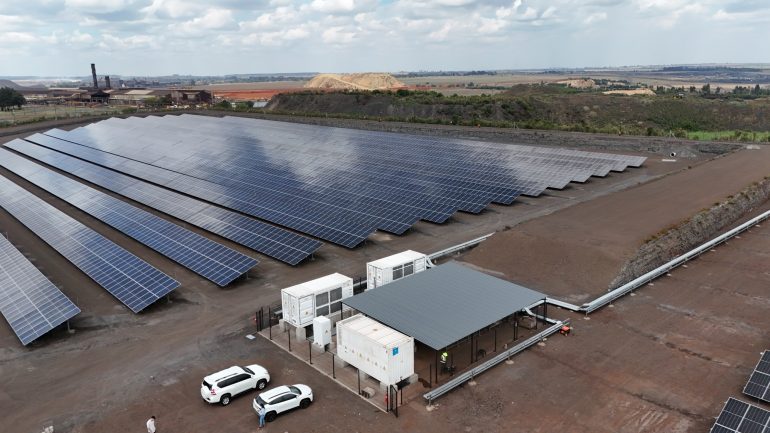
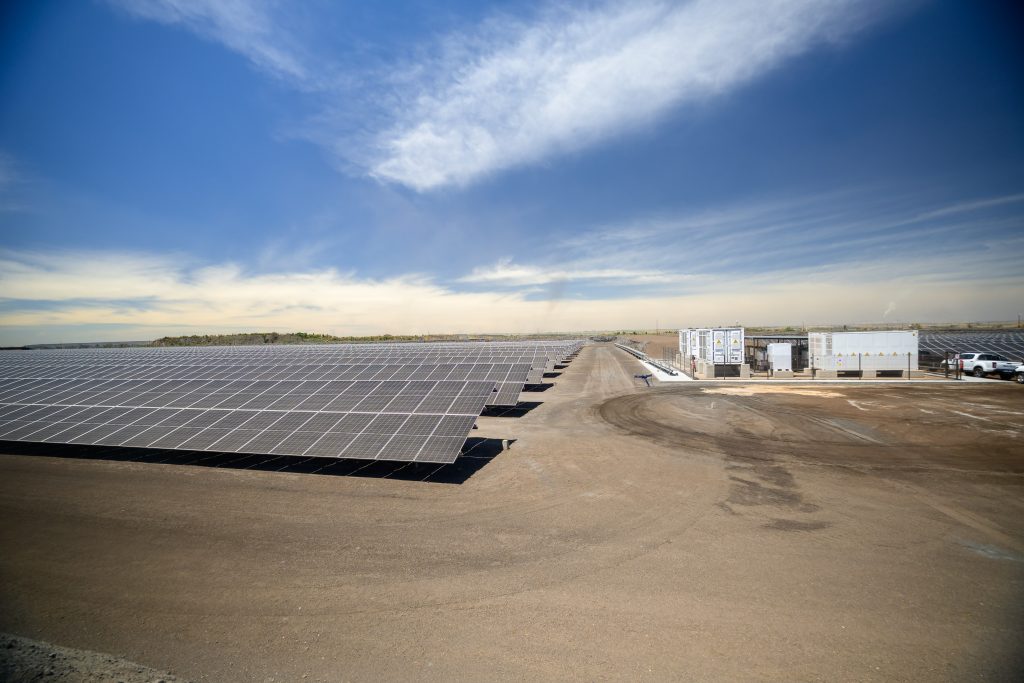
In eMalahleni, a town built around coal mining and heavy industry, Highveld Industrial Park is expanding its own electricity supply. Its latest addition is a 6.35-megawatt-peak (MWp) solar plant paired with a Huawei battery capable of storing almost 4.5 megawatt-hours (MWh) of electricity.
The installation, called Shumbasolve Phase 2, was officially launched on 28 October. It takes the industrial park’s total installed solar capacity to approximately 9.95 MWp, with the battery allowing some of the electricity generated during the day to be saved for periods when demand is higher.
Huawei Digital Power supplied the solar inverters and battery storage system for the project, which was developed through a partnership involving Highveld Industrial Park, MPower Energy, the energy business of property investment company Moolman Group, and Fledge Capital.
The expansion comes as businesses continue looking for ways to manage rising electricity costs, even as the national supply has improved considerably since the worst years of loadshedding. For industrial facilities that consume large amounts of power, generating electricity on-site can reduce their exposure to grid tariffs. Adding storage gives them greater control over when that electricity is used.
Saving solar power for when it’s needed
Solar panels generate most of their electricity during the day, but that doesn’t necessarily coincide with when a business needs the most power. Industrial facilities can consume substantial amounts of electricity in the early morning and evening, when solar generation is limited or unavailable.
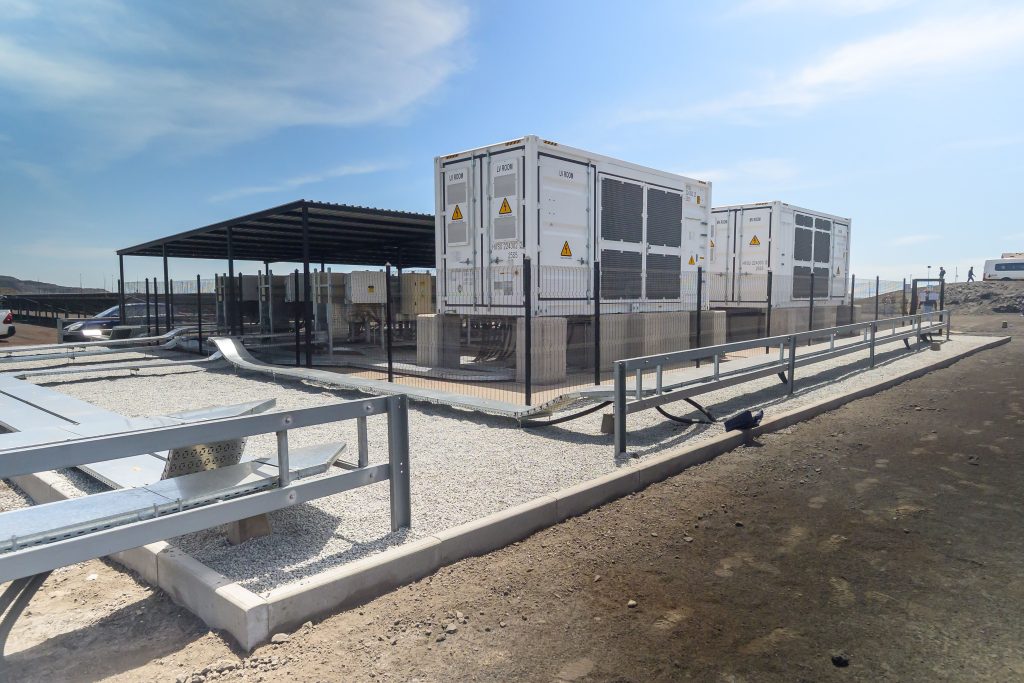
Shumbasolve Phase 2 uses Huawei’s LUNA2000 liquid-cooled Smart String battery energy storage system, with a reported storage capacity of 4.475 MWh.
During the day, electricity generated by the solar installation can supply businesses at the park, while surplus energy is stored in the battery. That stored electricity can then be discharged during periods of higher demand, reducing how much power the park needs to buy from the grid at those times.
The installation also uses Huawei SUN2000-330KTL inverters, which convert electricity generated by the solar panels into a form that can be used by the park’s electrical infrastructure.
The two capacity figures describe different things. The solar plant’s 6.35 MWp rating describes how much power it can generate under standard test conditions at peak output. The battery’s 4.475 MWh rating describes how much energy it can store.
For perspective, 4.475 MWh represents enough stored energy to supply a continuous load of 1 MW for approximately four and a half hours, before accounting for losses and operating limitations. How long it could actually power the industrial park depends on the electricity consumed by its tenants and the battery’s maximum discharge rate.
The developers haven’t disclosed the park’s peak electricity demand or how much of it the battery can support at once.
According to Huawei, the new solar installation is expected to generate approximately 9.98 gigawatt-hours (GWh) of electricity annually and avoid around 6,000 tonnes of carbon dioxide emissions each year.
Those figures are projections rather than measured results from a full year of operation.
“Industrial sites need power they can plan around,” says Darius Mare, head of key accounts at Huawei Digital Power South Africa.
“Our Smart String storage captures the solar energy the park doesn’t use and makes it available when the park needs it most. That gives Highveld more certainty over its energy costs and its supply.”
Building an electricity supply around industrial demand
The first phase of Shumbasolve was commissioned in 2024, introducing a 3.6 MW solar installation comprising approximately 6,200 bifacial solar panels, alongside a 1 MVA gas-to-power generation unit.
That solar installation generates an estimated 6.8 GWh of electricity annually. With both phases now in place, the developers estimate that the project will avoid approximately 13,000 tonnes of carbon dioxide emissions a year.
eMalahleni sits at the centre of Mpumalanga’s coal industry, surrounded by mines, power stations and industrial infrastructure that have supplied much of the country’s electricity for decades. Now, businesses in the same region are investing in alternative ways to meet their energy needs.
Highveld Industrial Park houses several energy-intensive operations that depend on a reliable electricity supply. For these businesses, interruptions can affect production schedules and equipment, while rising tariffs make it harder to predict operating costs.
Generating electricity locally gives the park greater control over its supply, although the solar and battery installations don’t necessarily eliminate its dependence on the grid.
Similar projects are taking shape elsewhere. A citrus farm planning to replace 22 Eskom connections with its own solar mini-grid is using a combination of solar generation, battery storage and private distribution infrastructure to manage electricity costs across its operations.
The approach at Highveld Industrial Park is different in scale, but the underlying economics are comparable. Businesses want electricity prices they can plan around, particularly when their operations need power throughout the day.
JZ Moolman, CEO of MPower Energy and director of private equity at Moolman Group, believes expanding private electricity generation could help lower industrial energy costs.
“To make our economy grow, we need to have cheaper electricity and I think the only way that we are going to achieve that is by building these large-scale renewable energy plants in South Africa,” he said at the launch.
The financial benefits of Shumbasolve itself are less clear. The developers haven’t disclosed the total investment in Phase 2, the electricity tariff paid by the industrial park or how much it expects to save compared with buying the same amount of power from the grid.
Those figures would help establish how quickly the project could recover its costs and how much of the savings, if any, reach businesses operating at the park.
A much larger solar installation is planned
The latest expansion could eventually be dwarfed by what comes next.
MPower and its partner SolarAfrica have secured a 300-hectare site at Highveld Industrial Park, where they intend to develop a further 184 MW solar installation alongside 210 MWh of battery storage.
The proposed solar plant would have more than 18 times the generating capacity of the park’s existing solar installations combined. The planned battery system would have roughly 47 times the storage capacity of the Huawei unit installed in Phase 2.
There are also plans to add approximately 15 MWh of battery storage to Shumbasolve in 2027. Moolman discussed the additional capacity at the project’s launch, according to details reported from the event.
The larger development remains a proposal. Its developers haven’t announced construction dates, financing arrangements or when the additional generation capacity could become operational.
Andrea de Souza, CEO of Highveld Industrial Park, says the development forms part of a broader effort to put the infrastructure in place that industrial tenants need.
“Highveld cannot be viewed as pieces in isolation, it’s something that has to work together,” she said at the launch. “Working together meant understanding the right strategy to implement and the right infrastructure to put in place.”
The proposed expansion would represent a considerable increase in the park’s generating capacity, but its success will depend on more than installing additional solar panels and batteries. The electricity will need to be delivered reliably to the businesses using it, at prices that make the investment worthwhile.
For now, the park has almost 10 MWp of installed solar capacity, a new battery system and plans for a considerably larger private electricity operation.
The developers have outlined how much electricity the installations should generate and how much carbon dioxide they expect to avoid. What they haven’t explained is what this means for the electricity bills of the businesses operating there.
Without those figures, it’s difficult to assess the project’s economic benefits beyond reducing the amount of electricity the park needs to buy from the grid.