
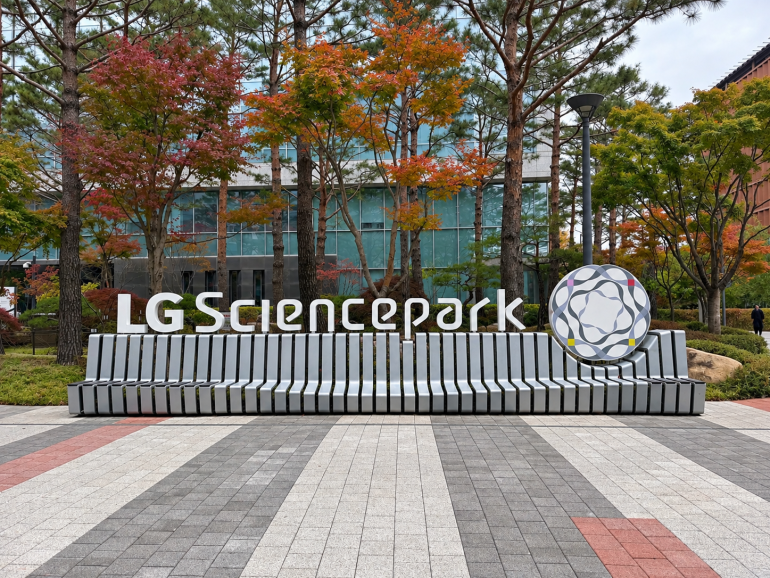
LG Electronics built a home in Seoul where the lights, appliances, heating, ventilation and even the robot vacuum can respond to what you’re doing without you having to control everything individually. The company calls it the Zero Labour Home, and after visiting its ThinQ Real demonstration space at LG Sciencepark in South Korea, I think there’s a fairly good argument for dropping the idea that this is still the home of the future.
The technology already exists, and much of it is available in appliances and smart home products that you can buy today. What’s different about LG’s approach is how those devices work together, with artificial intelligence helping to manage things that would ordinarily require several apps, individual commands or manually configured routines.
Of course, a fully connected home like the one LG demonstrated isn’t something most people can afford to put together overnight, and the company hasn’t announced when the complete experience will be available in South Africa. But having seen how the system works, I can understand why LG thinks it can eventually take much of the work out of managing a household.
A home that knows when you’re there
LG’s ThinQ Real is a roughly 100m² demonstration and research space at LG Sciencepark in Magok, Seoul. The company upgraded it earlier this year to recreate a conventional Korean apartment, complete with a living room, kitchen, bedroom and laundry area.
It’s also a working research facility where LG can study how people interact with connected appliances, test new automation features and collect information that helps improve its AI Home technology.
The demonstration begins at the front door, where a fingerprint-enabled smart lock identifies the person entering the house. That triggers a welcome routine that can adjust the lighting, open curtains, play music and set the indoor temperature according to the person’s preferences.
We’ve had smart home routines capable of doing some of these things for years, so the individual features aren’t necessarily new. You can already use platforms such as Apple Home, Google Home and Samsung SmartThings to automate lighting, climate control and other connected devices.
Where LG wants to go further is in reducing how much of that automation you have to configure yourself.
Its AI Home system uses information from connected appliances, sensors and other devices to understand what’s happening around the house. It can monitor things such as temperature, humidity, lighting and air quality, then use that information to recommend or carry out relevant actions.
For example, if outdoor air quality is poor, the system can suggest refreshing your clothes in an LG Styler rather than leaving them hanging outside. It can also coordinate air conditioning and ventilation instead of requiring someone to adjust each device separately.
These are relatively small conveniences individually, but I can see how they would become quite helpful when they’re happening throughout the day without someone having to constantly think about them.
ThinQ ON brings everything together
At the centre of the system is LG ThinQ ON, an AI-powered smart home hub that connects compatible appliances, sensors and other devices.
It supports conversational commands, so instead of opening an app and navigating through several menus, you can ask the system to perform a task or help with something you’re doing.
In the kitchen, for example, ThinQ ON can provide recipe instructions while coordinating compatible cooking appliances and ventilation equipment. If you’re preparing a meal, it can activate the extractor hood or adjust connected windows to help clear cooking fumes.
I studied to be a professional chef, so I have some thoughts about how useful AI cooking assistants actually are. I don’t necessarily need an appliance to tell me how to prepare dinner, but I can appreciate a system that takes care of the ventilation while I’m cooking, or makes sure the oven is ready when I need it.
The key thing is that these features don’t require every appliance to operate independently.
LG demonstrated how the same approach extends to other parts of the house. In the living room, a cinema routine can coordinate the television, lighting and other connected devices to prepare the space for watching a film. In the bedroom, the system can adjust the environment around sleeping and waking routines.
Again, none of this is entirely beyond what existing smart home platforms can accomplish. LG’s advantage is that it manufactures so many of the appliances involved, from televisions and refrigerators to washing machines, air conditioners and robot vacuum cleaners.
That gives the company considerably more control over how those products communicate and what they can do together.
The house can take care of itself when you leave
One of the more convincing examples of LG’s Zero Labour Home concept is what happens when someone leaves the house.
Its Away Mode can switch off connected lights, adjust appliances to reduce unnecessary electricity consumption and send a robot vacuum cleaner out to clean while nobody is home. The system can also check the battery level of a compatible electric vehicle.
The idea is that you shouldn’t have to go through the house checking which appliances are still running or remember to start the vacuum before leaving for work.
I think there’s considerable appeal to this, especially when you start looking at electricity consumption.
South Africans already have good reasons to pay attention to how much power their appliances use. Having a connected system that can manage some of that consumption automatically could be helpful, although the actual savings would depend on the appliances, household routines and electricity tariffs involved.
LG has been expanding this aspect of its AI Home technology through Homey, the smart home platform developed by Athom, in which it acquired an 80% stake in 2024.
At IFA 2026, LG demonstrated a Home Energy Management System capable of coordinating compatible solar panels, home batteries, smart meters and electric vehicle chargers alongside household appliances.
That could become quite interesting for South African homes with solar installations and battery storage, where deciding when to use stored electricity or run energy-intensive appliances can make a difference to monthly costs.
LG hasn’t confirmed local availability for the complete system, though, and some of the energy optimisation features depend on electricity pricing arrangements that aren’t necessarily available here.
LG still has to solve the smart home problem
One of the things I’ve always found frustrating about smart home technology is how much work can be involved in getting everything connected and keeping it working.
You might have a television from one manufacturer, smart lights from another and a robot vacuum that needs its own app. Then there’s the air conditioner, washing machine and whatever other connected devices you’ve bought over the years.
Some products support Matter, others work with specific ecosystems, and certain features are only available through the manufacturer’s own software.
You can end up spending quite a bit of time configuring devices that were supposed to make your life easier.
It’s something I’ve written about before, and LG’s decision to bring Homey into its ecosystem makes a lot of sense in this context.
Homey supports devices from a wide range of manufacturers, allowing LG to connect products that aren’t necessarily part of its own appliance range.
That’s important because I don’t think many people would be willing to replace every appliance they own just to have everything working through a single AI assistant.
LG has also introduced ThinQ Claw, a conversational AI agent that can work with ThinQ ON to understand requests, consider information about the household and coordinate compatible devices.
As I wrote when LG introduced the technology at IFA, having a washing machine with AI isn’t especially exciting if all it does is add another way to control something you could already operate with a button.
But having a system that understands when you’re leaving the house and manages several appliances accordingly is something I can see people using regularly.
The challenge is making sure it works reliably across different brands, without requiring someone to spend hours troubleshooting connections or rebuilding routines whenever something changes.
Zero labour is still a fairly ambitious claim
For all the convenience LG demonstrated, I don’t think we’re quite at the point where a home can manage every household chore without human involvement.
A connected washing machine might be able to choose an appropriate cycle, monitor electricity consumption and notify you when the laundry is finished, but someone still has to put the clothes inside it.
The same applies to loading a dishwasher, preparing ingredients for dinner and the countless other physical tasks involved in looking after a home.
LG knows this, which is partly why it’s also developing robots capable of handling some of those jobs.
At CES 2026, the company introduced LG CLOiD, a household robot with articulated arms and hands that can manipulate objects and assist with domestic tasks.
It’s designed to work alongside LG’s connected appliances, potentially allowing the company to automate things that software and smart home controls can’t accomplish on their own.
CLOiD is still a demonstration of where LG wants to take its robotics technology, rather than something consumers can buy. And there’s a considerable difference between a robot successfully completing a household task under controlled conditions and one doing the same thing reliably in an ordinary home.
I’m also curious about how much such a robot would eventually cost, because even if the technology works well, affordability could remain a major obstacle.
There’s also the question of privacy.
A home that learns when you arrive, what time you go to bed, which appliances you use and how you move between rooms is collecting a considerable amount of information about your daily life.
LG says its Shield security framework is designed to protect connected appliances, services and customer information, but I’d love to know exactly how that data is handled and how much control users have over what the system remembers.
The more decisions a home can make on your behalf, the more important those controls become.
When can South Africans get it?
LG hasn’t announced a South African launch date or pricing for the complete ThinQ Real experience, and it’s unlikely that the company would sell it as a single product anyway.
Some of the individual components, including ThinQ-compatible appliances, televisions, air conditioners and robot vacuum cleaners, are already available locally. Others, such as ThinQ ON and certain connected home infrastructure products, have more limited regional availability.
The full experience would also require compatible lighting, locks, sensors and other devices, along with the necessary installation and configuration.
For someone living in an apartment or renting a property, that could make things complicated. You can buy a smart television or washing machine without making structural changes to your home, but replacing door locks, installing sensors or integrating automated windows isn’t always an option.
There’s also the cost of putting everything together. LG hasn’t provided a price for recreating its ThinQ Real demonstration, and I’d expect a complete installation involving premium appliances and home automation equipment to be a substantial investment.
That’s before considering what happens if one of the connected services stops working or a manufacturer discontinues support for a device.
Still, I came away from LG Sciencepark impressed by how much of the experience the company has already managed to put together.
I’ve seen plenty of smart home demonstrations over the years, and the technology has often been presented as a collection of separate products that happen to connect to the internet. LG’s ThinQ Real is a much better demonstration of what those products can accomplish when they’re designed to work together.
I’m not going to suggest replacing perfectly good appliances just to recreate the experience, and I’m not convinced that every household needs AI making decisions about its daily routines.
But if I were building or renovating a home and had the budget to install a comprehensive smart home system, I’d certainly be considering what LG’s developing.
The company’s Zero Labour Home name might be getting ahead of what the technology can currently accomplish, especially when it comes to physical chores. But after walking through ThinQ Real in Seoul, I wouldn’t call it the home of the future either.
It’s already here. The question for LG is how quickly it can make the experience affordable, accessible and practical enough for people to have in their own homes.