

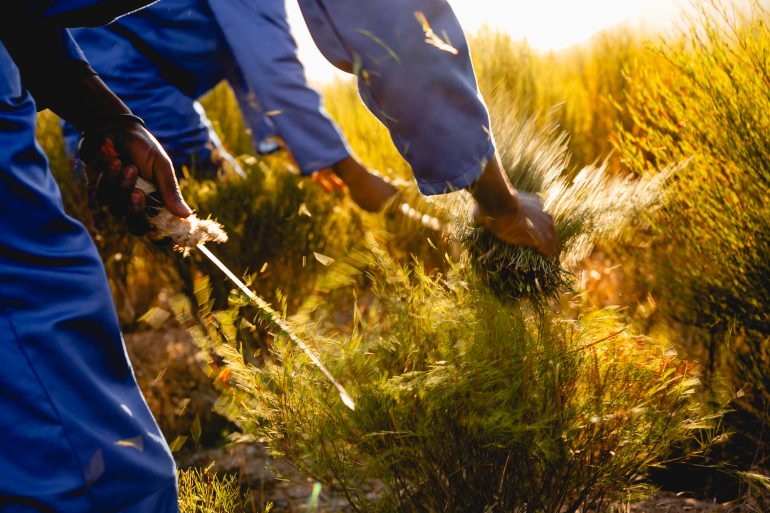
Rooibos heritage has been repackaged for the global wellness market — but beneath the glossy branding, questions remain about who truly benefits. South Africa’s most famous brew is no longer just a local staple; it’s now a protected product on the same register as Champagne. That might sound like a victory for authenticity, but the story is messier when you dig into ownership, power, and profit.
Back in 2021, the European Commission granted rooibos Protected Designation of Origin (PDO) status — the first African product to achieve that recognition. On paper, it means rooibos can only be grown and processed in parts of the Western and Northern Cape. In reality, it also means South Africa’s rooibos industry now has to defend its turf against global wellness brands eager to slap “heritage” on packaging and charge a premium.
The other big headline has been the benefit-sharing levy. Since 2019, producers pay 1.5% of the farm-gate price to Khoi and San councils, recognising them as the original knowledge holders. It’s a world-first. It’s also… tiny. In a multibillion-rand industry that sells itself as Indigenous knowledge made fashionable, is 1.5% a gesture or genuine reparative justice? The answer depends on who you ask.
Carmién Tea, one of the sector’s biggest players, would argue it’s part of a broader ecosystem that ties rooibos heritage to community ownership. Workers hold 50% of its processing facility, and foundations fund healthcare and education for thousands of dependents. That’s significant. But we’ve seen this model before in wine and coffee — industries that marketed heritage and terroir while the biggest slices of profit landed far from the communities doing the actual work. Rooibos could slip into the same trap.
Innovation is another double-edged sword. Rooibos has evolved into powders, cold brews, and functional blends designed for global tastes. Carmién pushes “women’s blends” and ready-to-drink formats. It’s savvy, but it also risks reducing rooibos heritage to just another wellness buzzword, stripped of its cultural meaning in the rush to keep up with oat milk and collagen sachets.
For perspective on how rooibos is being repositioned beyond heritage and into premium markets, we recently profiled founders treating rooibos as a lifestyle product rather than just a commodity. Rooibos is one of the first African products to win Champagne-style recognition, but it won’t be the last to face the question: how do you keep heritage intact when it’s suddenly a global brand?
Rooibos heritage is worth celebrating, but it’s also worth interrogating. Behind the Instagram-friendly brews and export stats is a much harder question — who really owns South Africa’s red bush tea?