
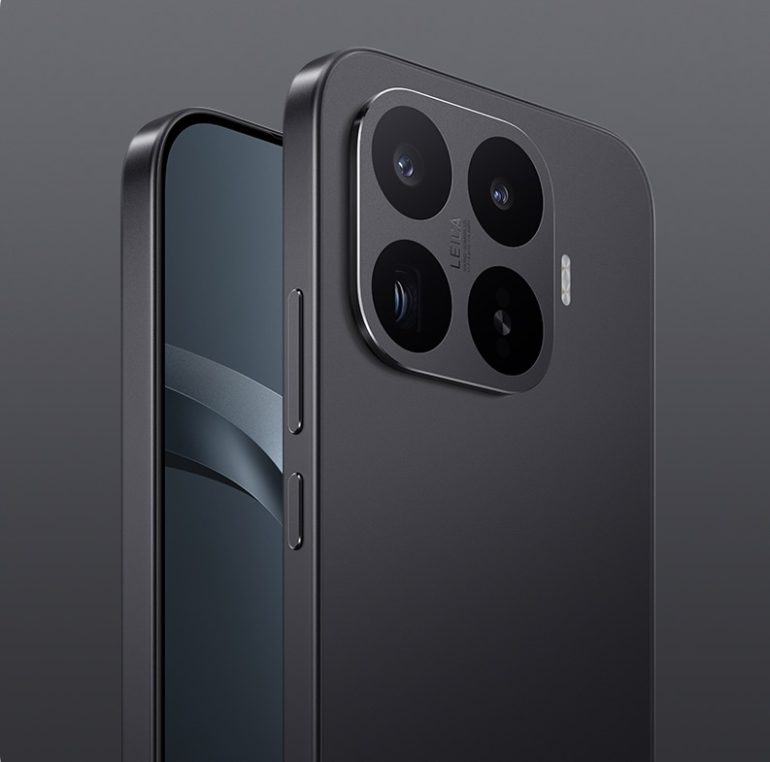
The Xiaomi 17T is unusually clear about what it wants your money to buy: camera reach, battery life and storage. Its 50MP periscope camera offers 5x optical zoom, there’s a 6,500mAh battery inside, and the model available locally comes with 512GB of storage as standard. Those are meaningful upgrades rather than specifications that exist mainly to make the launch presentation longer.
That also tells you where Xiaomi has chosen not to spend the money. The frame is plastic rather than metal, there’s no wireless charging, and the ultrawide camera is considerably less ambitious than the main and telephoto cameras. Those compromises would be easy to wave away if the 17T were substantially cheaper than a flagship. At its current local prepaid price of R18,999, they require a little more thought.
The 17T is more interesting than another almost-flagship Android phone because Xiaomi hasn’t simply tried to reproduce a Galaxy S26 for less. It’s decided that some things matter more than others, and whether you agree with those decisions will probably determine whether the 17T looks like good value.
Xiaomi 17T specifications
| Specification | Xiaomi 17T |
|---|---|
| Display | 6.59-inch AMOLED, 2756 × 1268, 120Hz |
| Processor | MediaTek Dimensity 8500-Ultra |
| RAM | 12GB LPDDR5X |
| Storage | 512GB UFS 4.1 |
| Main camera | 50MP Light Fusion 800, f/1.7, OIS |
| Telephoto | 50MP periscope, 115mm equivalent, 5x optical zoom, OIS |
| Ultrawide | 12MP, f/2.2 |
| Selfie camera | 32MP |
| Video | Up to 4K at 60fps |
| Battery | 6,500mAh silicon-carbon |
| Charging | 67W wired |
| Wireless charging | No |
| Water and dust resistance | IP68 |
| Software | HyperOS 3 |
| Weight | 200g |
| Colours in South Africa | Black, Opal White |
| Current prepaid price | R18,999 |
The locally available version is the 12GB/512GB model, which is important because that storage advantage becomes part of the price comparison rather than an irrelevant spec-sheet win. Xiaomi also officially offers the 17T here in Black and Opal White.
Xiaomi spent the money on the camera you’ll actually notice
The 17T can technically zoom all the way to 120x using Xiaomi’s AI-assisted processing, but that’s not the reason to care about its camera. The interesting number is 5x, where its 50MP periscope telephoto has a 115mm-equivalent focal length with optical image stabilisation and gives you enough reach to make a photograph look meaningfully different from one taken with the main camera.
It works for getting closer to a performer at a concert, isolating someone across a room, picking out architectural details or photographing wildlife without immediately reducing the image to a crop from the main sensor. That’s far more useful than the 120x figure Xiaomi puts in the marketing material because once you push far beyond the optical focal length, the software increasingly has to compensate for information the lens can no longer capture. The results can still be impressive in the way extreme smartphone zoom often is, but they’re demonstrations of computational photography rather than a reason to buy the phone. At 5x, the camera is simply useful.
The main 50MP Light Fusion 800 camera is less novel but more consistently dependable, with an f/1.7 aperture, optical image stabilisation and Xiaomi’s continued Leica processing. You can choose between Leica Authentic and Leica Vibrant depending on whether you prefer a more restrained image or something with more punch, and the result is a camera system with slightly more personality than the increasingly interchangeable processing on many Android phones.
The 12MP ultrawide is where the camera hierarchy becomes obvious. It’s perfectly serviceable when you need the wider field of view, but detail and consistency don’t match the main and telephoto cameras, particularly as the light gets worse. Xiaomi appears to have concentrated its camera budget on the two lenses people are more likely to care about, and that seems like the right compromise. I’d rather have one genuinely useful telephoto camera than three rear cameras engineered to look equally impressive on a spec sheet.
Video recording tops out at 4K at 60fps, with HDR10+ and Log recording also supported. Some early South African launch material referred to 8K recording, but Xiaomi’s final specification doesn’t include it.
A big battery makes a better argument than most of the AI
The other specification that changes the experience is the 6,500mAh silicon-carbon battery. It’s significantly larger than what you’ll find inside many similarly sized flagship phones, without making the 17T unusually thick at 8.17mm.
Independent testing has consistently found battery life to be one of the phone’s strengths. How long it lasts will obviously depend on whether you spend the day on 5G, play games, use the camera heavily or keep the display at high brightness, but the extra capacity gives the 17T far more room before battery anxiety becomes part of the day. That matters more to me than most of the software features Xiaomi labels as AI.
HyperOS 3 includes the expected collection of writing tools, interpretation, speech recognition and image features, alongside Google’s Gemini and Circle to Search. Some are useful, but similar features are spreading across Android quickly enough that they’re becoming difficult to treat as reasons to choose one phone over another. A battery that’s substantially larger than the one in the phone beside it remains easier to appreciate.
Charging tops out at 67W wired, which is slower than the extreme charging speeds Xiaomi has offered elsewhere but still fast enough to replenish a meaningful portion of the battery while you’re getting ready in the morning. A full charge takes around an hour under ideal conditions.
There’s no wireless charging, and at R18,999 that starts to feel less like an irrelevant omission. A large battery reduces how often you need to charge in the first place, but it doesn’t change the fact that wireless charging has become fairly ordinary on phones approaching this price.
It doesn’t need a flagship processor to feel fast
The MediaTek Dimensity 8500-Ultra isn’t the company’s top processor, and that’s much more interesting on a benchmark chart than it is while actually using a phone.
With 12GB of LPDDR5X RAM, the 17T has more than enough performance for everyday apps, multitasking and demanding games. Testing across the reviews supplied for this piece found little to complain about in normal use, although thermal behaviour varied somewhat under sustained loads. Some units became noticeably warm while others remained better controlled, but there’s no consistent evidence of overheating becoming a meaningful problem.
This is one of the areas where the distinction between an upper-mid-range chip and flagship silicon has become increasingly academic. A faster processor might produce a better benchmark score, but it’s difficult to argue that WhatsApp opening fractionally sooner would improve the 17T more than Xiaomi using that money elsewhere.
The 512GB of UFS 4.1 storage is a much easier advantage to appreciate. Samsung’s Galaxy S26 starts at 256GB in South Africa, so Xiaomi gives you twice as much storage before you start thinking about paying for a higher-capacity model. If you shoot a lot of video, download Netflix shows before travelling or keep phones for several years, that’s not a trivial difference.
The display follows much the same logic. The 6.59-inch AMOLED panel runs at up to 120Hz with a 2756 × 1268 resolution, Dolby Vision and HDR10+ support. It’s bright, sharp and smooth, and there isn’t an obvious specification missing that would materially improve everyday use. Some testing found darker portions of video content slightly muddy, but the panel overall is one of the stronger parts of the phone.
Xiaomi could’ve chased a 144Hz refresh rate or an even more impressive brightness number, but neither would necessarily make the screen better to live with.
The compromises become more obvious when you pick it up
The 17T weighs 200g and carries an IP68 rating for dust and water resistance, while Gorilla Glass 7i protects the display. It looks suitably expensive from a distance, with flat sides, relatively slim bezels and the large camera module that’s become almost mandatory on phones that take photography seriously.
The frame is plastic, though, and while that doesn’t make the phone poorly built, the material becomes more difficult to ignore because of what Xiaomi is charging. Plastic has practical advantages, but at R18,999 the 17T is close enough to devices with metal frames that the difference stops being an abstract materials debate and becomes part of the buying decision.
HyperOS has a similar almost-there quality. Xiaomi’s software is considerably cleaner and more coherent than it was a few generations ago, but the phone still arrives with first-party apps that overlap with Google’s equivalents. Once it’s set up, the experience is quick and generally unobtrusive, although Xiaomi still hasn’t reached the point where its software fades into the background quite as successfully as the best Android implementations.
Software support is another place where the price invites scrutiny. Xiaomi promises four Android generation upgrades and six years of security updates for the 17T. That’s respectable, but Samsung’s seven-generation operating-system commitment remains stronger if you’re buying with the intention of keeping a phone well into the next decade.
None of these weaknesses is devastating, but collectively they explain why the 17T doesn’t feel like a straightforward bargain.
The price puts the compromises in perspective
Xiaomi launched the 17T in South Africa through Vodacom, with the 12GB/512GB model initially advertised from R799 per month over 36 months. The same configuration is currently listed prepaid at R18,999 through Cellucity.
That R18,999 number is the one that matters most when comparing the phone with what else you could buy today. Samsung’s Galaxy S26 has a recommended South African starting price of R20,999 for 256GB, putting only R2,000 between the two before retailer discounts enter the equation. Samsung gives you a more overtly premium build, wireless charging and a longer software-support commitment, while Xiaomi gives you twice the storage, considerably more battery capacity and a 5x telephoto camera instead of Samsung’s shorter 3x zoom.
There isn’t an obvious winner because the manufacturers have spent the money differently, and that’s both the 17T’s problem and its best defence. Xiaomi used to be able to make the argument largely with price. You accepted a few rough edges because the equivalent Samsung or Apple device cost dramatically more. At R18,999, that cushion is much smaller, which means the things Xiaomi does better have to be things you genuinely value.
For some buyers they will be. I’d take a 5x optical camera over a metal frame, and I’d rather have a 6,500mAh battery than wireless charging if forced to choose between them. Someone planning to keep their next phone for six or seven years could reasonably arrive at the opposite conclusion.
That’s why I wouldn’t buy the 17T based on the idea that it offers “flagship specs for less”. The phrase has become too vague to be useful, and it doesn’t describe what Xiaomi is doing here anyway. The 17T has flagship-like strengths and some decidedly non-flagship compromises, combined in a way that makes sense only if its priorities resemble yours.
Prices and network promotions can change quickly, so it’s worth checking the Reframed Phone Finder for the latest South African prepaid and contract options before buying.
Verdict
The Xiaomi 17T is at its best when you use the parts Xiaomi clearly cared most about. The 5x telephoto gives you photographic options that many phones around this price still don’t offer, the 6,500mAh battery provides the kind of endurance people are far more likely to notice than a faster processor, and 512GB of storage is generous enough that you may never need to think about it again.
The weaknesses become harder to excuse because R18,999 is serious money. Wireless charging should probably be here, the plastic frame gives rivals an easy premium-materials advantage, and Xiaomi’s software-support promise is good rather than class-leading. The ultrawide camera also feels distinctly secondary beside the other two rear cameras.
None of that undoes what the 17T gets right, but it does mean the recommendation depends less on whether it’s cheaper than a flagship and more on whether you agree with Xiaomi about what matters in one.