
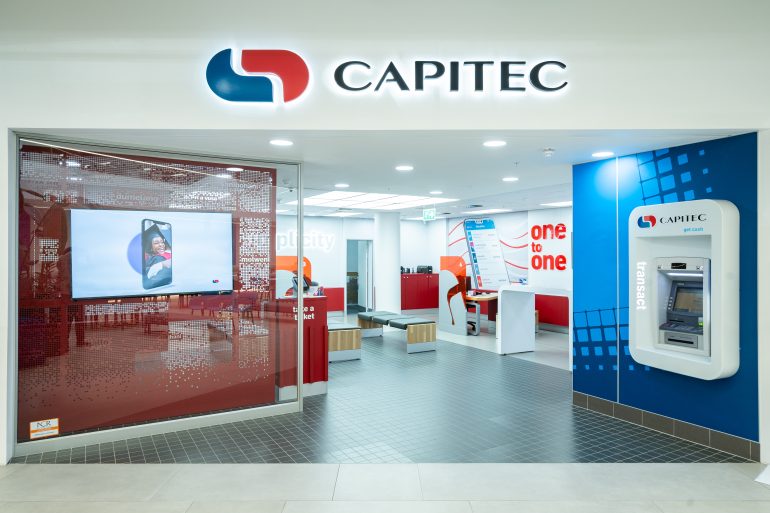
Capitec Connect has crossed 1.5 million active users and scrapped call charges between its own SIM cards. The free Connect-to-Connect calling is the kind of move that makes more sense as a banking play than a telecoms one, and that’s the point.
The numbers backing it up are hard to argue with. Data usage excluding rewards data effectively tripled to 40.5 petabytes, while voice traffic more than doubled to 768 million minutes, and net income from Connect more than doubled to R442 million for the year to February 2026. The subscriber base reached 1.5 million active users in the past three months of the reporting period, up from 900,000 a year earlier. That’s not the trajectory of a bank hedging into connectivity. It’s a product that’s working.
South Africa’s MVNO market has grown quickly and noisily, but the dynamics are fairly settled. Banking sector MVNOs such as Capitec Connect, FNB Connect and Standard Bank Connect continue to dominate in terms of customers and revenue, with retail-linked players like Shoprite K’nect and Pick n Pay Mobile competing on loyalty rather than scale. By December 2024, FNB Connect had 997,000 active SIMs, making Capitec’s 1.5 million a meaningful lead. Standard Bank Connect sits considerably further back. Capitec isn’t chasing this market anymore. It’s defining the pace.
What makes the free on-net calling worth examining is what it reveals about the model. Bank-led MVNOs don’t really win on price alone. Their structural advantage is that the SIM lives inside an existing financial relationship, which means the more a customer uses Connect, the stickier Capitec becomes as a bank. Free calls between Connect users accelerates that dynamic. Every conversation between two Connect clients deepens the network effect. It’s not a telco promotion. It’s an engagement loop.
The press release frames this as an “industry first,” and technically that appears to be accurate for the South African MVNO market. Globally, on-net calling incentives have a longer history, particularly in markets where MVNOs have reached genuine scale. The local significance is that Capitec is comfortable enough in its subscriber base to make a move that only pays off if the network keeps growing. eSIM support is also coming in the second half of 2026, with a fully remote onboarding option, and the bank has indicated plans for wearables support as well.
The device financing piece is less flashy but arguably more consequential. Capitec is now offering Samsung and Apple devices through its app with no deposit, flexible credit terms, and delivery within three days. Clients with a linked Connect number get 5GB of free data per month for 12 months on every device purchase, worth R1,200 over the year. That’s not incidental to the connectivity product. It’s the entry point for a specific kind of customer: someone who needs a smartphone to access banking, job applications, or education, but who can’t afford to buy one outright or navigate a contract. Linking device access to a banking relationship solves that problem without requiring a separate financial product.
The broader ambition has also been made explicit. Capitec has flagged plans to “enable home connectivity through partnerships,” signalling a move towards a fixed-line or fixed-wireless internet offering to complement the mobile business. Home broadband would take Connect well beyond its current positioning. Cell C, which hosts Capitec Connect on its wholesale network, returned to profitability in its 2024/2025 financial year, with Capitec Connect singled out as its standout partner. Both parties have an obvious interest in expanding the relationship.
For context on where the MVNO market is heading, South Africa’s MVNO market is estimated at USD 505 million in 2025 and is projected to reach USD 750 million by 2030, growing at a compound annual rate of around 8%. New entrants including Old Mutual Connect, Spar Mobile, and Stadio Connect have entered in the last two years. The market is getting more crowded, and differentiation is increasingly about depth of integration rather than price per gigabyte. Capitec is ahead on that metric. Its Melon Mobile and FNB Connect competitors are capable, but neither is embedded into a banking relationship at Capitec’s scale. We’ve previously covered the MVNO space, including Melon Mobile’s digital-first approach, which remains a strong pure-telco play, but a different kind of bet.
The limitation worth naming is that Connect’s reach depends entirely on Capitec’s client base. You can’t sign up without a Capitec account, which is a structural ceiling that doesn’t apply to independent MVNOs. It also means the product’s success is partly a Capitec Bank success story, driven by the bank’s 26 million active clients and 860-branch footprint. The MVNO doesn’t stand alone. That dependency is also a strength, but it’s worth understanding when evaluating what “1.5 million active users” actually represents.
None of that changes what this announcement signals. Capitec Connect is no longer a connectivity add-on. Value-added services and Capitec Connect grew 38% to R6.1 billion in Capitec’s last financial year, contributing 26% of group headline earnings alongside fintech and insurance. A product producing those numbers gets product roadmap priority. Free on-net calls, device financing through the app, eSIM support on the way, and home broadband being scoped. The direction is clear, and the pace is not slowing.