
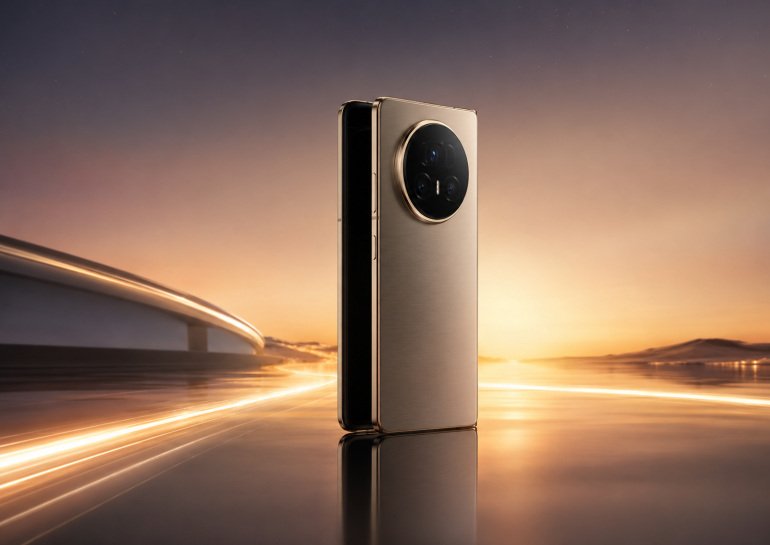
HONOR’s African growth is happening at an awkward moment for the smartphone business. The company’s shipments increased 53% across Africa during the first half of 2026, according to Omdia data supplied by HONOR, while it grew 35% in the Middle East and 15% in Southeast Asia. Those numbers are impressive on their own, but they become considerably more revealing when placed against a market in which the economics of selling the cheapest smartphones are deteriorating and HONOR is steadily building its business further up the price ladder.
Counterpoint Research found African smartphone shipments falling 12% year on year during the first quarter of 2026, largely because rising memory prices pushed device prices higher and reduced the availability of entry-level phones. HONOR moved sharply in the other direction, growing 98% over the same period and overtaking Infinix. Counterpoint attributes some of that performance to inventory, which matters because several competitors simply didn’t have enough affordable devices on shelves, but it also points to something more deliberate: HONOR has adopted what the research firm calls an “affordable-premium positioning” in Africa, concentrating initially on South Africa, Egypt and Nigeria.
That description gives HONOR’s current run a different shape because this isn’t a company taking share by trying to become the cheapest Chinese smartphone brand in Africa. It’s edging in the opposite direction at precisely the moment when the bottom of the market is becoming harder to serve.
Entry-level smartphones are having a particularly miserable 2026. Counterpoint says rising memory costs have hit the lower end of the Middle East and Africa market hardest, with higher prices and limited availability dragging regional shipments down 7% in the first quarter. HONOR grew 154% across MEA during that period. Counterpoint says that was helped by effective inventory management, but also by continued momentum in premium markets, particularly the Gulf states. Its researchers argue that HONOR has been building its position among premium buyers more aggressively than it has been chasing the mass market.
It would be easy to read this as a straightforward story about a smartphone brand getting bigger, but HONOR appears to have found itself unusually well positioned for a market that’s moving upwards in price whether consumers particularly want it to or not. That pattern is already visible in its product and channel strategy, which increasingly occupies the space between mass-market affordability and the traditional flagship world instead of tying the company too closely to either.
Omdia reached much the same conclusion when it examined HONOR’s international expansion. It found that HONOR had made the mid-to-high-end segment a strategic focus outside China, with the $300 to $499 band accounting for around 23% of its overseas shipments in the first three quarters of 2025, the highest proportion among the major Chinese vendors Omdia compared. Its analysis describes the Middle East and Africa as HONOR’s main source of incremental overseas growth while noting that the company has been strengthening premium channels in the Middle East and growing rapidly in South Africa through operator partnerships and locally tailored products.
The Middle East makes the strategy particularly easy to see. HONOR has been working more closely with operators, national electronics retailers and branded retail formats, while using its mid-range phones to deliver volume and flagships to strengthen the brand further up the market. Omdia’s analysis explicitly describes this as part of HONOR’s broader premiumisation strategy, helped by a regional market where higher purchasing power and mature financing make more expensive devices easier to sell.
We’ve already seen that strategy rather plainly in South Africa. When HONOR launched the Magic8 Pro here at R27,999 in February, HONOR South Africa CMO Mark Lei told Reframed that the company wasn’t expecting its flagship business to suddenly provide enormous sales volumes. “The flagship category is not about chasing immediate volume,” he said. “It is about brand strength. If consumers see that you can compete at the highest level, it changes how they see everything else you sell.”
That’s a revealing way to think about a R27,999 phone. The Magic8 Pro doesn’t have to outsell Samsung’s Galaxy S26 Ultra or Apple’s latest Pro iPhone for HONOR to get something valuable from it. It has to make the R15,000 HONOR sitting a few shelves away feel less like an alternative from a cheaper brand, which is something HONOR’s South African flagship strategy already suggested when Reframed spoke to Lei.
The numbered series makes that strategy easier to see because it sits closer to where HONOR built much of its South African audience. The HONOR 600 Pro arrived with Qualcomm’s Snapdragon 8 Elite, silicon normally associated with considerably more expensive flagship phones, while HONOR itself positions the 600 range as an “accessible flagship” series. Ahead of its South African arrival, I noted that putting a flagship chip into the Pro changed the proposition considerably from the conventional mid-range formula.
HONOR says the 600 Series has recorded double-digit growth in the sub-$1,000 accessible-flagship segment since launch. Company figures deserve the usual caution, but the product decisions themselves aren’t ambiguous. Better processors, larger batteries, increasingly ambitious camera hardware and more attention to industrial design are appearing below the Magic series, while the Magic phones and foldables stretch the brand upwards.
Foldables are particularly useful for that exercise because there’s almost no cheap end of the category to drag perceptions back down. IDC figures supplied by HONOR put the company above 50% of foldable smartphone sales in Malaysia, Singapore and Hong Kong. That doesn’t mean HONOR controls half of those countries’ smartphone markets, nor does dominance of a relatively small category automatically translate into broader premium success. It does put the HONOR name in a part of the shop where price is less likely to be the first thing defining the brand.
The Magic V6 extends the same argument. HONOR used Mobile World Congress 2026 to place the foldable alongside its Robot Phone, MagicPad 4 and MagicBook Pro 14 as pieces of a broader device ecosystem rather than treating the event as another Android handset launch. The company has spent much of the past year talking about its shift from smartphone manufacturer to what it calls an AI device ecosystem company, backed by the ALPHA PLAN announced in 2025. There’s plenty of corporate theatre wrapped around that language, but the commercial logic underneath it is familiar. Apple and Samsung have spent years showing that premium positioning becomes considerably easier when consumers encounter a family of products rather than a solitary phone.
HONOR has also been unusually explicit about where it wants this to lead. As far back as 2024, the company said it wanted to become a “premium global brand”. That statement is marketing rather than independent evidence, but it becomes more useful when the behaviour around it starts matching the claim: flagship phones intended to change perceptions, investment in premium retail, foldables gaining meaningful share and an upper-mid-range portfolio absorbing hardware that previously belonged much higher up the market.
There’s evidence of the same approach in Europe. Omdia found that HONOR entered Europe’s top five smartphone vendors in 2025 partly by leaning on its more affordable X-series, but described that growth as creating a foundation for the company’s premium ambitions. In other words, inexpensive and mid-range phones haven’t disappeared from the strategy. They’re helping build the scale and distribution from which HONOR can try to sell something more expensive later.
None of this means HONOR’s enormous growth percentages can simply be credited to some perfectly executed climb upmarket. Counterpoint repeatedly points to inventory as an important part of what happened during the first quarter. Samsung benefited from the same conditions, while Transsion and Xiaomi were hit much harder by component shortages. Empty shelves have a wonderful way of improving the market share of whichever competitor still has phones available.
There’s another complication for HONOR because the further it pushes upwards, the less forgiving the competition becomes. Selling somebody an excellent R8,000 phone requires a different kind of trust from asking them to spend R28,000. Apple and Samsung have ecosystems, trade-in programmes, years of software familiarity and installed bases that make leaving inconvenient. HONOR can build hardware capable of competing with them more quickly than it can reproduce all of that accumulated attachment.
Africa adds an economic problem of its own. Premiumisation can be attractive to manufacturers because it increases how much money they make from each device, but the conditions pushing the industry in that direction aren’t necessarily good news for the people buying the phones. Counterpoint says the African market contracted 12% in Q1 as rising memory costs pushed prices upwards and squeezed the entry tier, and its analysts point out that relatively small increases can become serious barriers in some of the continent’s most price-sensitive markets. Globally, the pattern is already showing up in the money: smartphone revenue grew 8% in Q1 2026 even as shipments declined, while average selling prices climbed 12% to $399. Middle East and Africa was Counterpoint’s fastest-growing region by revenue, up 18%.
A smartphone market can therefore become more valuable while becoming harder for some people to participate in. HONOR may simply be better insulated from that problem than some of the companies it’s overtaking. Its mid-range still gives it volume, its more expensive phones give the brand somewhere to move those customers later, and its inventory has allowed it to take advantage of a year in which some competitors have struggled to supply the very devices on which their African businesses depend.
The next set of numbers should tell us more than the current ones do. If memory supply improves and cheaper smartphone availability recovers, HONOR will lose one of the unusual advantages helping it this year. If it keeps gaining share after that, particularly while moving more customers into upper-mid-range and premium devices, its African growth will become harder to explain as a fortunate response to somebody else’s shortage. By then, the more useful question may no longer be how quickly HONOR is growing, but what sort of smartphone company it has managed to become.