
I’ve been using the HONOR Magic 8 Pro for a few weeks and I still haven’t had to think about charging it at night. That’s not a usual occurrence. The Magic 8 Pro ships with a 7,100mAh silicon-carbon battery, and in practice it lasts well over a full day of heavy use, display-on, heavy camera use, AI features firing constantly, and closer to two days if you’re reasonable about it. In the current flagship landscape, where 4,500mAh is still considered acceptable, that battery alone is a statement.
But the Magic 8 Pro is not just a battery phone with good PR. It’s a full flagship that competes seriously with Samsung and Apple on nearly every axis, design, display, performance, and camera, at a price that undercuts most of them. Whether that’s enough to matter depends entirely on whether you’re bothered by where it clearly borrowed its homework.
Design and build
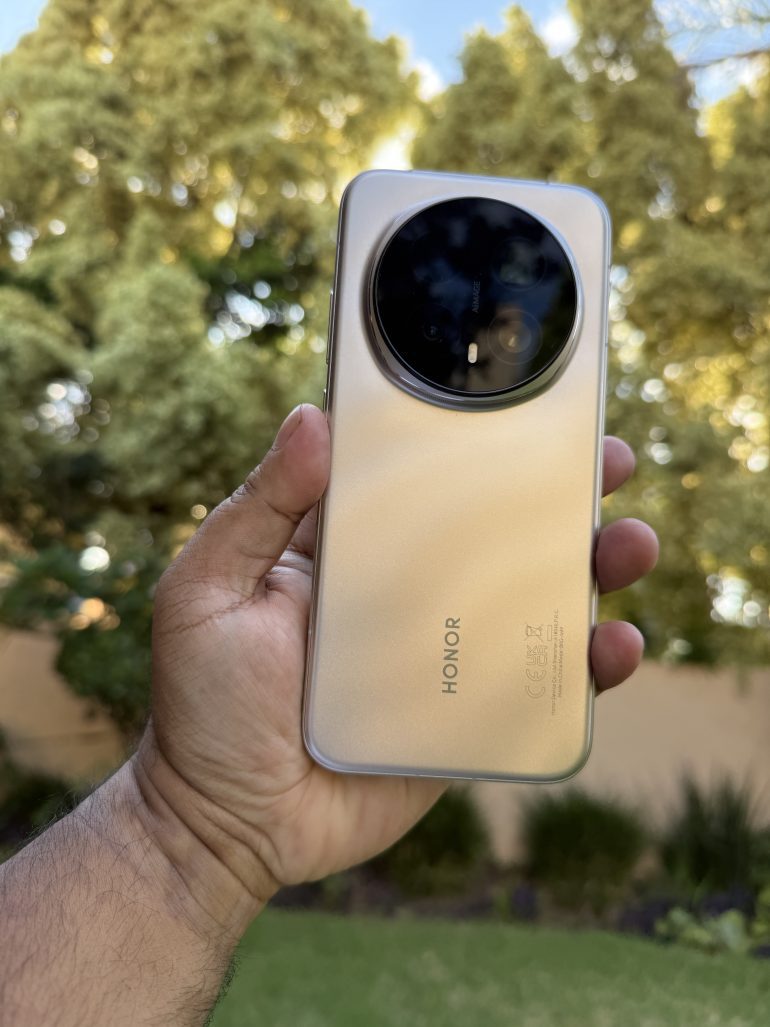
The Magic 8 Pro looks like an iPhone. Not in a vague, “all phones look the same” way, in a specific, rounded-corners-and-thin-bezels, aluminium-frame, fibre-reinforced plastic back way. The Sunrise Gold review unit I spent time with is genuinely beautiful, particularly in outdoor light where the back picks up warmth without going garish. It deflects fingerprints better than most. At 219g and 8.33mm thick, it’s not a featherweight, but it’s reasonably balanced for a phone with this much battery inside it. The camera module protrudes more than I’d like, going caseless means it’ll rock on a flat surface, but a case is included in the box, which is more than Apple or Samsung will do for you.
On the right edge sits a dedicated AI Button, below the volume rocker. A double press launches the camera; a long press calls up Google’s Circle To Search; and it can be remapped if you’d rather assign it to something else.
The phone is rated IP68 and IP69K, which means it’s tougher than it looks. NanoCrystal Shield glass covers the front. It’s the kind of spec sheet that makes you feel better about the price.
Display
The 6.71-inch LTPO OLED panel is excellent, bright, sharp, and smooth. HONOR rates it up to 6,000 nits peak brightness, and the dynamic 120Hz refresh rate drops appropriately at lower usage to save battery. It can also dim to a single nit, which is actually useful if you’re the type to check your phone at 3am without wanting to blind yourself.
HONOR includes 4320Hz PWM dimming and what it calls AI Defocus technology, designed to reduce eye fatigue. Whether those features do anything measurable is difficult to say, but the display is comfortable for extended reading and video without any of the flicker issues that plague cheaper OLED panels. Video looks superb. Text is clean. It’s a good screen.
The Magic Capsule, HONOR’s implementation of a Dynamic Island-style cutout for the punch hole, works well enough. Notifications and activity indicators use it sensibly.
Performance
The Magic 8 Pro runs Qualcomm’s Snapdragon 8 Elite Gen 5, paired with 12GB of RAM and 512GB of storage. That puts it on equal hardware footing with the Galaxy S26. In practice, the phone is very fast. Everything opens instantly, multitasking is smooth, and the AI features, which are running constantly in the background, never visibly tax the system.
Gaming performance is strong. In stress testing, it maxed out 3DMark’s Sling Shot Extreme OpenGL benchmark and posted competitive scores on Geekbench 6, with single-core averages around 3,443 and multi-core around 9,855. That’s in the same range as the best Android flagships right now.
Thermal management is decent. Extended gaming sessions produced some warmth but nothing alarming, and performance didn’t noticeably degrade during sustained workloads.
Camera
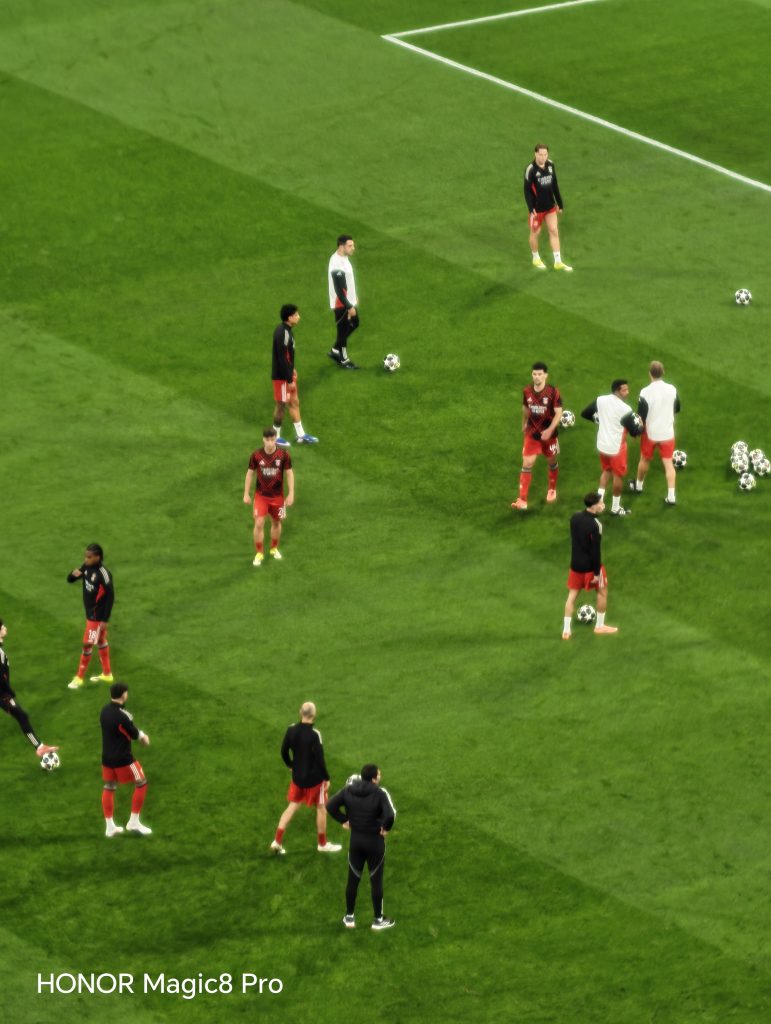
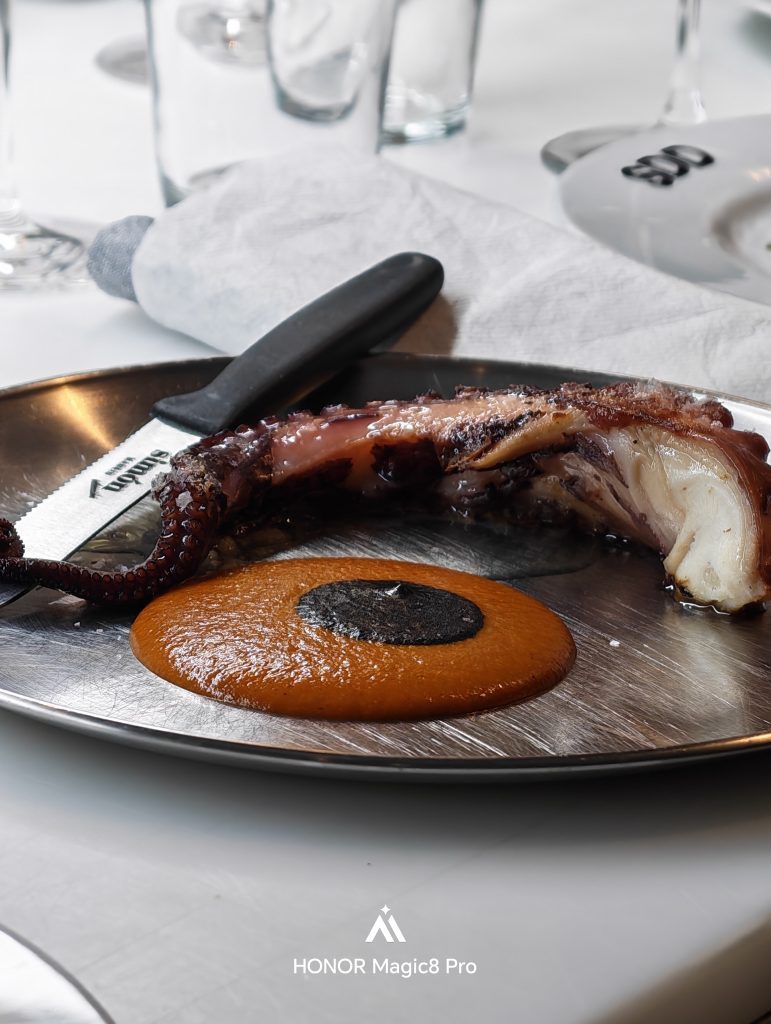
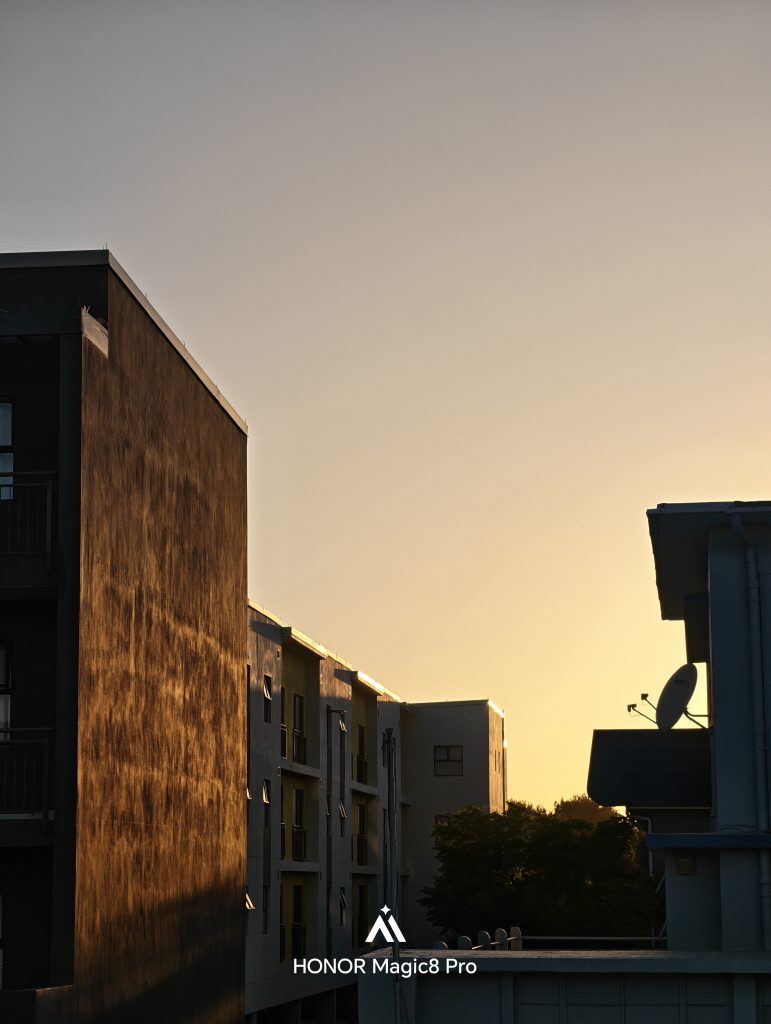
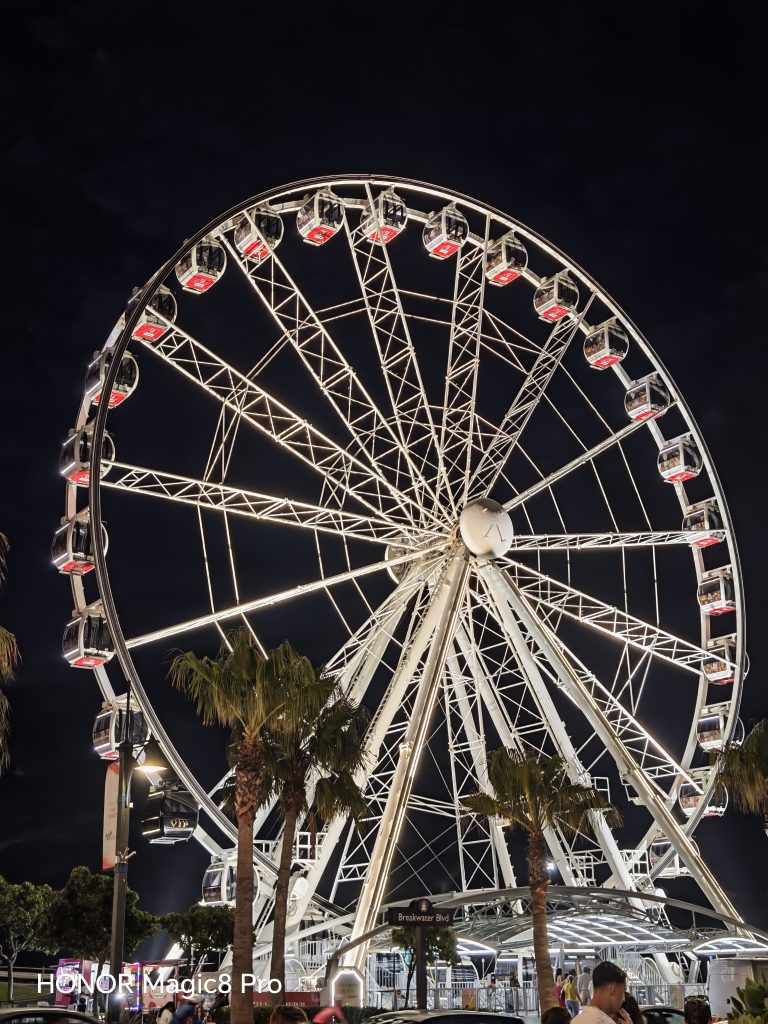
The camera system is where HONOR has made the most deliberate choices. You get a 50MP main sensor, a 50MP ultrawide, and a 200MP telephoto with 3.7x optical zoom and CIPA 5.5-grade optical image stabilisation. The front camera is a 50MP wide-angle unit paired with a 3D depth sensor for face unlock.
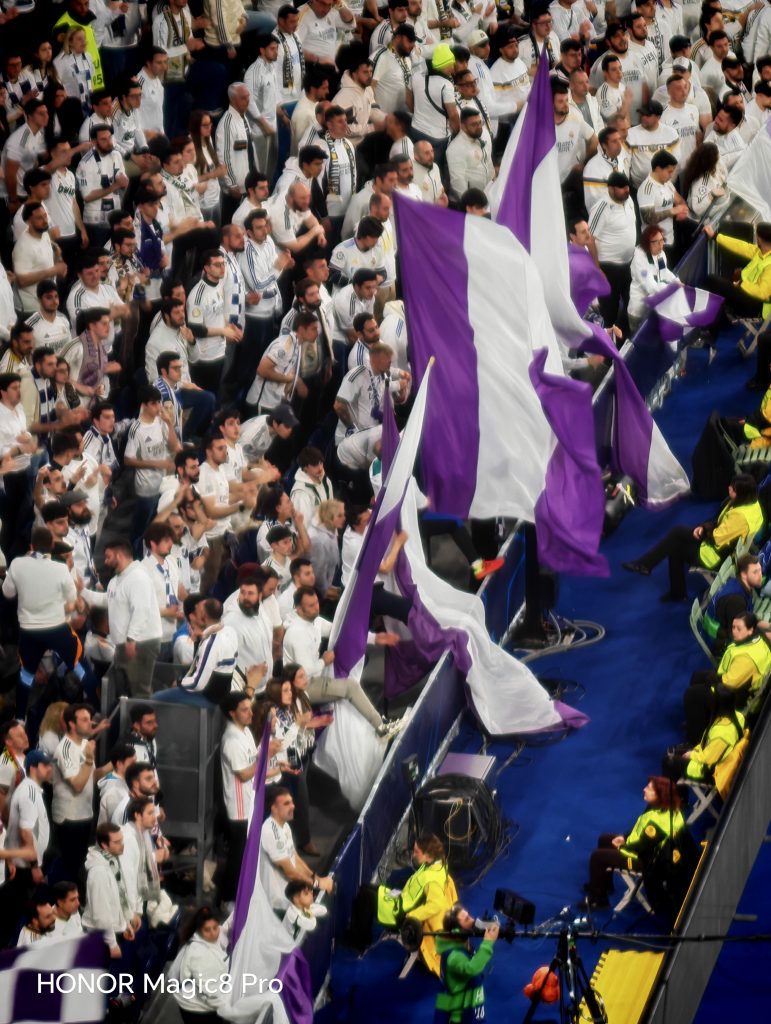
The main camera is reliable and consistent. Colors are well-balanced, detail holds up in reasonable light, and low-light performance is better than the spec sheet alone suggests. The ultrawide is genuinely versatile. The telephoto is where the system earns its keep, 3.7x optical with that level of stabilisation produces sharp, usable results at range, including handheld moon shots that are more impressive than they have any right to be.
There are caveats. The telephoto processing applies sharpening that occasionally overshoots, producing edges that look slightly artificial in close inspection. Bokeh occasionally shows blur artifacts at the edge of subjects. These are not dealbreakers but they’re real, and they show up at inopportune moments.
Video is strong. The rear system records 4K at up to 120fps; the front camera tops out at 4K/60fps. HONOR’s Audio Zoom feature tracks microphone focus to the subject as you zoom in, and it works better than gimmicky zoom audio has any right to work.
For most users, in most conditions, this camera system will not disappoint. It’s not quite the best camera on the market, but it’s far closer to that level than the price suggests.














Software and AI
MagicOS 10 is built on Android and, for the most part, it stays out of the way. The interface is clean, app switching is fast, and there’s a level of customisation depth that power users will appreciate, HONOR genuinely offers a setting for nearly everything, though you’ll sometimes have to dig for it. I grew fond of double-tapping the back to toggle the torch. Small things add up.
The AI layer is where the Magic 8 Pro tries to distinguish itself, and it largely succeeds, with one significant qualification. HONOR’s AI surfaces shortcuts, assists with photo search, helps locate buried settings, and includes features like deepfake detection and voice-clone detection that are more practically useful than most AI phone features rolling out right now. Photo search in particular is noticeably better than competing implementations; finding a specific image from months ago is fast and accurate in a way that feels genuinely different.
The qualification: MagicOS can feel crowded. Suggestions, prompts, and AI tools surface frequently, and on a premium device that kind of persistent eagerness reads as noise rather than help. A lighter touch would make the software feel as polished as the hardware.
There’s also the Liquid Glass UI element, which looks unmistakably like something Apple presented at WWDC. HONOR knows this, I know this, and presumably you know this. Whether it bothers you is a personal matter. It didn’t bother me.
Battery life
I need to come back to the battery because it really is that good. The 7,100mAh cell, combined with 100W wired and 80W wireless charging, makes the Magic 8 Pro one of the strongest endurance flagships on the market. A full charge from zero takes around 40 minutes wired. Wireless charging at 80W is fast enough to be genuinely useful rather than symbolic. The silicon-carbon chemistry keeps the physical size manageable.
In heavy daily use, screen on, camera active, AI features running, always connected, I finished most days above 40 percent. On moderate days, I didn’t think about the charger at all. This is the kind of battery life that changes how you travel.
Audio
The stereo speakers deserve mention because they’re unusually good. They’re among the loudest and clearest you’ll find on any smartphone currently available in South Africa, with enough separation and fullness that watching video or playing games without headphones doesn’t feel like a compromise. There’s real depth here, not just volume.
Verdict
The HONOR Magic 8 Pro asks you to accept that it borrowed its design language from Apple, that its software occasionally overreaches, and that its telephoto processing isn’t always subtle. In exchange, it offers a 7,100mAh battery that actually changes your relationship with your charger, a camera system that punches at its price point, a display that holds up against the best in its class, and top-tier performance on Qualcomm’s latest silicon.
At its launch price, it undercuts the Samsung Galaxy S26 Ultra and the iPhone 17 Pro while matching or exceeding them on battery by a considerable margin. If you’ve been following how Samsung is repositioning its flagship strategy, as I covered here, the contrast is telling. For the right buyer, someone who wants a capable, well-built flagship that won’t need babysitting through the day, it’s a compelling offer. Just go in knowing what it is.