
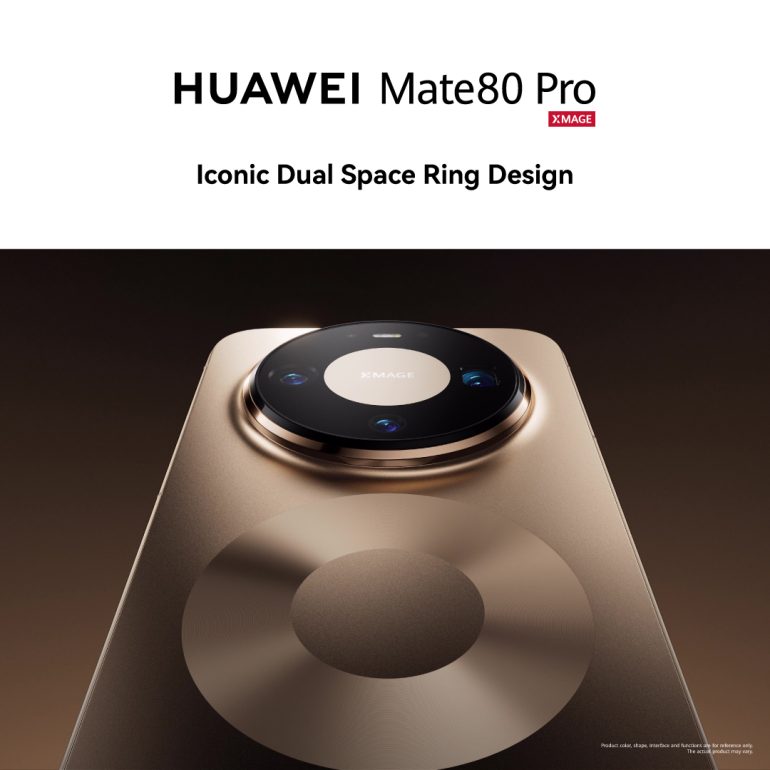
The HUAWEI Mate 80 Pro has arrived in South Africa at R21,999. If you read Huawei’s launch materials carefully, you’ll notice one thing that’s conspicuously absent from an otherwise detailed spec sheet: any mention of Google.
That omission isn’t an oversight. It’s the central tension in what is otherwise a legitimately impressive piece of hardware.
Let’s start with what Huawei is actually selling. The Mate 80 Pro’s camera system centres on what the company calls True-to-Colour photography, a direct counter-positioning to Samsung’s famously punchy, oversaturated processing and Apple’s warm, cinematically adjusted results. In a category where every flagship claims colour accuracy but few deliver it consistently across all three lenses, Huawei’s argument has some substance. The XMAGE system, running across the main 50MP variable aperture lens, a 40MP ultra-wide, and a 48MP macro telephoto, aims to maintain consistent colour rendering when you switch between them. That’s a real problem in mobile photography, and it’s not one that Samsung or Apple have fully solved either.
The Kirin 9030 Pro powering the device doesn’t match the raw benchmark performance of Qualcomm’s Snapdragon 8 Elite Gen 5, which runs the Samsung Galaxy S26 Ultra and a growing list of Android flagships at similar or higher price points. But hardware benchmarks are increasingly disconnected from the user experiences that most people care about. The Mate 80 Pro’s thermal management system, its 5,750mAh battery, and 100W wired SuperCharge are strong, and in the context of South Africa’s intermittent power supply, a phone that charges fast and lasts long is more useful than one that wins a synthetic performance test.
The 2nd Generation Kunlun Glass and vegan fibre back panel extend a durability narrative that’s become standard across premium devices. IP68 and IP69 ratings, the latter covering high-pressure, high-temperature water jets, are impressive credentials, though they follow a well-worn path. Samsung has offered IP68 since the Galaxy S7, and Apple similarly. What sets the Mate 80 Pro apart is the combination: few phones at this price point offer both the glass toughness and the IP69 certification simultaneously.
At R21,999, the Mate 80 Pro undercuts both the Galaxy S26 Ultra and iPhone 17 Pro by a meaningful margin. That pricing strategy is deliberate. Huawei holds around 10% market share in South Africa, enough to sustain distribution and brand recognition, but well behind Samsung’s dominant 51%. The Mate 80 Pro isn’t designed to take Samsung’s mid-market. It’s positioned at the upper-premium tier, where buyers are weighing up whether a hardware advantage justifies an ecosystem compromise.
That compromise is real, and it deserves more honesty than the launch materials offer. The Mate 80 Pro ships with HarmonyOS and Huawei Mobile Services. There is no Google Play Store. Whether the international version ships with any Android compatibility layer will matter enormously to South African buyers, many of whom rely on Google-dependent apps for banking, navigation, health, and productivity. As I mentioned back when Huawei’s nova 9 launched locally, the Google gap has long been the brand’s most persistent challenge in markets where the Android ecosystem is the default infrastructure of digital life.
AppGallery has improved. It’s a functioning app store with millions of titles globally. But “functioning” isn’t the same as “equivalent.” South African users who depend on apps like Capitec, Discovery Health, or Takealot, all of which have historically required Google Play Services, need clarity before committing to a nearly R22,000 device. The 200GB HUAWEI Mobile Cloud bundle included in the launch package is a useful sweetener, but it’s also a soft on-ramp into Huawei’s own services ecosystem, which is exactly where the lock-in begins.
None of this makes the Mate 80 Pro a bad phone. The opposite is closer to the truth. For photographers who’ve consciously evaluated the ecosystem trade-off, for business users in environments where Microsoft productivity tools and HarmonyOS work well together, or for consumers who simply want high-specification hardware at below-Galaxy-S26-Ultra pricing, this is a coherent choice. The camera system is competitive. The build quality is premium. The battery strategy is well-matched to South African realities.
But the Mate 80 Pro’s marketing asks buyers to see a flagship without limitations when the real pitch should be: here’s a flagship with a specific trade-off, and if you can live with it, the hardware is exceptional. That’s a more honest case, and probably a more persuasive one in a market that’s increasingly sceptical of tech launches that don’t say what they mean.