
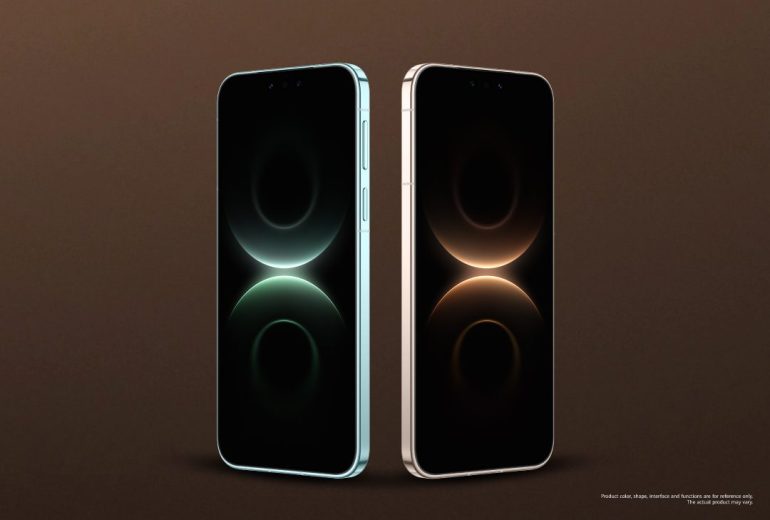
The Huawei Mate 80 Pro launch in South Africa arrives today on 7 April with a price tag of R21,999, a genuinely impressive camera system, and a conspicuous silence on the one thing that has kept Huawei buyers hesitant for the better part of six years.
The Mate series hasn’t been available globally since the Mate 50 Pro in 2022. That’s not a footnote, it’s the actual story. Huawei’s flagship line went dark internationally as the company retreated under the weight of US sanctions, rebuilt its chip supply chain, and developed EMUI into something it could ship globally without Google. The Mate 80 Pro is the first real sign that this period is ending, at least on Huawei’s terms. It won a Best of MWC 2026 award and has attracted serious attention from reviewers. The hardware, by most accounts, holds up.
And the hardware is worth examining. The Mate 80 Pro’s True-to-Colour Camera System is built around a 50MP main sensor with a variable f/1.4 to f/4.0 aperture, a 40MP ultra-wide, and a 48MP macro telephoto lens with 4x optical zoom and a 5cm minimum focus distance. The DCG HDR technology claims a 300% improvement in dynamic range, which matters most in the scenarios that trip up most phones: backlit portraits, harsh midday light, and golden hour shots where highlights and shadows exist in the same frame. Colour consistency across all three lenses is also a stated priority, which, if it actually holds in real-world shooting, addresses one of the most persistent frustrations in multi-lens mobile photography.
The camera pitch isn’t novel, though. Apple’s Photographic Styles, Google’s Real Tone, and Samsung’s latest ProVisual Engine all make essentially the same promise: that the colours you see are the colours you get. Huawei’s approach differs at the sensor level; its RYYB (Red, Yellow, Yellow, Blue) pixel array captures more light than a standard RGB layout, but the marketing language is familiar. “True-to-life colours in any environment” is not a claim that belongs to any one brand. It’s a category-wide promise, and the proof is always in the shooting.
The durability story is similarly solid and similarly expected. The 2nd Generation Kunlun Glass, IP68 and IP69 ratings, and the vegan fibre back panel are real improvements, but IP68 is now a baseline expectation at this price point, not a differentiator. The 5750mAh battery with 100W wired and 80W wireless charging is genuinely strong, and in a South African context where power reliability is still variable, battery capacity and fast charging carry more practical weight than they do in markets with stable electricity. A phone that can charge to full in under an hour and last a full day under load is a practical advantage here, not just a spec sheet number.
At R21,999, the Mate 80 Pro lands between the Samsung Galaxy S25 (currently discounted below R18,000) and the Galaxy S25 Ultra (RRP R30,000). It’s a considered placement, premium enough to read as a flagship, not so expensive that it’s competing with the absolute top of the market. But price isn’t really where this decision lives. The Galaxy S25 series runs Snapdragon 8 Elite, ships with full Google Mobile Services, and integrates Gemini across the OS. For most South African buyers who’ve been in the Android ecosystem, that integration is invisible until it isn’t, until they try to restore a WhatsApp backup via Google Drive, or navigate without Google Maps, or find that an app they rely on daily simply isn’t in AppGallery.
The press release doesn’t mention any of this. There’s no mention of EMUI 15, no mention of AppGallery, and no mention of what it looks like to live inside Huawei’s ecosystem without the apps most South Africans take for granted. That silence is a choice. It’s the same choice Huawei South Africa has had to navigate since 2019, and it hasn’t gotten easier with time. My coverage of the Pura 80 Ultra put it directly: Huawei is building some of the most technically impressive smartphones available, in a constrained ecosystem that limits how many people can actually benefit from them.
It’s worth holding both of those truths at once. The Mate 80 Pro is a serious piece of hardware. Its camera system is not marketing fluff; the sensor architecture, the macro telephoto range, and the colour calibration across lenses represent genuine engineering effort. Huawei’s recovery from near-collapse to re-emerging globally with a competitive flagship is, by any measure, remarkable. And yet: a South African buyer spending R21,999 on a phone is making a long-term commitment to an ecosystem. That commitment looks very different depending on how much of your digital life runs through Google. For some buyers, Huawei loyalists, users who’ve already built their workflow around AppGallery, or people who genuinely don’t miss Google, the Mate 80 Pro is an easy recommendation. For everyone else, it requires a more honest conversation than the press release is willing to have.
Huawei’s global re-emergence with the Mate series is real and worth paying attention to. The hardware justifies the price. The software question remains the actual test, and it’s one that South African buyers will have to answer for themselves, because Huawei isn’t going to bring it up.