

The Mac mini has spent most of its life being the Mac you bought when you already owned everything else. Bring a monitor, keyboard and mouse, hand Apple a relatively modest amount of money, and the little silver box gave you macOS without the cost of an iMac or MacBook. The new M6 model gives Apple a reason to treat it less like an entry-level desktop and more like a small computer that can sit on a desk, stay switched on and run AI agents in the background.
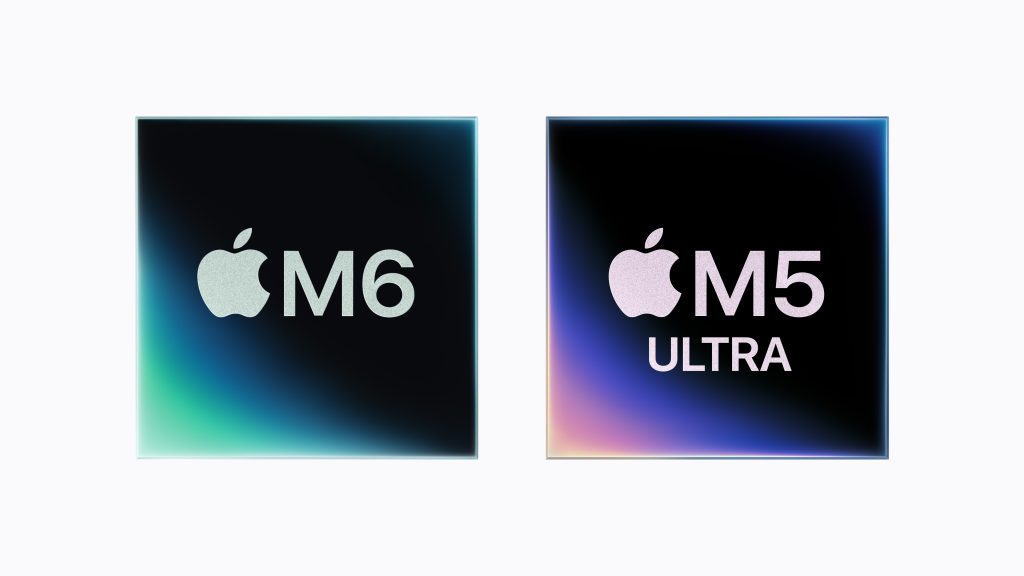
Apple unveiled the M6 chip and M5 Ultra on Tuesday alongside new versions of the Mac mini and Mac Studio. There are predictable generational improvements throughout. M6 is Apple’s first chip built using a 2-nanometre process and gets a 12-core CPU, 12-core GPU with Neural Accelerators in every core and what Apple calls a Dual 16-core Neural Engine. The company claims up to four times the AI performance of the M4 Mac mini, alongside faster graphics, storage and CPU performance.
The Cupertino tech giant is selling the new Mac mini for a job it barely talked about two years ago. In its announcement, the company repeatedly describes the machine as suited to “always-on agentic computing”, including setups where it sits beside a user and runs AI agents continuously.
That changes what the Mac mini is being asked to be. It’s still a small desktop, but Apple is also positioning it as a computer that can keep doing useful work when nobody is actively sitting in front of it. The pitch has moved well beyond faster exports or snappier apps and into territory that starts to look more like personal AI infrastructure.
The idea didn’t originate with Apple. The Mac mini has already become an oddly popular piece of AI hardware because Apple’s unified memory architecture allows the CPU and GPU to access the same large pool of memory. That’s useful when running local large language models, where fitting the model into memory can matter as much as raw computational muscle. The Wall Street Journal has reported that demand from AI developers helped turn the previous Mac mini into an unexpectedly sought-after machine, with supply struggling to keep up.
Apple now appears to be designing directly for that behaviour rather than merely benefiting from it. The M6 Mac mini starts with 16GB of unified memory and can be configured with 32GB, while the more powerful M5 Pro version goes to 64GB with 307GB/s of memory bandwidth. Apple specifically points to running local AI models, diffusion models and agents among the workloads these machines are intended to handle. The distinction between a small desktop computer and a tiny personal server gets fuzzier if the machine spends much of its time carrying out jobs while nobody is sitting in front of it.
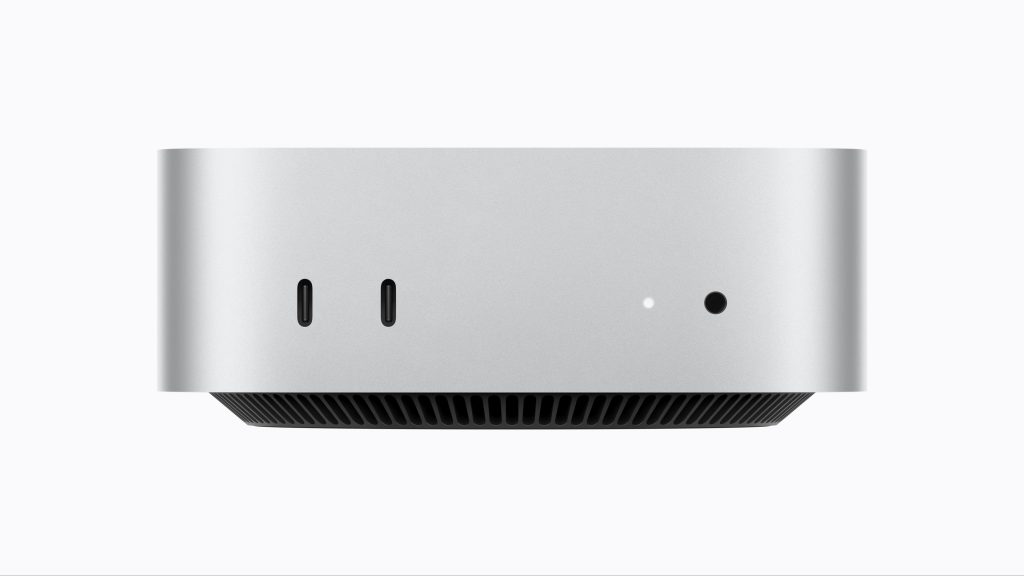
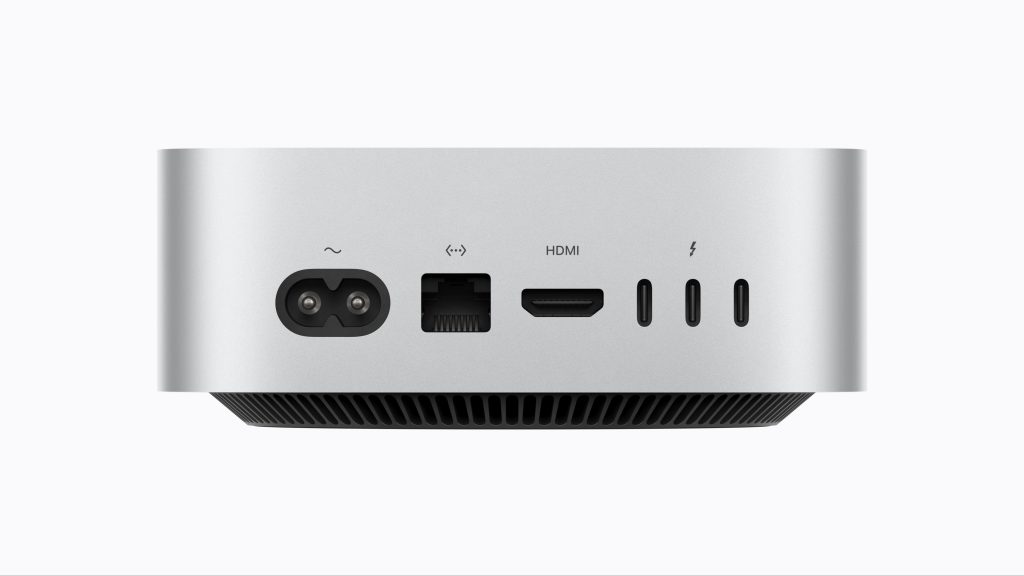
There’s a cost to Apple deciding that the humble Mac mini now belongs in the AI infrastructure conversation. The M6 model starts at $899 in the US, compared with the $599 starting price of the M4 model when it launched in 2024. The M5 Pro version starts at $1,699. The little Mac remains little, but its entry price has jumped 50 percent in less than two years.
That increase weakens one of the previous Mac mini’s strongest arguments. When the M4 version arrived in South Africa, it started at R13,199, making it an unusually accessible route into Apple silicon. The M4 Mac mini’s combination of price and performance was part of the appeal precisely because Apple had managed to shrink the computer without turning it into another expensive Pro product. South African pricing for the newly announced M6 models hadn’t been confirmed at the time of publication.
At the other end of Apple’s range sits a machine with a very different relationship to the word affordable. The new Mac Studio can be configured with M5 Max or M5 Ultra, with the latter supporting up to 512GB of unified memory and 1.2TB/s of memory bandwidth. Apple says that’s enough to run language models containing hundreds of billions of parameters in memory, turning a box small enough to sit under a monitor into a genuinely unusual local AI machine. The M5 Ultra configuration starts at $5,499, and the 512GB models won’t arrive until late October.
A sufficiently expensive computer being able to run an enormous AI model isn’t especially surprising. There are plenty of spectacularly expensive ways to buy compute. Apple’s advantage is that unified memory lets developers buy capacities that become difficult or much more complicated to reproduce with conventional consumer GPUs. A graphics card may be considerably faster for some AI workloads, but once a model is too large for its available VRAM, speed is only part of the problem. A Mac Studio with hundreds of gigabytes of memory becomes easier to justify when the alternative involves multiple accelerators, dedicated servers or renting access to somebody else’s infrastructure.
Local AI still has obvious limits. Cloud AI exists partly because enormous models require enormous amounts of compute, and buying a $5,499 computer doesn’t suddenly make every cloud service redundant. Smaller Macs also won’t be running the same models as a 512GB Mac Studio. What Apple is building instead is a wide ladder of local compute, from a Mac mini intended to keep an agent running beside your desk to a Mac Studio capable of holding models that would once have belonged exclusively in a server room.
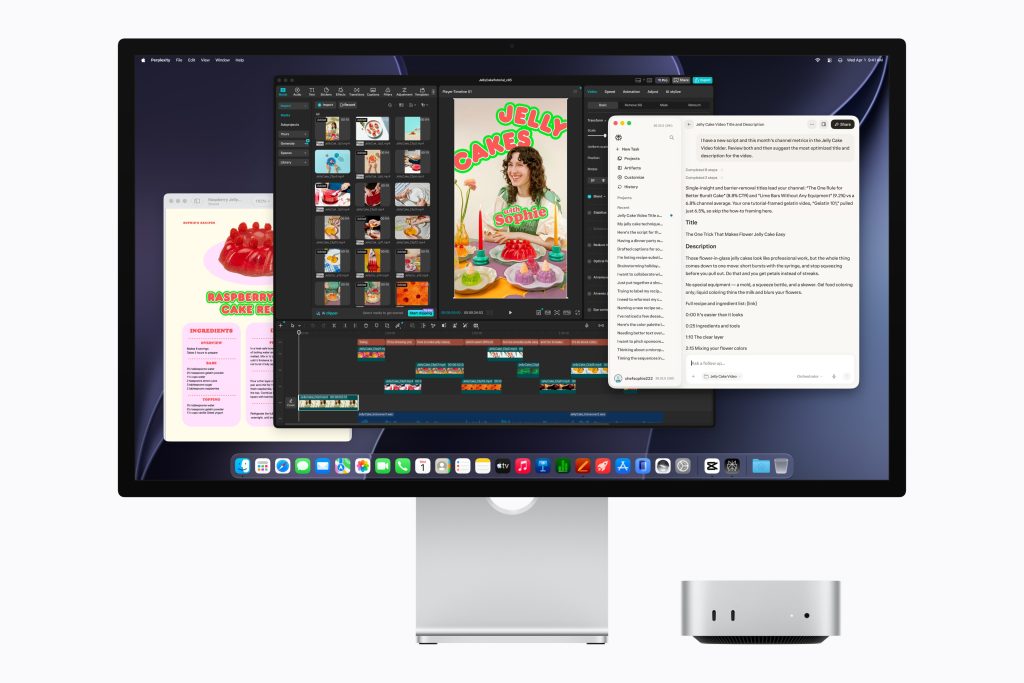
It also makes Apple’s obsession with keeping AI controlled and close to the device easier to understand. For much of the generative AI boom, that strategy made Apple look cautious while OpenAI, Google and others fought over ever larger cloud models. Apple Intelligence was pitched around privacy and on-device processing even when the company’s AI capabilities lagged its competitors. Hardware designed for persistent agents gives that philosophy considerably more substance. Local processing starts looking less like a privacy line in a keynote and more like an architectural choice Apple expects developers to build around.
There’s a South African parallel here too. Local businesses are already reconsidering the assumption that every AI workload belongs in public cloud, partly because cost, data control and infrastructure requirements vary wildly between workloads. Personal computing may be drifting towards the same untidy arrangement. Some AI will run on Apple’s hardware, some will call enormous models in the cloud, and agents may move between both depending on the job. The computer on your desk becomes one piece of AI infrastructure rather than merely the screen through which you access somebody else’s.
Apple calling the Mac mini an “always-on” machine for agentic computing gives the little desktop a peculiar new role. Personal computing spent decades becoming less stationary as desktops gave way to laptops, laptops ceded everyday work to phones, and more computation disappeared into distant data centres. AI may be giving Apple a reason to make the box on the desk useful again. This time, though, it doesn’t necessarily need you sitting in front of it.